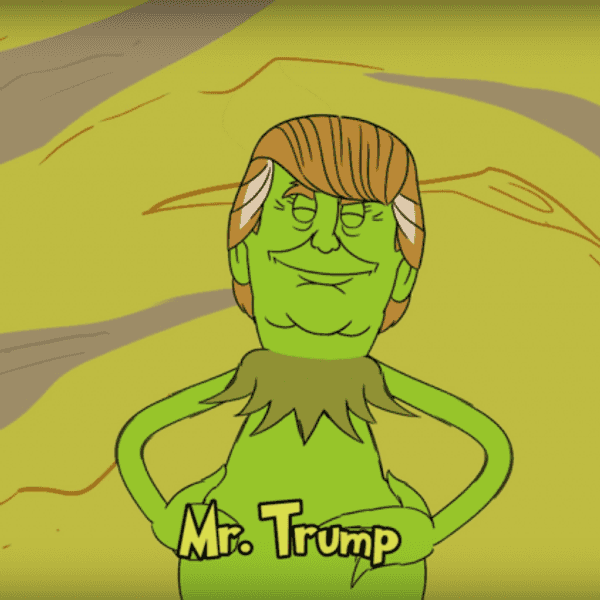
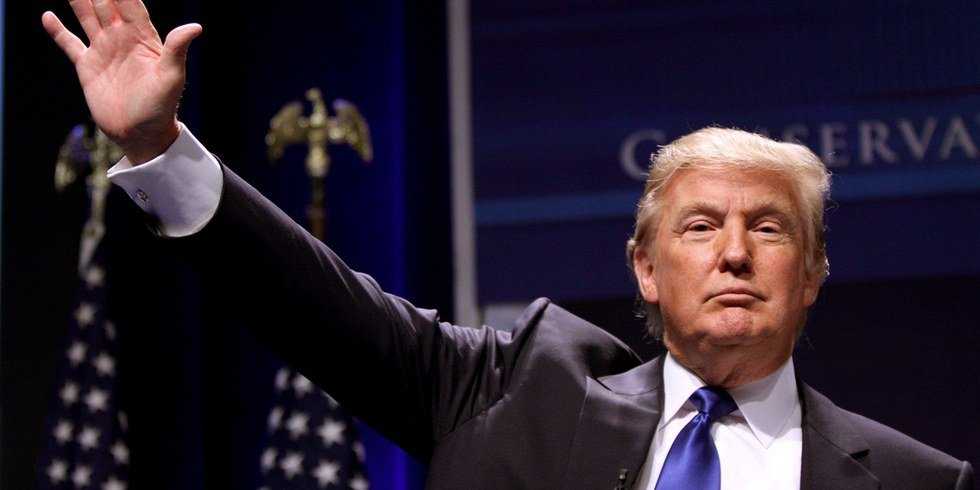
Imagine if you could condense the last three years for the Republican party into one meeting. Imagine that in this Country Club Republican meeting Reince Priebus and the Republican elites came up with a plan to combat the Democratic coronation of Hillary Clinton. Then imagine someone rolling a grenade with a blonde toupee into the room with its pin pulled.
The grenade, Donald Trump, is exploding within the party laying waste to conventional wisdom and the Republican establishment. But, if that's the case, where is his support coming from? If he is such a destructive force for the party, how is he able to garner such a fervent base? The fact of the matter is that what we're seeing is, in the words of Bernie Sanders; a "political revolution” rallying against the Country Club Republican establishment.
Trump’s far right populist platform with Reagan-esque rhetoric has awoken a sleeping Republican support center and is possibly realigning the party for years to come. As the Republican media peddles an image of an American society that is being infiltrated by foreigners, that is being beaten abroad by another rising power (CHI-NA!) and an economy that is not creating enough good jobs (“I will be the greatest job president God has ever created.”) they have conditioned an angry electorate that identifies with Trump’s xenophobic immigration policies, his anti-NAFTA, anti-TPP, and anti-elite talking points. This runs counter to the trend of a Republican party that was not only the main reason any of these free trade deals got passed in the first place but have advocated for tax cuts for the elites in the American socio-economic ladder. So where is this re-alignment climate of party ideals coming from?
According to a study completed by Princeton economists Anne Case and Angus Deaton; "middle-aged white non-Hispanic men and women in the United States between 1999 and 2013," have been dying at an alarming rate. This runs counter to the trends of not only the same demographics all over the industrialized world but among minorities within the United States. Case & Deaton argue that this is due to poisonings, overdoses, suicides and liver disease as the top causes of this alarming trend.
As wages stagnate and the economic picture gets bleaker for this demographic it could be creating a sense of hopelessness leading to an anger at an establishment that they see is to blame for their failings. Where the establishment fails to resonate is where Trump’s far right populism dominates. While there is no proven causation to these phenomena and Trump’s rise, I agree with Washington Post columnist Jeff Guo’s assertion that it is not a stretch to link these two things, which may be an empirical explanation for it. The idea that the reason he is so popular is because we talk about his so much is not only illogical, but it is insensitive to the current political climate that another Democrat has succeeded in exploiting. So, while this rhetoric rings true with Republican voters will it ring true for general election voters?
Saying that Trump’s popularity will carry over to the general election is like saying that you’ll be the most popular kid at school because your mom loves you so much. The fact is the votes that will own November REALLY don’t like this guy. Especially among women who now dominate the American electorate. They are the largest voting electorate and went double digits for Barack Obama in 2012. It’s difficult to envision a scenario where they retreat or vote for Trump who not only carries low favorability ratings with women, but with the entire general election population. Not to mention he’s going to have to answer to the Hispanic constituency when he finally garners the nomination, which will end up building their own wall around the White House to keep Trump out. While it is true that both of these demographics list the economy and jobs as their number one concern, which could be a window of opportunity for a right-wing populist, in 2012 Romney won the, “Who would be best suited to handle the economy?” question consistently (which is consistent with Republican presidential nominees), but his policy of prescriptions of self-deportation and position against women’s reproductive rights delivered losses in the Hispanic demographic by 44% and women by 12%. Trumps incredibly sexist remarks about famous women who oppose him and his xenophobic immigration policies make a reversal of these trends highly unlikely.
The Republicans knew this race would be tough in 2012. They decided to get behind a candidate early and drown him in cash. Jeb Bush’s advocation for inclusive immigration reform, ability to speak Spanish, strong economic record (during the housing boom) in Florida and calm demeanor seemed to give them a good shot. Trump blew it all up with his party re-aligning stratagem and any attempt by Jeb to bring the conversation to the big boy table is encamping him in single digit polling. Now all the potential establishment candidates are duking it out for what seems like the consolation prize as Trump maintains commanding leads in states like Florida over a sitting senator and an ex-governor.
As this article is being written, Jeb has made really impressive progress in New Hampshire, but it would be an incredible upset for him to take enough votes to win the nomination. Especially with Trump’s seemingly unbreakable support, which has stayed with him, quite surprisingly, from the repugnant remarks about John McCain not being a war hero to remarks about blood coming out of Megyn Kelly’s “whatever.”
So, as we scavenge through the rubble of the remnants of the Country Club Republican meeting looking for any signs of life in this chaotic campaign, all of Reince Priebus’ hopes of saving the establishment lie in Marco Rubio and his incredibly cute boots.