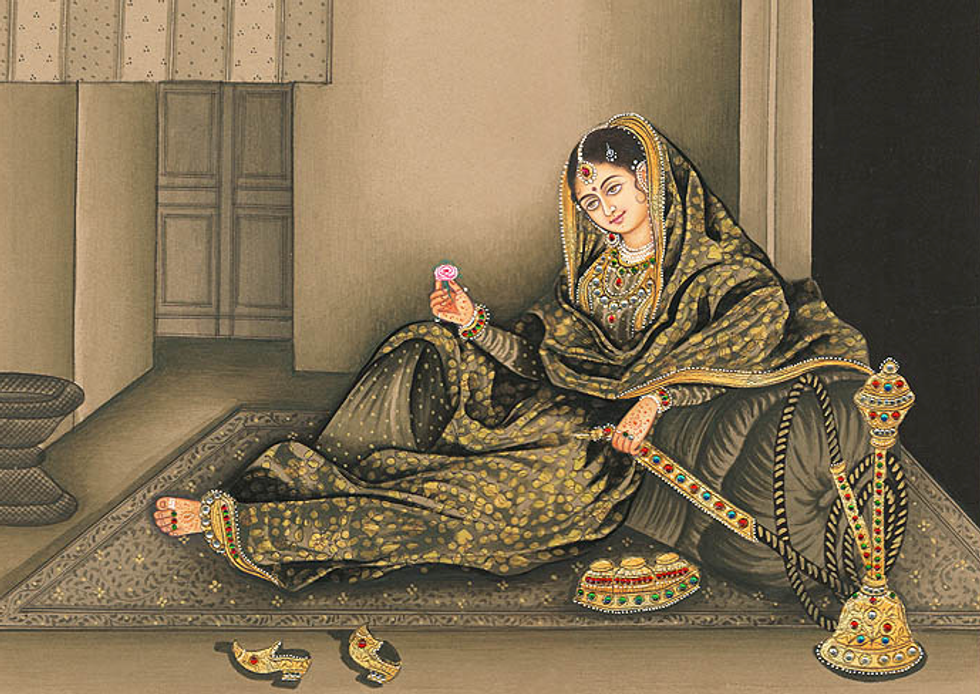
Umrao Jan deals with a lot of ideas such as the Lucknow courtesan culture, the societal position of a courtesan, also known as tawaif, and the loss of identity. However, the theme that struck me the most was the agency courtesans, and Umrao Jan in specific had. The element of agency in the life of a courtesan was shown through various means; her poetic knowledge, her public gatherings with other poets and Nawabs and the evolution of the definition of a tawaiif.
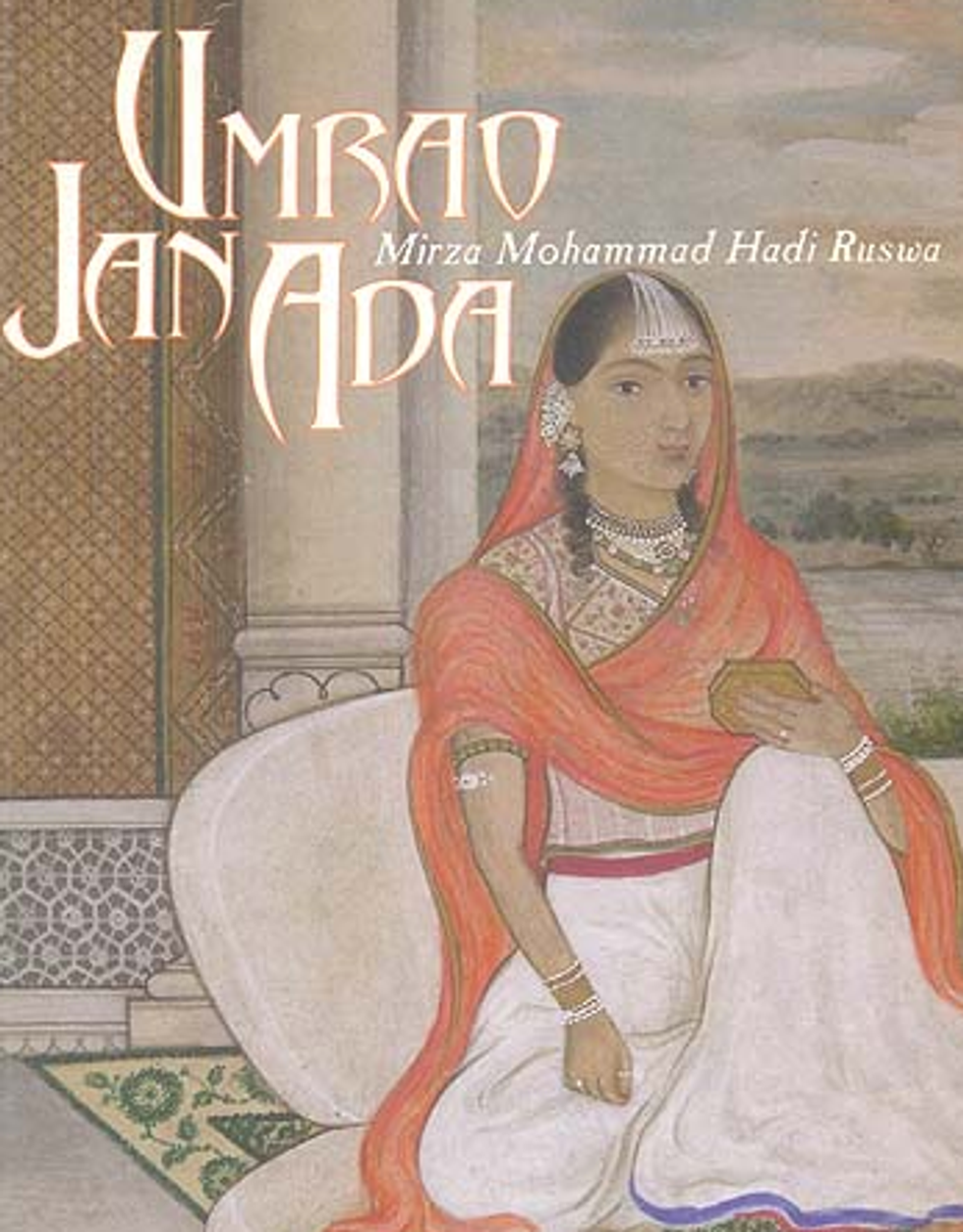
After reading Umrao Jan Ada by Mirza Muhammad Hadi Ruswa, I immediately understood how the average courtesan is connected to the Ghazal/Poem through the Lakhnavi courtesan culture. The culture establishes the fact that a courtesan must be skilled in poetry, language, religion/tradition and etiquette; it is because of these traits that the nobility of India and aristocratic society spent so much time with the courtesans. This marks the agency of these women, as it shows how they excel in knowledge and intellect; this is one thing that the “pure” wives and daughters of the aristocrats lacked.
The fact that a Nawab met with courtesans not only to be entertained and watch mujra (Urdu word for dance performance by courtesans), but to also converse through poetry and discuss greater and universal themes such as love and devotion, highlights the respect the tawaifs (Urdu term for courtesans) gained. It was the ghazals that created the connection between the Nobility and the courtesans, as they dealt with multiple ideas and various types of love. As Chishty-Muhajid explains in "The Dancing Beloved in South Asian Lyric Film", the types, “that of lover for beloved, that of courtesan for customer, or that of traveler for home,” further suggesting how such wide topics created more scope for discussions and gave the courtesans a platform of intellect in society. In my view, with the theme of “traveler for home,” I saw a direct connection with Umrao Jan’s life, as she is also a lost wanderer who deals with the issue of lost identity as she loses all her senses of belonging (after the raid in Lucknow, and after her brother disowns her).
tawaifs were still the impure ones, the ones who could not officially tie themselves with a family as it would have an extremely deep and negative impact on the family’s honor and pride. This marks how any sort of association with the courtesan, other than entertainment and mujra was considered unacceptable in society. Further suggesting how courtesans such as Umrao Jan lacked agency in the general and public spaces, as compared to their agency in the private spaces of the kotha (Urdu word for the courtesans' residence). However, even in the kotha, the courtesans are answerable to the head, who in Umrao Jan’s case was Khanum.