

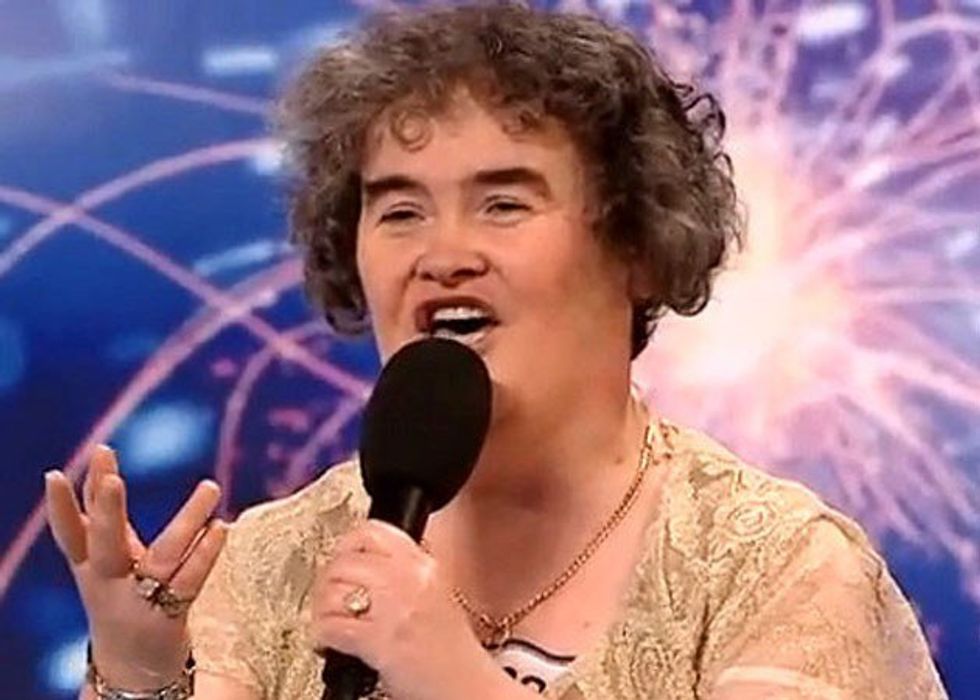
The year was 2009. Britain’s Got Talent was in the midst of searching for the next big “thing,” as hopefuls from all around the country performed their selected acts for judges Simon Cowell, Cheryl Cole, and Piers Morgan. One of these hopefuls was Susan Boyle from England. Her hairstyle, clothes, lack of makeup, posture, and age made her an underdog from the start. The judges, audience, and hosts clearly took her lack of conventional attraction as an indication of her talent. However, when she nailed a cover of I Dreamed a Dream from Les Miserables, everyone in the room suddenly changed their tune. The audience erupted in applause, shocked at the amazing performance someone like Boyle could give. It was one of the most insulting moments in television history.
If Susan Boyle had been conventionally attractive, her performance would have garnished the same reaction from the audience, I’m sure. I’ve seen enough episodes of reality competition shows to know that those people only react in the most extreme ways possible. However, there wouldn’t have been the “surprise” factor. The applause would have been for her talent and her performance, not because she was the underdog before she even opened her mouth. The audience—and the world—going crazy for Susan Boyle's performance was basically a way of saying, “We can’t believe someone like you would actually be good! Who knew?” It’s the biggest backhanded compliment I’ve ever heard in my life, and I call it the Susan Boyle Effect.
The Susan Boyle Effect is one that comes into play when an audience’s enthusiastic response to a performance is based on their surprise that an "undesirable" person could be talented, rather than on the talent itself. This is not to be confused with the Little Kid Effect in which the audience’s reaction is due to a 5-year-old’s ability to sing Schubert’s Ave Maria (well or not), or something similar.
I’ve seen the Susan Boyle Effect during many different occasions, but what’s even worse is when the Susan Boyle Effect is sprinkled with an extra dose of patronization. For example, I have attended performances in which an awkward kid comes on stage and gives an average performance to which the audience responds with an exaggerated reaction that does not at all match the performance given. I’m all for giving credit where credit it due, but leaping out of your seat and cheering because someone you thought would be terrible based on their appearance is actually somewhat talented? That’s harsh, man. Sit back down. The Susan Boyle Effect of the Susan Boyle audition was made clear in the judges' initial and post-performance commentary, not in the audience’s enthusiastic response to an amazing performance. When the act is on par with other performers' acts and the audience's reaction is exaggerated, though, that’s when the Susan Boyle Effect is clearest and most insulting.
There is no big lesson or relevant issue that moved me to write this article, but it’s been on my mind since 2009 and it’s about time I get it off my chest. As a performer, I don’t want people to cheer for me because I’m a "weirdo" who ends up having talent; I want the level of applause to match the level of my performance. I don’t need a pity clap, and if I do, I’d like to work on my skill until I don’t.
I know I’m a little late to the game on the topic of Susan Boyle, but the Susan Boyle Effect is still alive and well in television and real life performances alike.
I’m here to take it down, one Odyssey article at a time.