

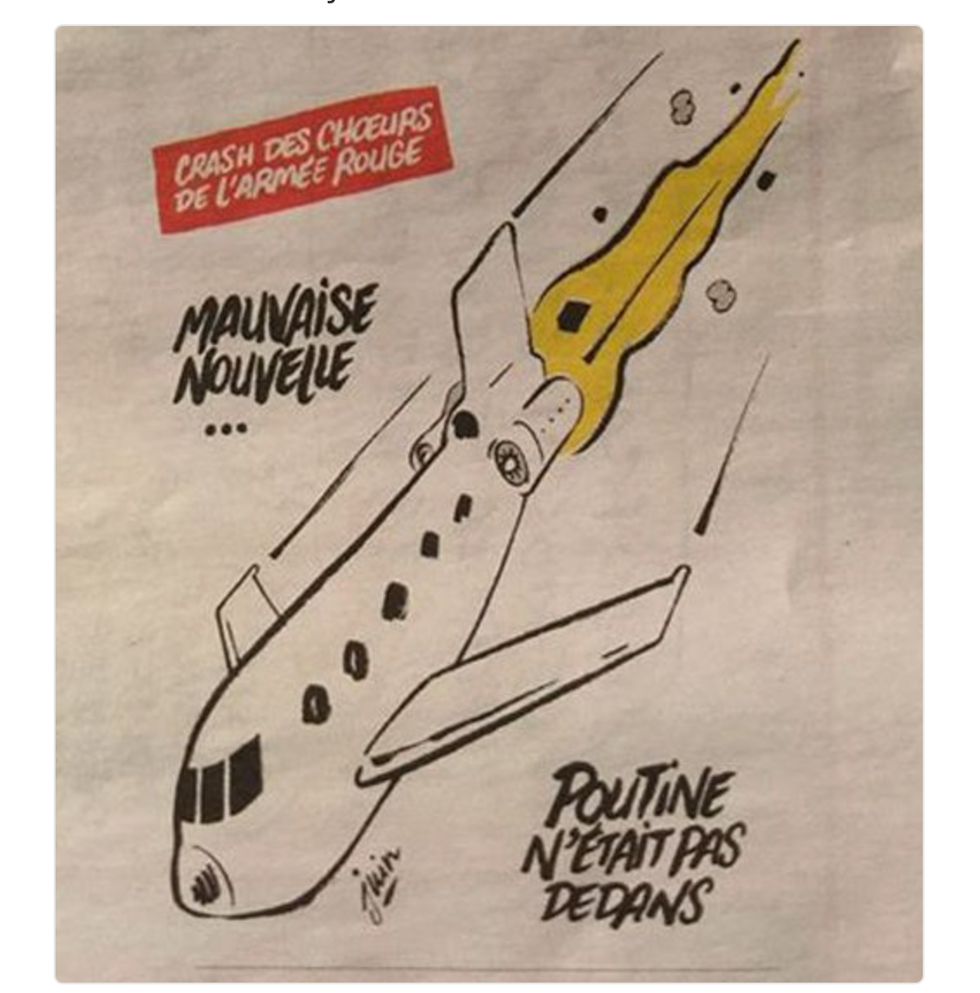
More inflammatory images from the French satirical magazine Charlie Hebdo saunter into international news headlines. These contestable cartoons address the Christmas crash of a Russian plane into the Black Sea. All were killed, including 64 members of the Russian "Red Army Choir."
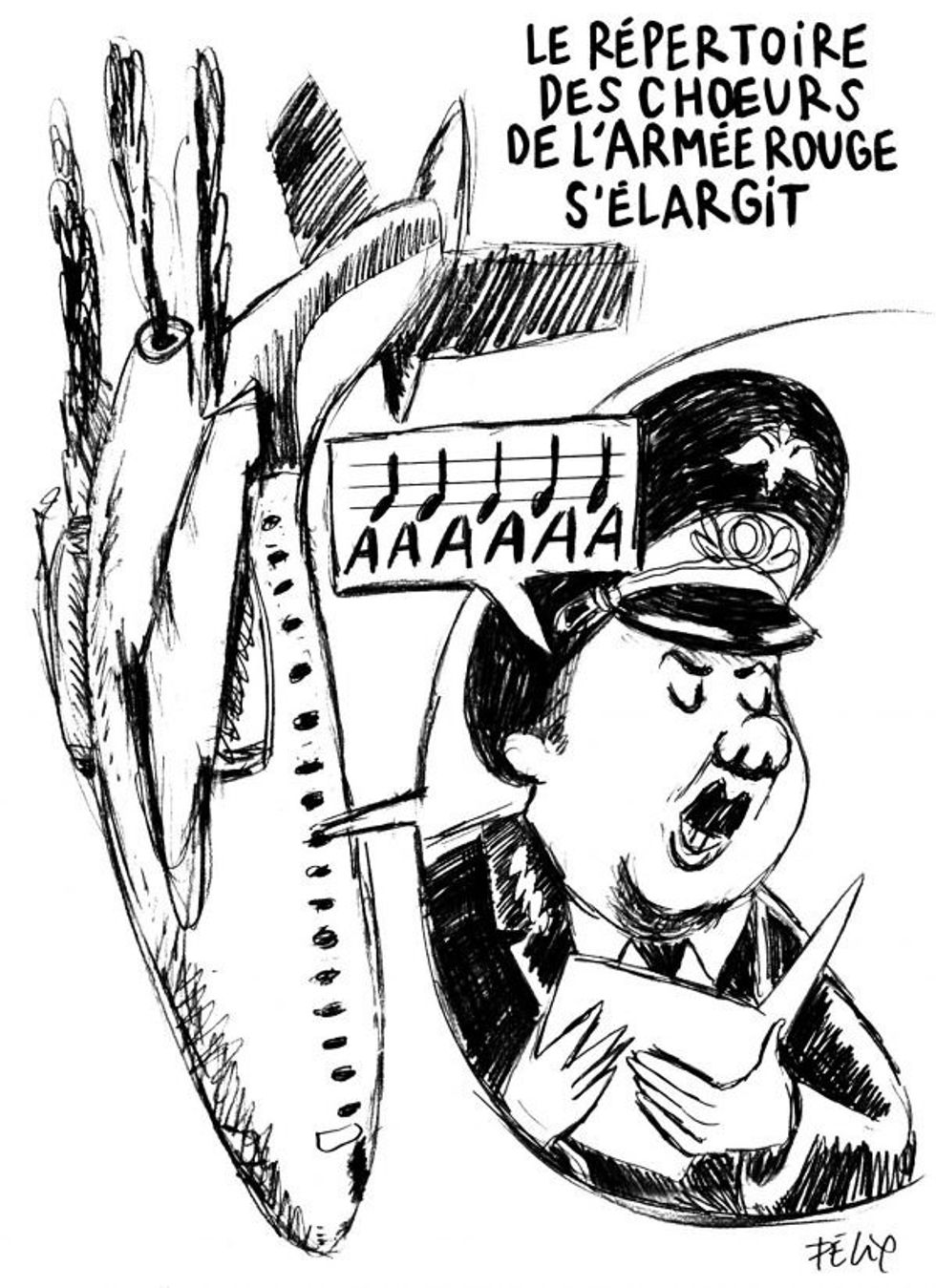
This image capitalizes on the Red Army Choir's presence. It reads "The repertoire of the choirs of the Red Army widens."
Charlie Hebdo is closely acquainted with negative press, and, for some, the outrage seems to invoke a strange sense of artistic fulfillment.
Francesco Mazza, an Italian script writer and director, recently wrote an article for Charlie Hebdo titled "La Caricature De Charlie Hebdo Expliquée À Ma Mère" (the Charlie Hebdo caricature explained to my mom). In the second paragraph, Mazza compares the work of Charlie Hebdo to the brilliant "satire" of Dante Alighieri. He argues that Dante's "Divine Comedy" isn't intended to be a peaceful read. It strategically poked at leading religious figures of the Middle Ages.
Mazza seeks to reassure his mother through comparison of Charlie Hebdo's depiction of the Islamic figure Muhammed to Dante's graphic memorial to the prophet. Relatively, Charlie Hebdo's graphic depiction seems tame, according to Mazza. Regardless, the author is confident that the intense responses to Charlie Hebdo's work means "il s'agit d'une vraie satire" (it is a real satire) and likens the French magazine to the ancient Greek renegade playwright, Aristophanes.
But is mass inflammation really something that merits pride?
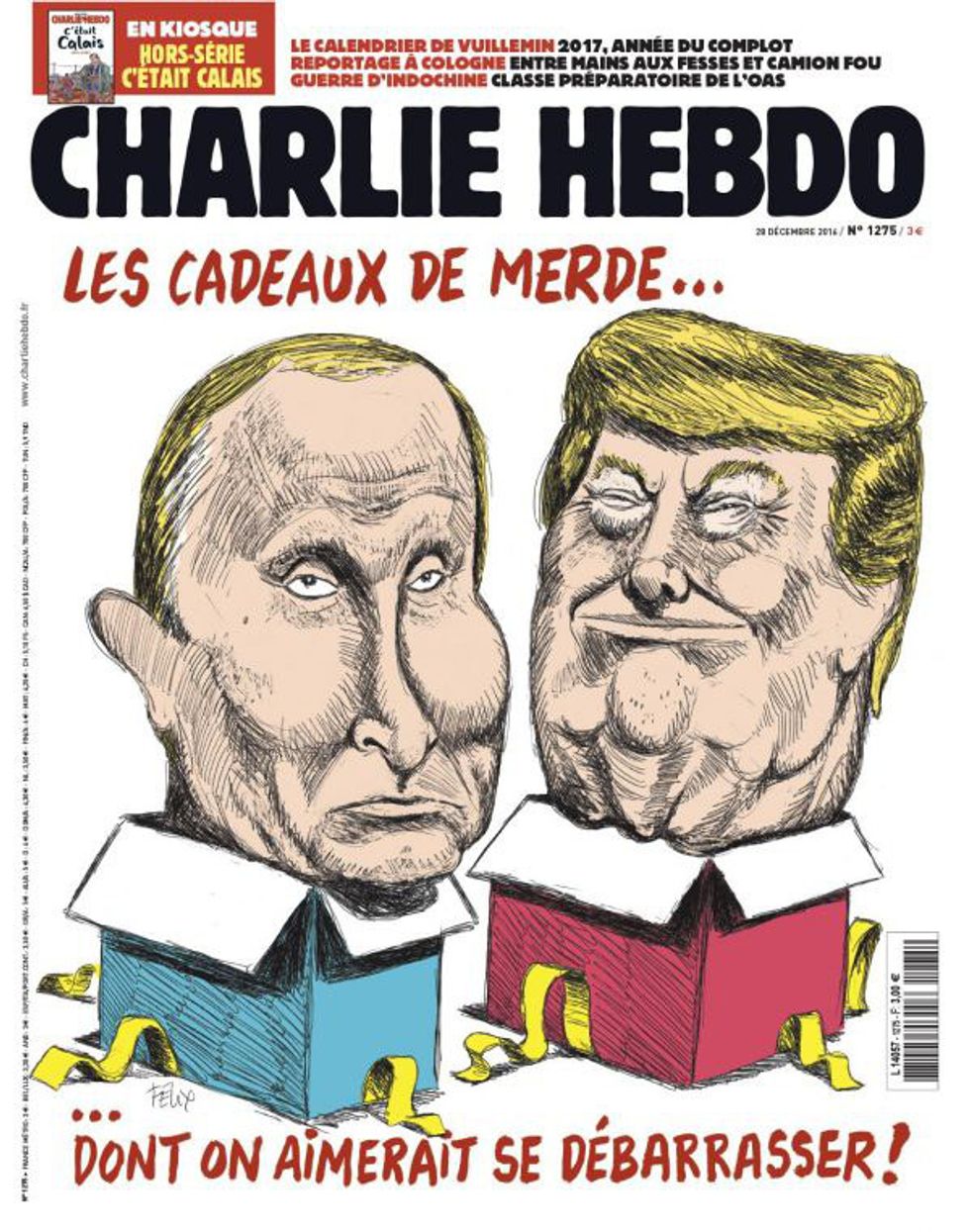
Charlie Hebdo regularly critiques world leaders such as Vladimir Putin and Donald Trump, which can be observed in their December issue.
This, if anything, is more acceptable in global culture since news agencies across the world regularly dissect and debate the character and actions of elected officials. Leaders subject themselves to scrutiny, especially since they are elected by the people.
Civilians, however, should not be fair game for mockery. Particularly, innocent civilians who needlessly died due to a mechanical failure. Association with the Russian government by citizenship or through employment does not incriminate the passengers and qualify them for ridicule, regardless of political rifts between Russia and France.
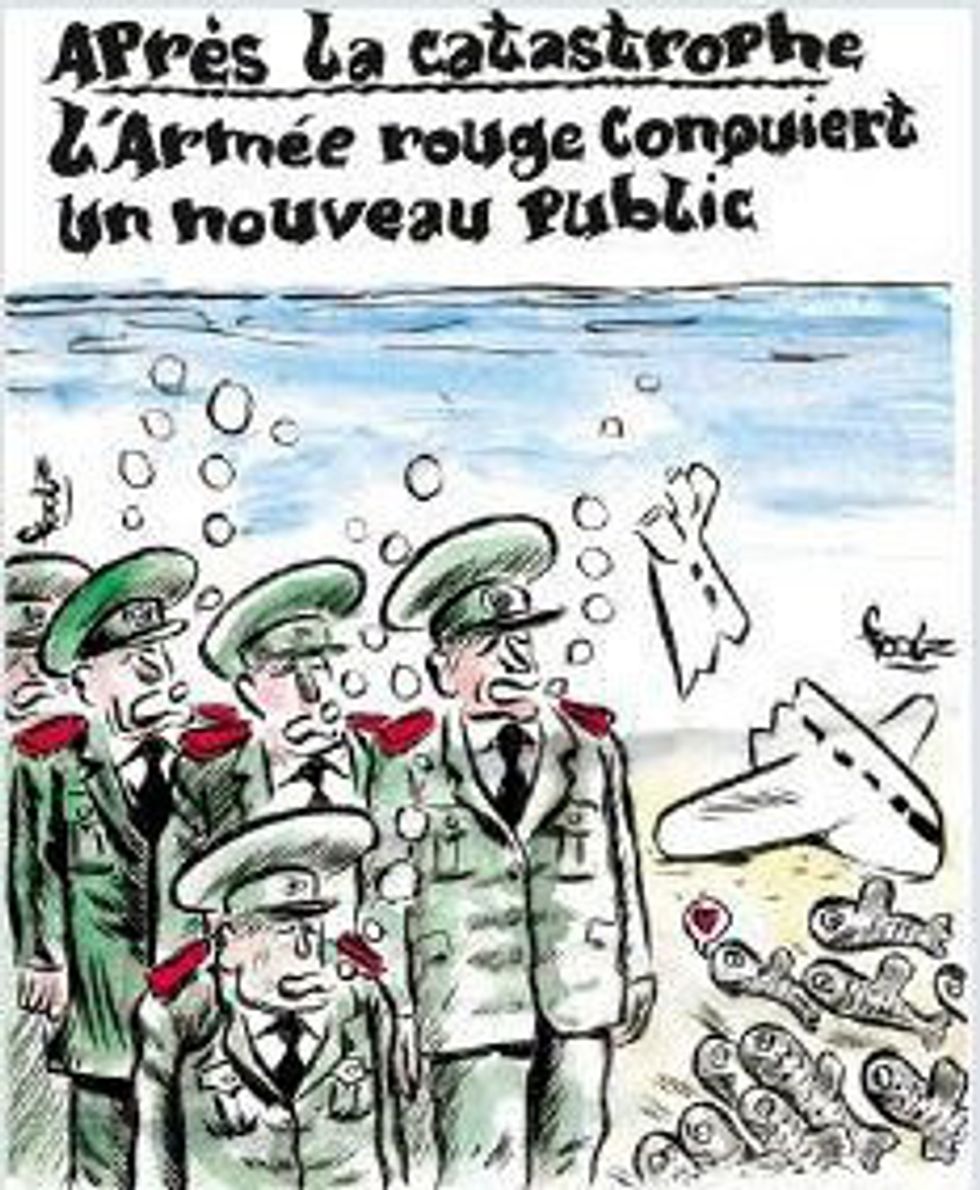
According to CNN, the choir was en route to sing and dance for soldiers on the battlefield in Syria. Regardless of who is fighting, war is brutal and soldiers are still men. CNN was reverent in noting the choir's patriotism. This picture reads "After the disaster, the red army conquers a new audience."
Russia spent the day after Christmas in a national state of mourning. Charlie Hebdo cartoonists snickered with their sketches. 3,500 rescue personnel searched for survivors and evidence to identify the cause of the crash. Charlie Hebdo mourned that Putin was not on board.
Free speech should be respected, and credit should be given to Charlie Hebdo for its challenge to the rise in European gravitation towards the socialization of political correctness.
However, the magazine is not obligated to cover every story. With the freedom to speak comes the freedom to pick their battles. Charlie Hebdo received opposition for similar images that followed the Russian plane crash in Egypt. These subject choices are unfortunate because they politicize and trivialize tragedies. The Kremin called the images "pure blasphemy," as reported by The Moscow Times.
Charlie Hebdo recently announced the expansion of its market with the arrival of its German edition of Charlie Hebdo, and with this expansion comes a greater sphere of influence and therefore greater responsibility to a larger audience.
In the Federalist Papers, James Madison argues that interest groups should be pitted against each other for accountability's sake. In a way, this seems like an effective system to promote media transparency. As of the afternoon of December 28th, the same day when The Moscow Times had covered the images, western media outlets have remained completely silent on the issue, while they have the capability to ignite discussions, issue critiques, etc.
The discussion should be expanded beyond Russian borders: were the subjects of Charlie Hebdo's cartoons and the timing of the cartoons' release appropriate, while fairly considering the style of the magazine?
















