

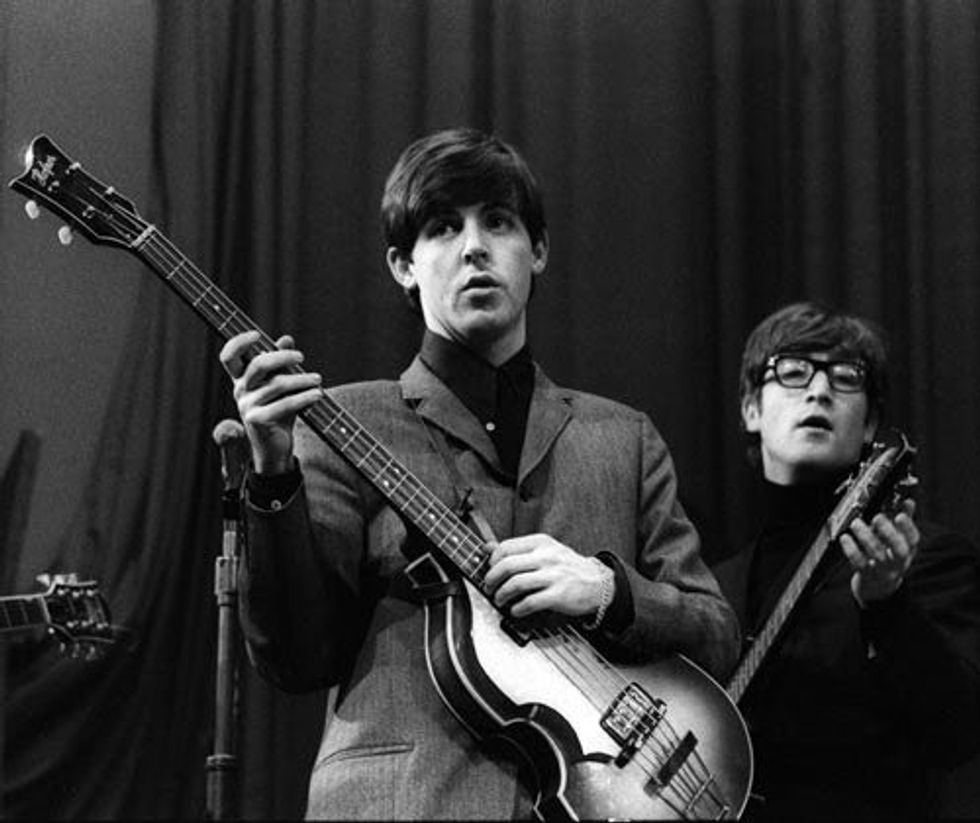
The Höfner 500 series bass was a cheaper, more accessible option for musicians during the 1950’s and 60’s. Compared to its American counterparts, the Höfner violin basses were far less known. Its design resembled a hollow-bodied violin and it was a small, odd instrument compared to its other bass competitors. However, as musicians such as Paul McCartney started using them, it was secured a small niche in rock and roll lore that would grow as other musicians found solace in its quirks. I want to celebrate the small surprises found in this little bass by listing some famous musicians who have played it, and who each were able to find a unique use for their music.
1. Paul McCartney of the Beatles
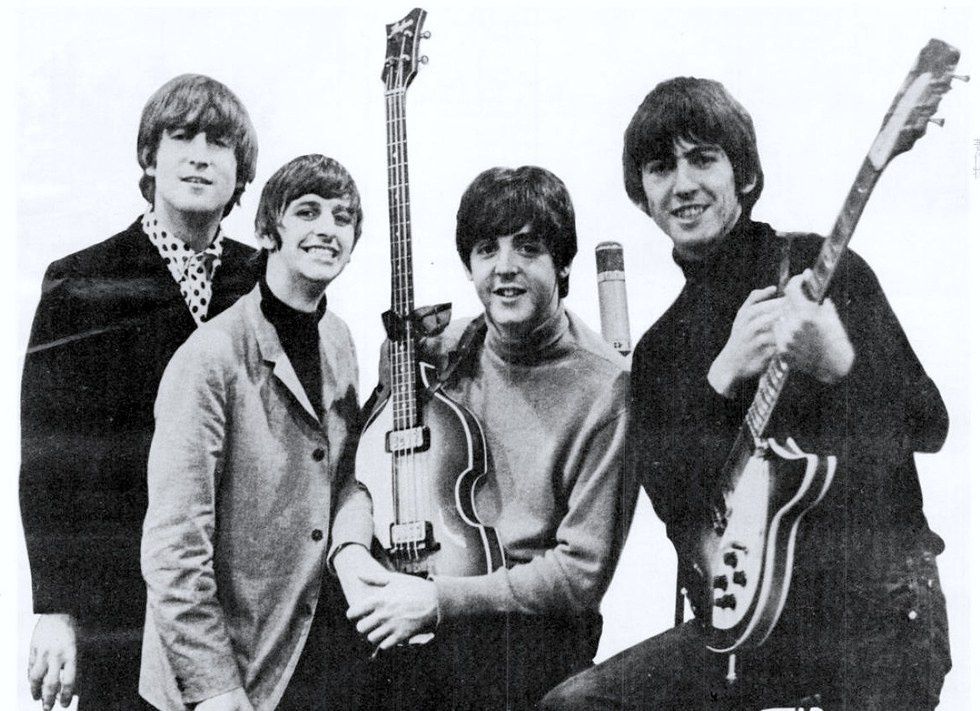
Perhaps the most famous musician to ever rock a Höfner, Paul McCartney primarily played the 500/1 model throughout most of the Beatles’ touring and recording career. Originally the group’s guitarist, Paul reluctantly switched to bass due to lineup changes. He encountered the violin bass by accident and found it immediately suitable for his smaller hands and lefty playing style. McCartney developed a very melodic style to playing the bass, thanks in part to the clear high tones and accessible fingerboard. As the Beatles forayed into psychedelic rock, funk, and whatever other genre they touched, it was clear that the violin bass could hold its own throughout it all. John Lennon and George Harrison played Höfner guitars, but the original bass used by Paul McCartney has become a signature model. It’s reputation among bassists and non-bassists has remained positive and its design has not changed much even today.
2. Nick Allbrook and Kevin Parker of Tame Impala
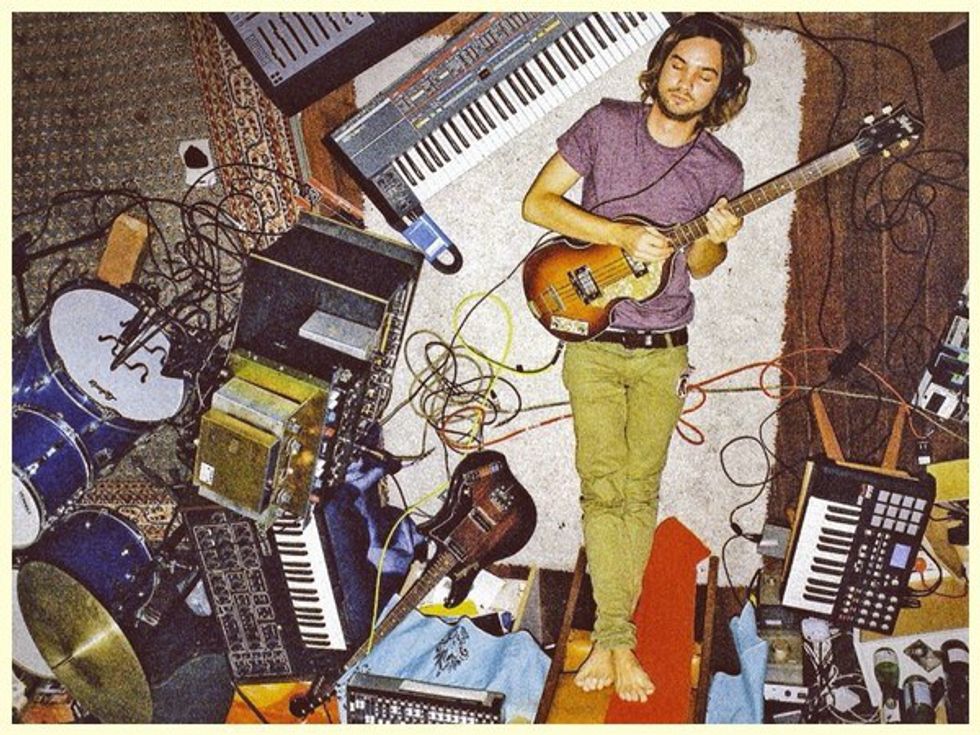
Tame Impala takes cues from psychedelic acts of the 1960’s and 70’s, so it is no surprise that Nick Allbrook would sport gear from that period of music. Tame Impala has a very specific palette for tone, often using weird pedal setups to get strange sounds out of their instruments. Like The Beatles, Nick plays very melodic, groovy basslines, but the full sound of the bass is amplified by a warbled wall of sound that keeps the songs cohesive. Parker has stated that while his songwriting is influenced by older rock, he doesn’t always invite the comparison. And while Nick Allbrook sporting the “Beatle” bass might say otherwise, he proves that the violin bass is as relevant to modern music as the electronics that put listeners in an endless trip.
3. Tina Weymouth of The Talking Heads
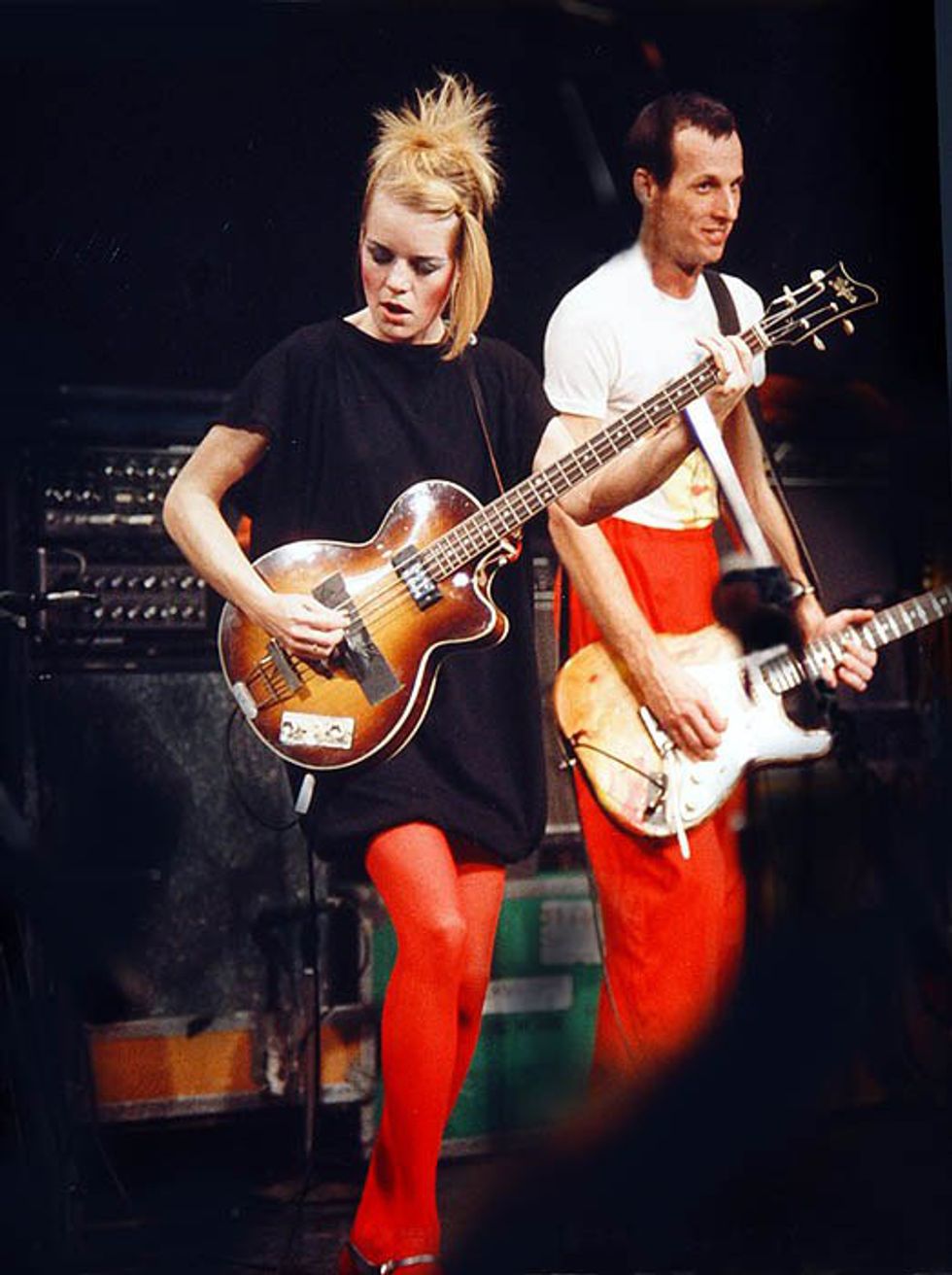
To be fair, Tina Weymouth played the 500/2 model of the Höfner bass, which has a more classic body shape. But her playing style was crucial in keeping David Byrne’s paranoid funk grounded. Weymouth was influenced by post-punk, sure, but she used those techniques to play funky semi-chromatic bass lines that got stuck in your head on repeat. While the bass had a very nice, rounded tone, its small fingerboard and default flat-wound strings made it hard to “slap” the bass. In turn, the inability to outright carbon copy old funk bands led the Talking Heads to develop a new, minimalistic funk. A funk that eventually evolved into a computerized, spinning celebration of new wave dance music.
4. Robbie Shakespeare of Sly and Robbie
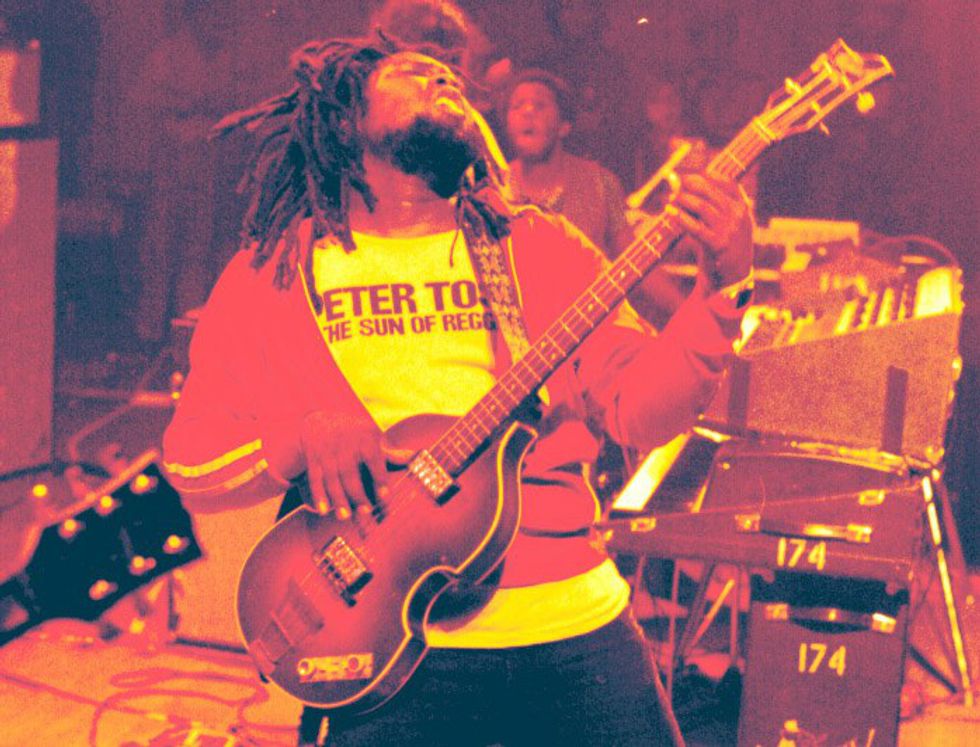
Also known as one of the original bassists for Peter Tosh, Robbie Shakespeare is no amateur to all things reggae. As the case with most versatile bassists, Robbie owns and uses a ton of instruments. But his preference for the Höfner over the big-boy reggae basses during his Tosh days is a testament to how capable it can be. Like the other musicians on this list, Robbie found the melodic crispness of the bass to be a strength. Though he rocks a Fender Jazz Bass today, he made that violin bass pop like a modern five-string.
5. Satomi Matsuzaki of Deerhoof

Deerhoof is the type of band to take whatever rock conventions are present at the time and actively ignore them. Does it make sense to play a vintage, light violin bass in an abrasive noise pop band? “Who cares?” says Satomi Matsuzaki of Deerhoof. Take that dinky bass and put some fuzz behind it, she would say. The result is a whole ‘nother monster, a bass that was given the bad girl treatment and is never going back. And for a band known for their energetic live shows and stage breakdowns, the lightweight Höfner is the perfect instrument to jump around with and smash. Who ever thought it could be so punk?
6. Christian Wargo of Fleet Foxes
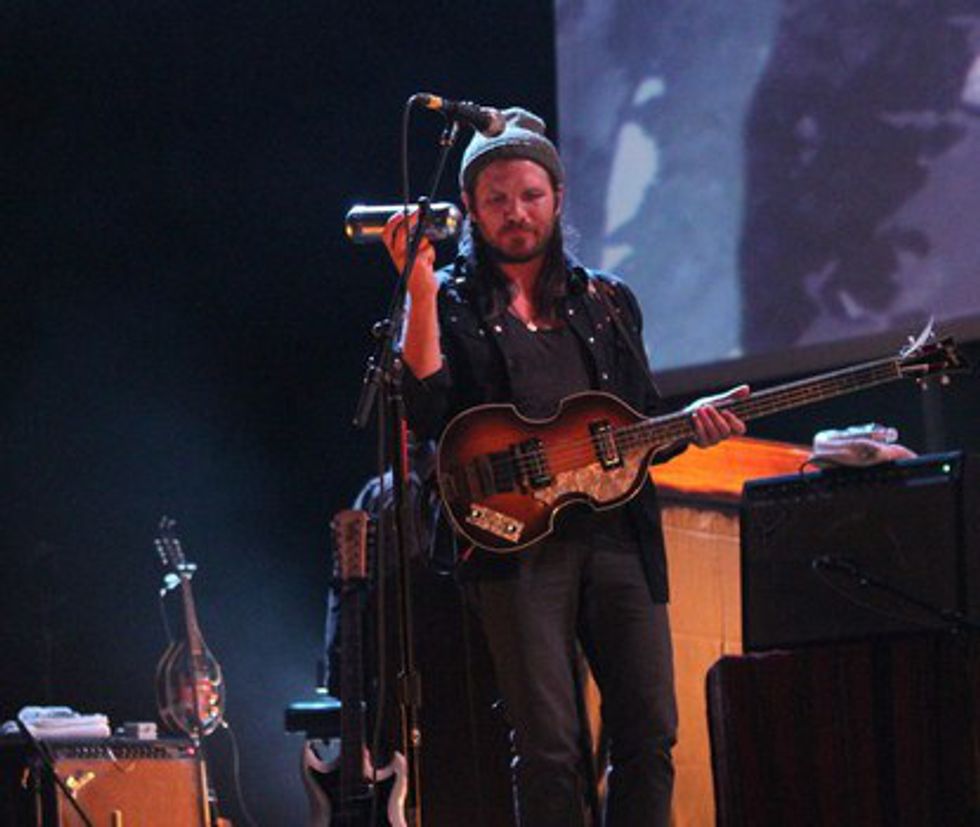
The Hofner 500/1 model was originally designed to appeal to upright bassists who wanted a lighter, electrified alternative to play in jazz music. No amount of foresight could have seen the advent of rock and roll, and along with all its derivatives, folk rock. Fleet Foxes being the nth incarnation of bearded folk wizards, they take cues from the past while polishing their music to resonate with today's standards. The band uses a variety of stringed instruments, like the mandolin, and the violin bass seems to fit right in for Christian Wargo. The hollow body along with modern echo effects allow Wargo to give the bass a wonderful sustain, and the result is an echoey folk meditation that sounds like a dream. Maybe in this case the use of a violin bass is not as serendipitous, but it’s come so far that it’s hard to be surprised at its versatility anymore.

















