

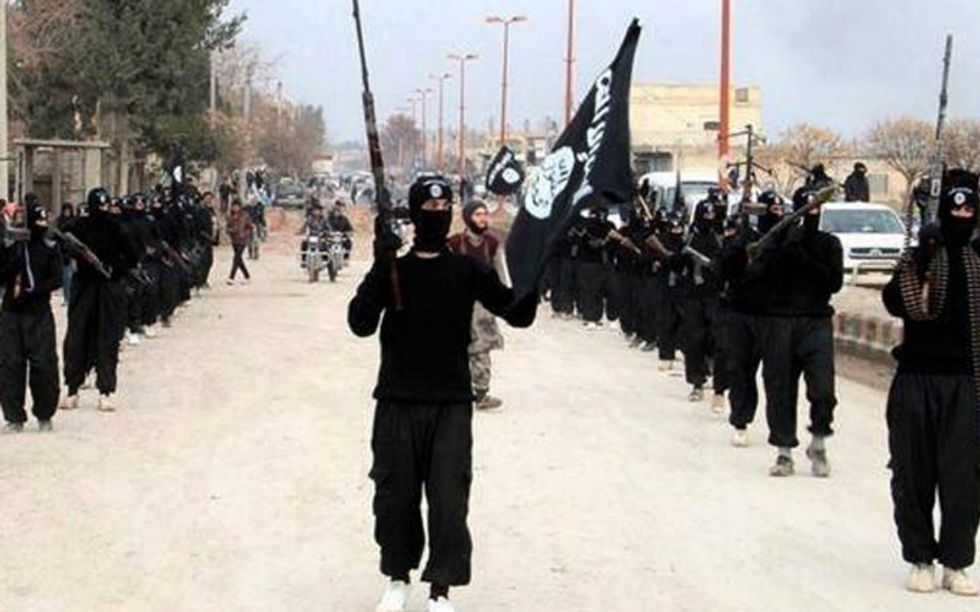
The rise of Middle Eastern terrorism in the 1990s terrified many westerners as it propelled an enemy to the stage with no fear of death and a desire to vanquish all life which did not bow to its doctrines. Despite the fear that this visage brought to some, it was moderated by the inefficiency and small scale of the early Al-Qaeda operations. Even after 9/11, Americans looked to Islamic extremism as a possible threat to their way of life and personal lives, but, as in the words of President George W. Bush following the 9/11 attacks, "they cannot touch the foundation of America. These acts shatter steel, but they cannot dent the steel of American resolve." We were wrong.
It can be tempting to relate ISIS to the state-sponsored Taliban in Afghanistan in capabilities and legitimacy, but there are qualitative factors which differentiate them. The Afghan government has always been focused on self-preservation above anything - that was why they originally backed the Taliban. Using Islam only as a organizing and legitimizing principle, it collapsed swiftly upon American intervention.
Additionally, Al-Qaeda's vast operative network is a threat in an entirely different vein from the ISIS movement. Undercover and sprawled across the Islamic world, Al-Qaeda has been largely regional since the death of Osama Bin Laden and carefully plans its attacks to never reveal too much of its infrastructure.
The first two initials in "ISIS" are what differentiate the group from these past terror cells. Extremist in their religious views, ISIS soldiers care little for self-preservation, as shown by the traditional battle-field tactics taken by their invasion forces in the light of insurmountable odds and their increasing rate of terror attacks as they continue to lose the ground war. Additionally, as much as American politicians hate to admit it, ISIS has become a de facto state. The territory they hold gives them the power to organize attacks with little risk of detection, and their numbers allow them to plan numerous attacks at the same time across the world.
The conjunction of a lack of care for their own lives and the acquisition of substantial home territory is particularly dangerous for the world. They cannot be sanctioned, droned to death, or deposed because they will just use these offenses as fuel to their ideological fire, and their continued existence guarantees more and more deadly attacks as their territorial integrity increases. They may even acquire a nuclear capacity if they gain the strike power to infiltrate Pakistani nuclear sites, which are ill equipped to defend against an armed assault.
Tired of war and conflict for decades, the American resolve has been dented by the rise of ISIS. Progressives and libertarians see the end of foreign involvement as the starting point to restoring America's role as a fair leader in the world, and the national feeling is supportive of their beliefs. It simply is not persuasive to the average American to hear that the U.S. Military needs to continue to occupy foreign nations in the Middle East and wage wars in places and against people they have never heard of. History has played us a bad deck this time around, because the window of time to exit the war against terrorism has closed. As a progressive, I take a predisposition against war whenever possible, but the situation necessitates some type of coordinated, overwhelming response to ISIS, whether it be through an American led NATO coalition or a band of moderate Middle Eastern allies.