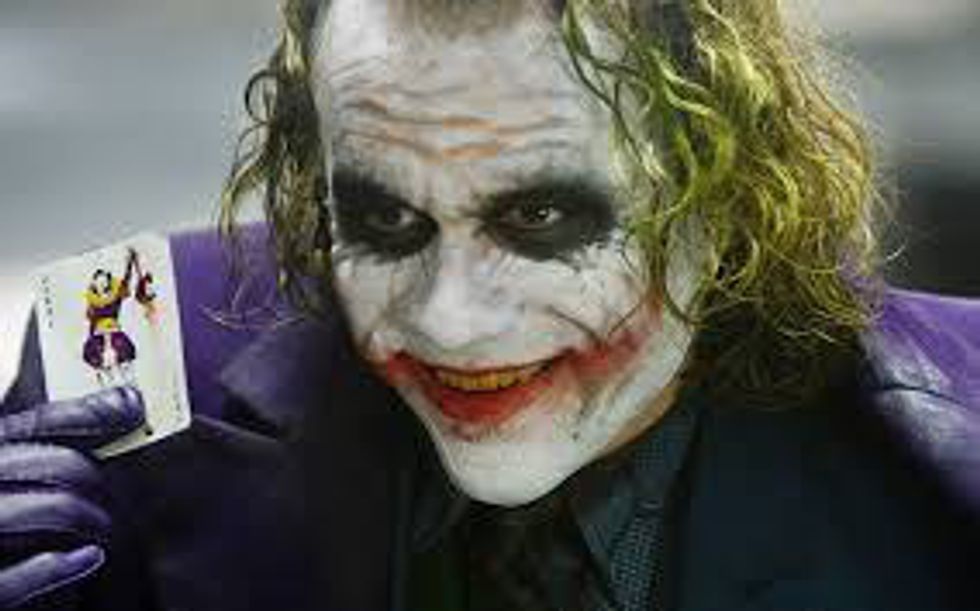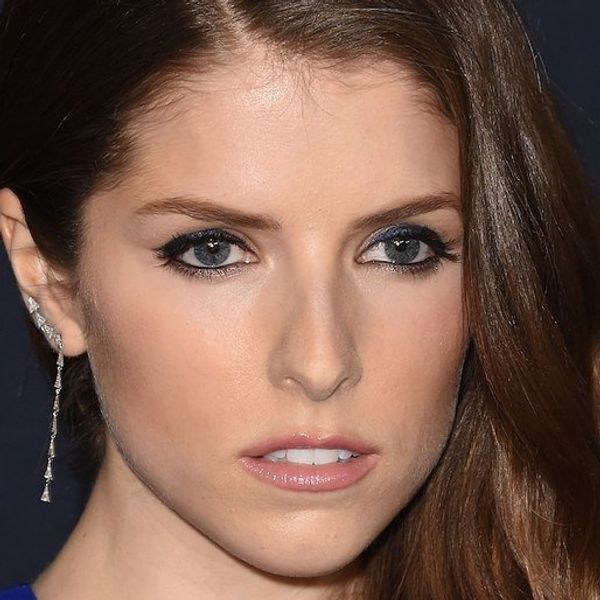

Many of us, for the most part, would like to believe that we are decently happy people. We have good friends, go to a good school, get good grades. We feel happy, especially on those days when the dining hall food didn’t completely reek, and that chemistry test we thought we failed, no worries, it got curved. Most of us seem to register a content nature, and yet for a small number of us, this happiness is only short-lived. Because some way or another, there always seems to that one person who comes up to us and asks, “Are you okay?” “Who died?” or the worst— “Are you sick?”
And almost every time, our response is always: “I’m fine. It’s just my face.”
Resting bitch face, or abbreviated RBF, is a phenomenon in which a person’s relaxed, or dazed expression often resembles one of anger or vexation. The term first surfaced in 2013, and the look became a signature outfit for celebrities like Anna Kendrick and Kristen Stewart, Kanye West. "RBF" circulated social media as a joke to describe those whose “thinking” expression resembles some else's “hand me the gun” expression.
But now, according to CNN, scientists have proven that resting bitch face is real.
Noldus Information Technology, a company that invents software to analyze observational and behavioral research, scrutinized the legitimacy of RBFs. Scientists Abbe Macbeth and Jason Rodgers analyzed the faces of RBF celebrities with the company’s Face-Reader software.
The software works by scientist first running a person’s picture, one in which they aren’t smiling, through the software. The program then reports what emotions seem to be underlying, that is, those traces of feeling that are caught up in the neutral expression.
“Typically, on an average reading, the software will register a face at 97 percent neutral,” Macbeth clarified, “But there's about 3 percent of an underlying expression. That 3 percent is made of emotions that show traces of sadness, happiness or anger, for example.
For those that exhibited RBF, that 3 percent jumped to 6percent, with underlying emotions that were labeled as contempt or scorn. Macbeth says there’s not an answer to whether these emotions are just facial structure, or actually reflect a person’s inner emotions. Both Scientists are currently trying to uncap the psychology of RBF: both behind those who have the “condition,” and those who criticize it.
"We've all heard the anecdotal evidence of people being told to smile more ... there's something that is unconsciously showing up on people's faces when people think they are just being neutral," Macbeth said.
Anthony S. Youn, a board certified plastic surgeon in Detroit, as well as a victim of RBF, and remarked that he doubts that the software is really witnessing true emotions. Instead, Youn argued, RBF is a combination of multiple forces, such as gravity and age. Youn also noted that the main way people can know if they have RBF is by looking at their relatives.
"The biggest predictor of those who have RBF is if your parents have it." he said.
Look at that—RBFs are just another way our parents can make us fume.
On top of genetics, Macbeth noted that there is more to the RBF then the person wearing it. In fact, the antagonism of the face may actually be determined by the witness rather than the wearer. That is, RBFs are more of a societal issue than a physical one.
“Cultural differences and gender bias may play a role in people's perception of RBF. "Eastern European people are seen as very stoic and not showing a lot of emotion and... a lot of the people touted as having RBF are women," Macbeth commented.
So, perhaps, the RBF label may not be as harmless as it appears. In fact, the face may be a social opprobrium: one in which women who do not smile equate to intimidating, less friendly, less beautiful, less "feminine" women. After all, it is called resting "bitch" face.
“That’s something that’s expected from women far more than it’s expected from men, and there’s a lot of anecdotal articles and scientific literature on that,” s ays Macbeth, according to the Washington Post. “So RBF isn’t necessarily something that occurs more in women, but we’re more attuned to notice it in women because women have more pressure on them to be happy and smiley and to get along with others.”
Artist Tatyana Fazlalizadah even addressed the criticism in a street art campaign she created in Spring of 2014, titled, “Stop Telling Women to Smile.” The campaign targeted harassment towards women, and criticized the typical “cat-calls” and “criticisms” women hear while walking down the street. You can read more about Fazlalizadah’s here.
The mounting criticism towards women with RBFs stands in stark contrast to dearth of criticism towards men with the same condition. (Except for Kanye West, who's RBF, in my personal opinion and in reference to his twitter, seems to be the closest thing to legitimate.)
In fact, there actually seems to be a praise for men with the stoic, harsh expression. Eminem, Batman, and virtually every historical leader in their portraits each wear the RBF as a mask of gallant courage, strength, and perceived masculinity.
(George Washington, below, with the same squinty eyes and tight lips that characterize RBF)
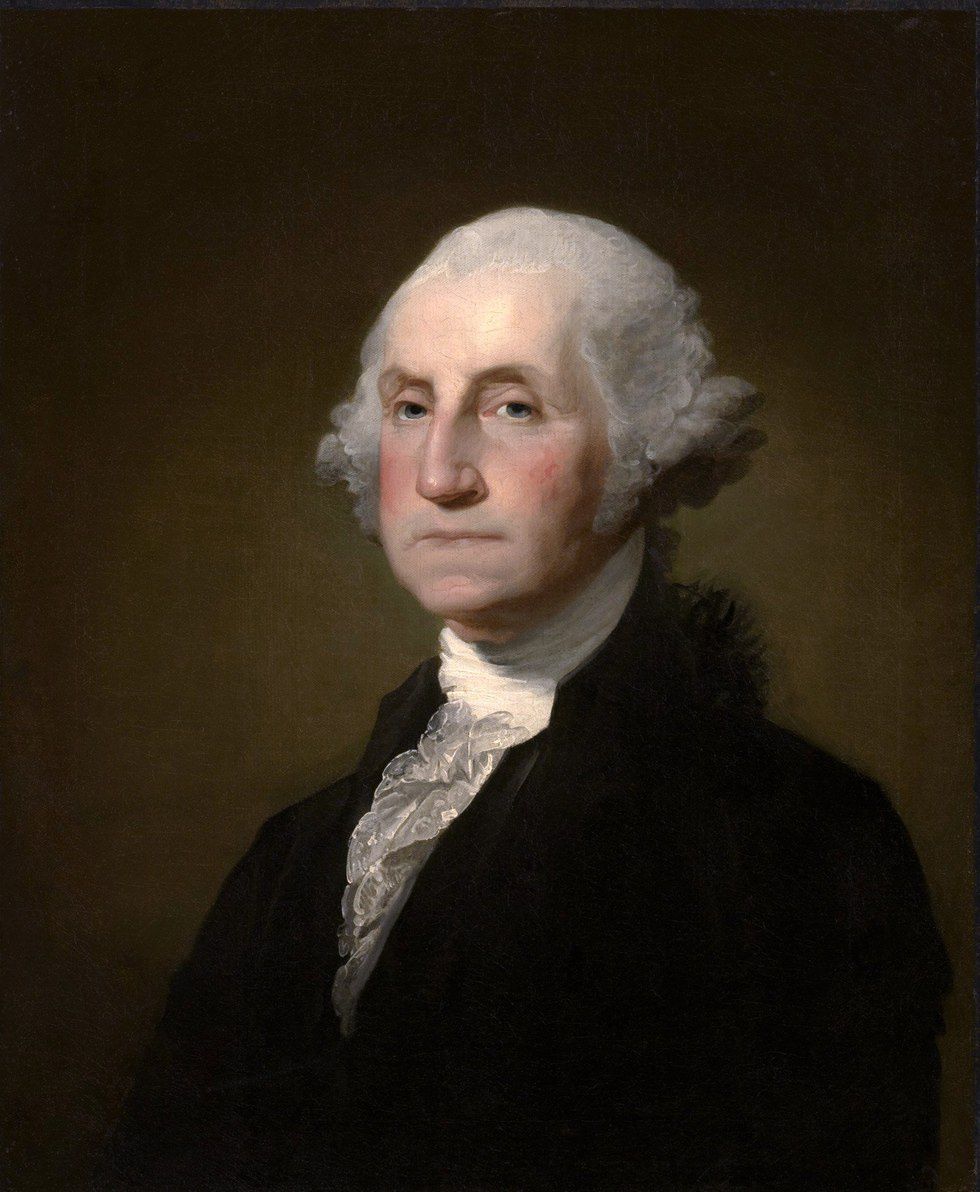
The male portion of RBFs appear to associated with power. Batman has a mask that practically draws a RBF on his face. And yet, I don't seem to recall a single person during that movie ask Batman if he was "okay," or "sick." Not once did Batman have to put a palm up and say, "Chill. It's just my face."
RBF is yet another "joke" that began as a harmless celebrity criticism, and has spiraled into yet another disparagement of women. And what has spiraled into another disparagement of women, has resonated itself into our social media posts, our classrooms, our criticisms, the way we see each other. We fail to realize that these little labels, these micro-comments that we find completely innocuous, sometimes stem from much larger issues. And what's worse: when we feed into them, we grow them all the more.
So should we accept RBFs? Treat that pissed-off expression with the same enthusiasm as we do a friendly smile?
It's up to our own judgment. Only we can decide. But from my perspective, I'd trust a RBF over an illegitimate smile any day.
After all, the one "smiling" in the Batman movies wasn't the hero.