

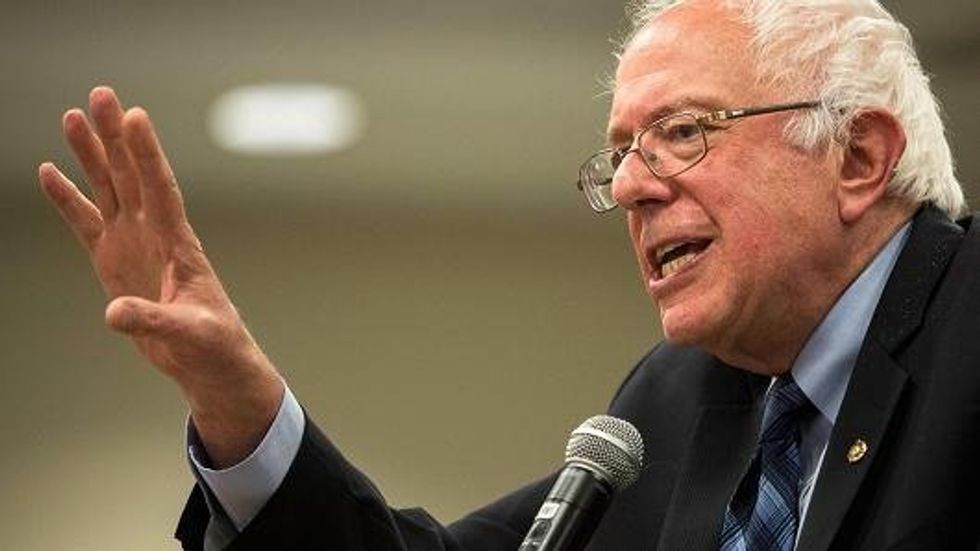
In the wake of Bernie Sanders' recent victory over Hillary Clinton in the New Hampshire democratic primary, many are shocked at how someone seen as an outsider, and widely unknown before the recent months, could beat the Secretary of State, former First Lady, and Democratic party veteran that many saw as a sure-fire win. We saw his coin-flip loss to Clinton, but just how does a self-proclaimed democratic socialist beat this powerhouse? The answer may not be too crazy, actually.
Bernie Sanders, long time senator of Vermont, has a populist and anti-establishment streak that resonates with Americans across the nation, especially young voters. Where some candidates look to dabbing on television to seem in touch, Sanders' candor in his frustration with the current political machine give him an air of frankness with which people identify. He says, "I've been doing something extremely radical, We're telling the American people the truth."
The truth that he speaks of, and has been speaking of for decades, is a rigged economic system that sends wealth in massive amounts to the already-richest Americans, a system of campaign finance by Wall Street executives, and deeply rooted racial, gender, and sexual injustices across the nation.
While both he and Hillary agree on many fundamental issues, lots of voters are slow to trust Hillary, viewing her as being too cozy with business interests. This isn't hard to believe, as corporations have put millions into the Clinton campaign, including $675,000 from Goldman-Sachs alone.
Consistency is another issue on which voters view Clinton with scrutiny. "[Sanders] hasn't flipped on any issues, but she flips on issues all the time, like saying she's a moderate, then turning around and saying she's a progressive," says 19-year-old AmeriCorps volunteer Peter Stockfin. That change in self-labelling Clinton underwent, from saying she's guilty of being moderate and center last year, to calling herself a progressive in recent days, has made many Democrats uneasy about where Clinton's loyalties actually lie. On the other hand, Sanders' consistent stances on issues, such as racial equality, have remained steadfast since the 1960s, when he was arrested while demonstrating in Chicago against the city's segregated school.
His track record with the LGBTQA community encourages others, like Jamie Tremblay, a Massachusetts pre-school teacher. Tremblay says, "Bernie's very supportive of the gay community. Hillary changed a lot of her beliefs over the last few years. She's acting like a whole new person." Often, that change of stance is embodied for people by her vote in favor of the 1996 Defense of Marriage Act, which federally defined marriage as between one man and one woman, and subsequently allowed states to refuse to recognize same-sex marriages under laws of other states.
In the end, votes and voter turnout will decide who becomes the Democratic party's nominee for the presidential race. If we can see anything from Sanders' win in New Hampshire, a state that has long been good to Clinton, it's that his consistency and frank, simple message free of corporate donations is likely to carry him far in the race for the next 48 states.