College is supposed to be a place of diverse opinions. It's supposed to be an environment where people of different cultures, ethnicities, and backgrounds come together to learn, learn not only those things to which they are inclined but also to hear those ideas that differ from their own. Ironically, on college campuses all across the United States, many students are adamantly opposed to hearing anything that they don't agree with.
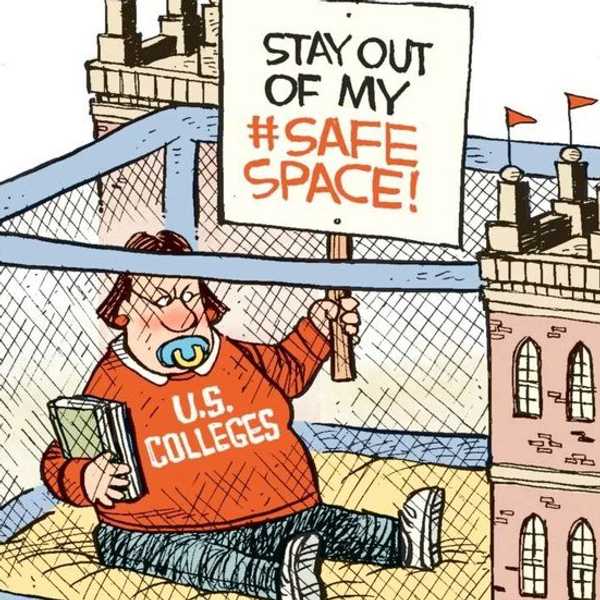
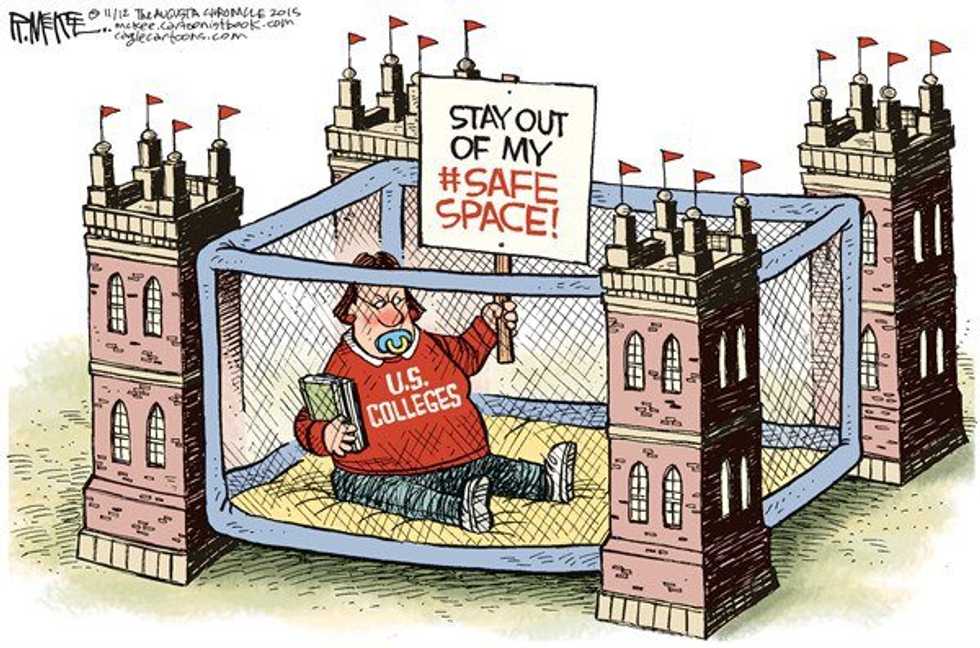
More and more college students are of the disposition that they do not want to learn, but simply be placated, assured of their beliefs that they hold with such high esteem. When did the youth of this great nation become this way? From where did they gain such a sense of entitlement that they will not look at both sides of the coin? This trend is dangerous, and it impedes the process of critical thought. Moreover, with the advent of the 'Safe Space,' the youth of today are learning that their opinions are always correct, and anybody who contends with it is acting inappropriately.
In the past, the 'Safe Space' has been used to protect those that have been discriminated against. Now it is used to protect from any dissenting opinion. Are students who utilize the Safe Space in this way really learning? Or are they simply being dumbed down, too afraid to raise the veil from which they hide, too headstrong and assured of their own opinions? There's no doubt about it: the Safe Space is harmful to modern academia.
One definition of a Safe Space is "an area or forum where either a marginalized group are not supposed to face standard mainstream stereotypes and marginalization, or in which a shared political or social viewpoint is required to participate in the space." It is the latter part of that definition that is so disturbing when put into the context of a university. The Safe Space in modern academia coincided with the advent of modern feminism in the 60's and 70's.
Women were the identified group that felt they were being marginalized in regards to a patriarchal groupthink. The first safe space emphasized an actual location, a physical place one could go to be with like-minded people, and perhaps more important, away from people who think differently. From there, the concept of the Safe Space escalated dramatically, as did the amount of people and groups who felt marginalized.
Of course, we should protect those that are being discriminated against, but it seems that our conception of discrimination in the modern age has become much more nebulous than it has been in the past. Historically, in the United States, discrimination has been more explicit. The Civil Rights era is a good example of this kind of stark discrimination; there were clear and distinct prejudices, and people were actually having their civil and human rights taken away. Now what we see is something entirely different.
The concept of discrimination is changing and it is rooted in something less sinister, becoming more malleable to the will of anybody who feels offended by the opinions of others. As far as modern academia goes, we have to ask, is this kind of ideology really conducive to a learning environment? Should we really placate those who are unwilling or unable to handle an alternate viewpoint? No, we should not, and the Safe Space fosters this disruptive and idealistic notion that the world conforms to your opinion, and that you will be treated as an equal. It is an unreality, and it would be much more valuable for institutions to admonish the Safe Space than to cave to the will of an oftentimes presumptuous and usually entitled group of people.
References: Theweek.com