
A couple of years ago, I ran into an old literature teacher of mine who had initially inspired me to become a writer. As we caught up on the latest lit news, he relayed to me a rather startling event that had happened within the past year about one of the college-level courses he taught at the local high school. Upon his teaching of the late Gabriel Garcia Marquez's masterpiece “A Hundred Years of Solitude," a parent of one of his students formally complained about the contents of the novel. According to the mother, the novel was too sexually explicit for her son to read. Not only did this parent complain to the teacher (who even half a year later seemed at a loss with the situation) but decided to go directly to the principal and the board of education on the matter. My teacher was thus faced with two options: be suspended from his job, or teach an alternative book in its place. After that instance, every novel in his curriculum was backed by a second "non-threatening" work that could be chosen at a student’s discretion.
Without me delving too much into the merits and absolute importance of the novel at hand in this recount, the bigger picture here is that not only were a novel's contributions overlooked because of a smaller element in the book, but the piece was also removed from everyone’s required reading, thus censoring the book for those who might have gained from it -- all because a mother did not want her 19-year-old son subjected to sexually energized material (Godspeed on that one).
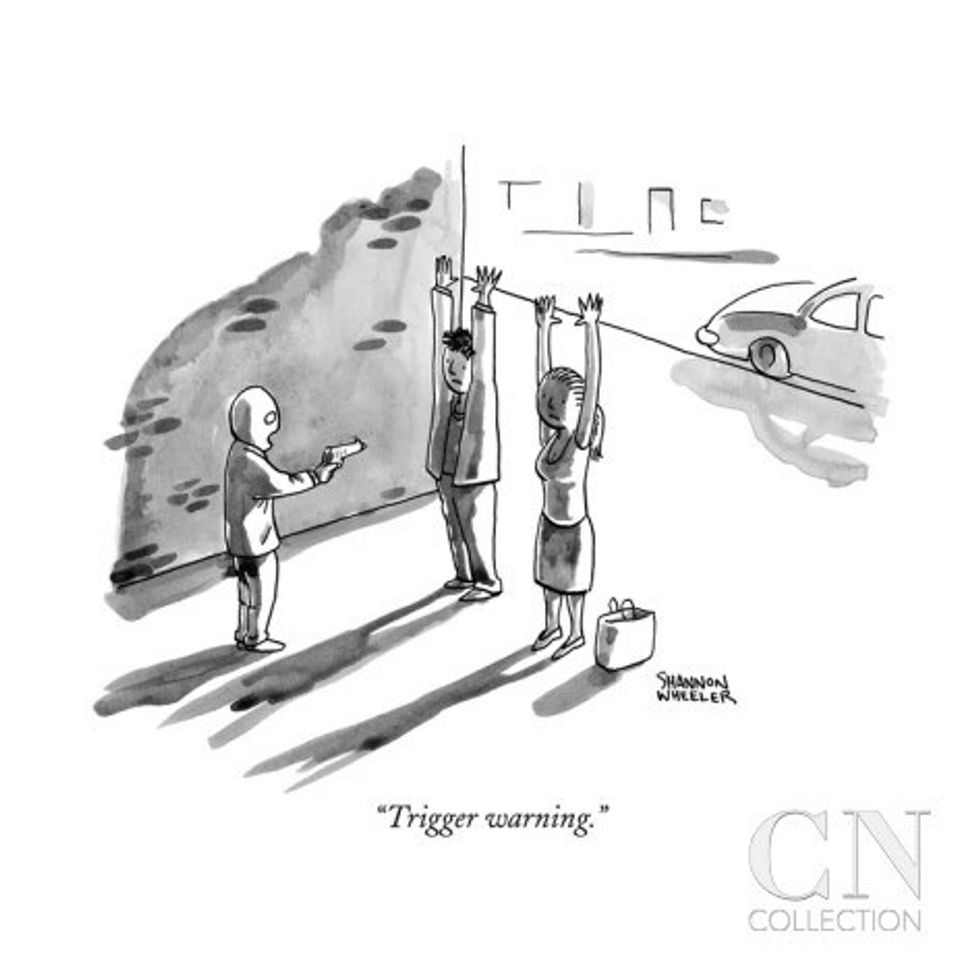
What these types of events on a small scale have led to in the educational community is what is now known as a trigger warning. Initially and in their purest form, trigger warnings were created to acknowledge any sort of disturbing content in a work (be it movie, music, book, etc.) in case there was someone who could be reminded of a personal, traumatic event. Essentially, it began as a disclaimer for such things as rape, assault, abuse, and the like to make sure that no one would be "triggered" psychologically by the work. It seems smart in theory -- people who do have those experiences should be allowed to feel safe, but it seems that we as an institution have taken this idea a little too far.
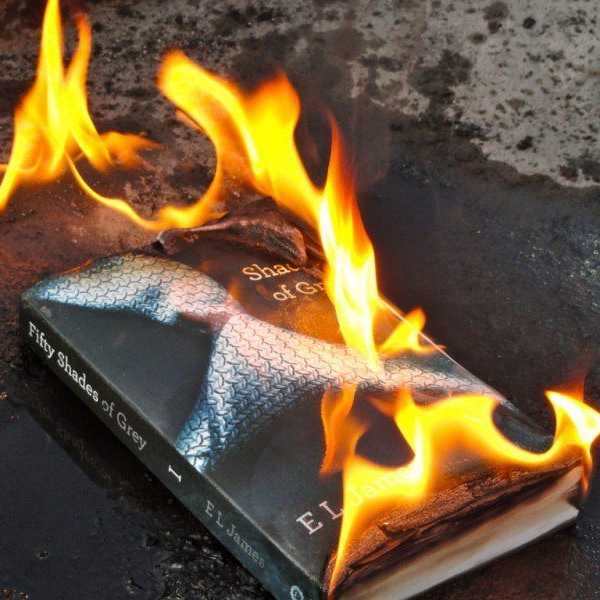
The issue that is still being debated with trigger warnings is, at what point does it become suppression? Of course, no one wants to hurt someone if they have had a traumatic experience with a subject, but it’s the other people -- the ones that have no experience and possibly no idea about these issues -- that are being shielded by something potentially important. Books are being opted out in literature courses because a teacher is worried that the subject matter is potentially harmful to students -- or rather, harmful to their jobs in case a parent gets angry. And these aren’t just any books (if there is such a thing); these are Nobel winners, internationally praised and studied novels that have shown they are important -- mainly because of the subjects we are trying to shield from society.
The instance with my old teacher that I addressed before is only a small part of what can happen when books are challenged. His case was one of censorship that lead to the implementation of trigger warnings into his AP courses -- a case that is becoming very common for many teachers around the country. While these aren’t cases of banning novels by any means (though instances do arise where the thought is tossed around), there is still a form of censorship in the fact that books aren’t being taught, because they might have something potentially challenging to grasp in their message.
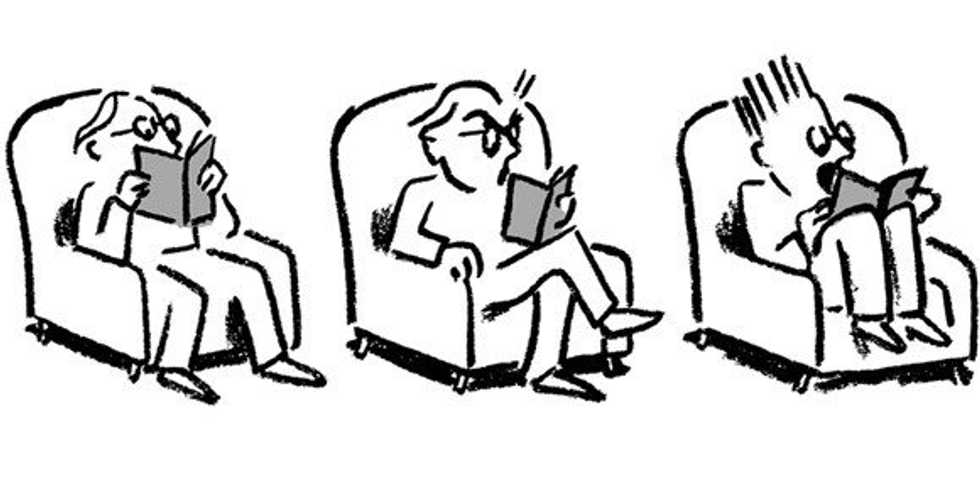
Famous author Oscar Wilde once said, "The books that the world calls immoral are books that show the world its own shame." Novels have and will continue to be written to challenge us. A few years back I was lying in bed reading Toni Morrison's "The Bluest Eye." I was cozy -- encased in blankets and drinking my morning coffee all while the rest of the world stayed seemingly still outside my windows. Within the story, though, I witnessed a young black girl going crazy. All while in the comfort of my own bed, I saw disgusting racism, rape, the pregnancy of a minor, and the breaking of a human soul that just wanted to know in some way what it felt like to be loved. I put down the book. I am cozy -- but somewhere outside my quiet windows, this fictional girl is real and knows tenfold the experiences the book captures. Books might be fictional, but they tell a reality of things we might never know could be in our backyard.
Books challenge us -- scare us. They are written because the world is such an expansive place, and things can fall into the cracks. Authors write because they see those cracks and they want to fill them -- even if it means pointing out the terrible things we would like to forget. Fortunately, many people do not have to experience the things we read in novels. I will never know what it feels like to be that young black girl in “The Bluest Eye,” but at least literature lets us feel some part of what someone else in the world could be possibly experiencing, and further, makes it known so it can be stopped. Trigger warnings are for the people who have felt those experiences much too closely, not for the people who are afraid to acknowledge them at all.
I place such a negative view on trigger warnings because if we take away our ability to learn about the terrors in the world from a safe space, how will we learn to deal with them when we are faced with their reality? Books can hold terrifying acts in the form of paper, but anyone can turn on the news and see the real thing happening around the world. Sheltering people from forming their own opinions on these issues will just make it harder and more destructive when they find them in their real lives. Books and their contents are a reflection of ourselves -- and sometimes that reflection is not a nice one. People should feel safe in their own space, but that should not mean that they don’t need to think about the things they don’t understand.
Of course, people will continue to suppress these thoughts, telling themselves they are saving our younger generations from the harsh truths that are undoubtedly real and impending. But if we should challenge books, let us challenge the news as well. Let us challenge the media and its broken narratives of self-image. Let us challenge capitalism and commercialism and religion and reality television and politics. If and when we challenge those things, we might find that fiction is the lesser of those evils. In fact, we might find that it actually teaches us something.

















