

In July, a bill was introduced to Congress called the "Safe Campus Act." I had never heard about it until around October, when I got assigned to write an article about it for my campus newspaper. As I began to read up on what the bill would entail should it become a law, my mouth dropped. How something like this could be thought of as helpful is astounding to me, and I fully believe more people need to become educated on the bill to understand why its consequences would be so harmful.
To summarize, this bill is about sexual assault. Whenever a student is sexually assaulted on a college campus, they can choose whether or not they wish to report the incident to the police. If they decide not to press charges, the college can launch its own investigation and perform "interim sanctions" to help the survivor feel more comfortable on campus. These sanctions consist of actions like moving dorms, changing class schedules, or even temporary suspension of the accused assaulter. While the system may not be perfect depending on the college, the sexual assault survivor has a lot of say in how he/she handles the situation.
If the "Safe Campus Act" is passed then this process will be changed. If a sexual assault survivor wishes to have any of the interim sanctions mentioned above, then they must report the incident to their college, which will then tell the police. With the police involved, the case is likely to gain attention from peers and even surrounding areas if others start to take notice of the charges. The police would then launch a 30 day investigation on the accusation, which could be extended if need be. The sexual assault survivor will also have to be willing to press charges if they want to have a separate class schedule or living arrangement to stay away from their attacker. If the case is taken to court, attorneys are not provided for either the accuser or the accused.
The purpose behind this bill is to solve sexual assault cases through more thorough investigations. The accusation is that college investigations are not as efficient unless the police are involved, and that perhaps people will be less likely to attack others with the threat of a police investigation looming over them.
This is wrong. The Safe Campus Act is a bill that would protect the attacker and not the attacked. I've spoken to survivors of sexual assault who all mention that telling their college's Title IX office was hard enough. If they had had to go to the police they would not have reported their attacker at all.
This bill would push survivors further into hiding, and if the attackers know this then who's to say that assault attacks will decrease? Will the number of annual attacks appear to decrease? Heck yes they would, because the survivors will stop reporting their cases.
The North American Interfraternity Conference (NIC), which is composed of over 70 fraternities, temporarily backed the bill. The National Panhellenic Council (NPC), which contains over 25 sororities, was undecided on whether or not to support the bill. After much outrage from chapters all over America, the NIC and NPC have finally decided to stop supporting the bill. The fraternity Lambda Chi Alpha even made a statement of leaving the NIC because the fraternity did not agree with the bill. This is an example of how more education on the bill can have a national impact.
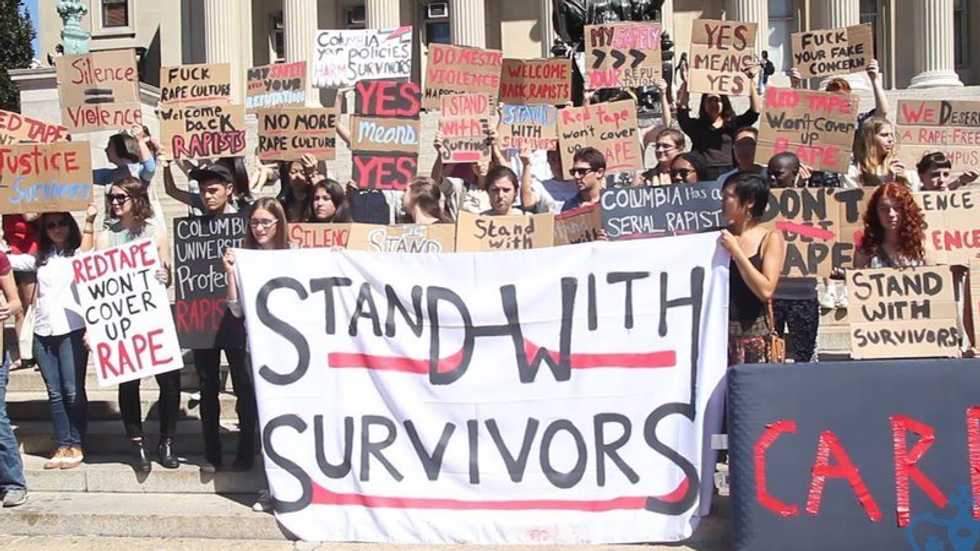
Whether or not this bill will become law is unclear as of now. However if you call yourself a supporter for survivors of sexual assault, then there is no way this bill can be viewed positively. Take a stand against it and remain educated.