

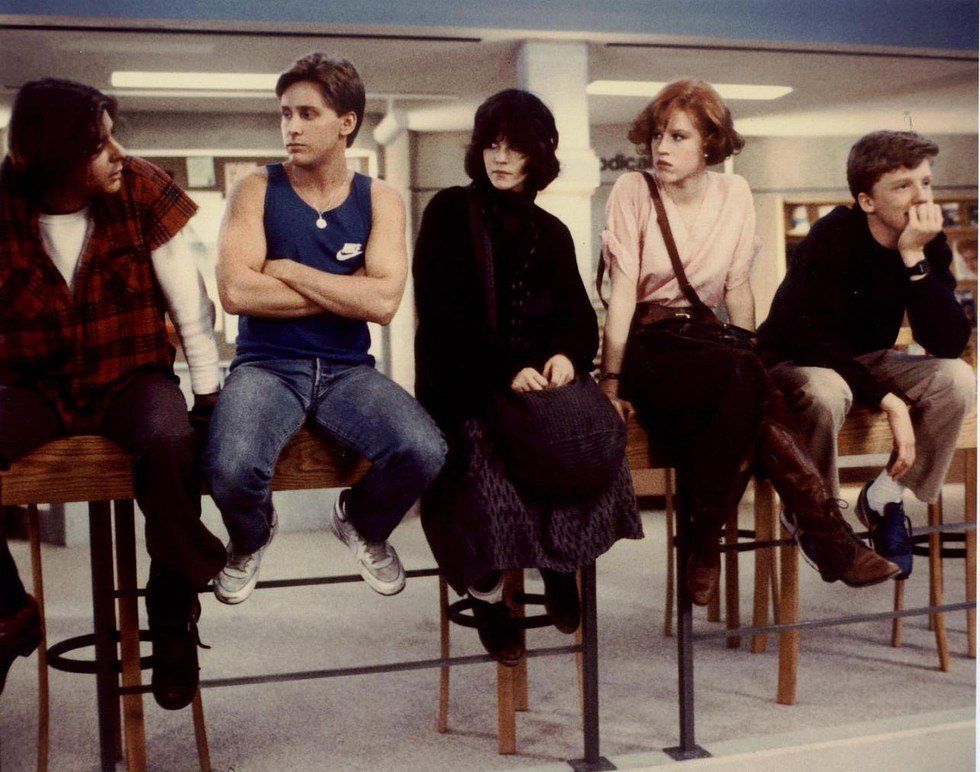
I’m sure you can think of at least one character from a movie, book, or television show that features a “Manic Pixie Dream Girl.” This term was coined by director Nathan Rabin and describes that girl within a film. This dream girl can be presented in many different ways. Sometimes, she’s the girl who comes into a man’s life after his biggest heartbreak and introduces him to a life full of adventure and new horizons. Or, she’s the major love of his life who leaves him in shambles so that the previously mentioned woman can “save the day."
Not only is this term and concept incredibly sexist, but it can also lead to further stigma surrounding mental illness. Many of the “Manic Pixie Dream Girls” are suffering from severe mental illnesses. This trope can lead to several misconceptions. It can also lead to the phenomena that is romanticizing the various disorders that we dream girls have.
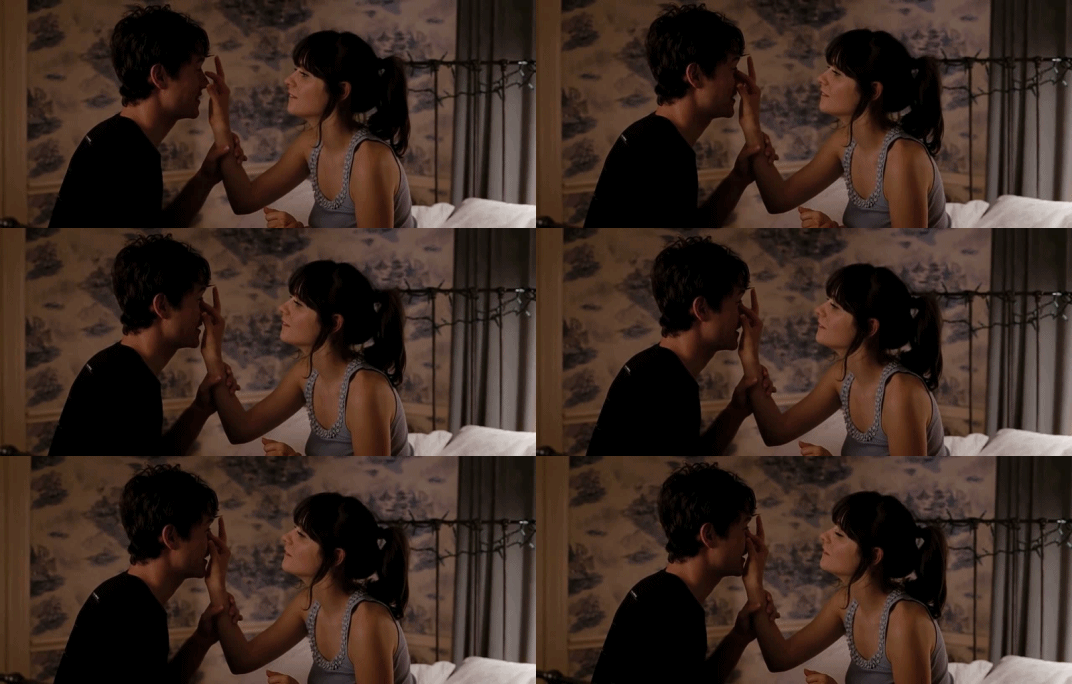
Now, don’t get me wrong here. I’m a real life Manic Pixie Dream Girl. I am full of love and laughter, good ideas, adventures and humor. I can come into your life and change it completely. I can lift you to higher levels and make you feel infinite. I can give you hope for the future, inspire you to take that job you were scared of, encourage you to “treat yo' self”; the list goes on and on. However, there’s a reality of the Manic Pixie Dream Girl that you don’t see.
I was diagnosed with Borderline Personality Disorder in March of this year, after I ended up in the hospital because my brain had convinced myself there was no other option than to die. That is what the movies, shows, books, etc will not tell you about your Manic Pixie Dream Girl.
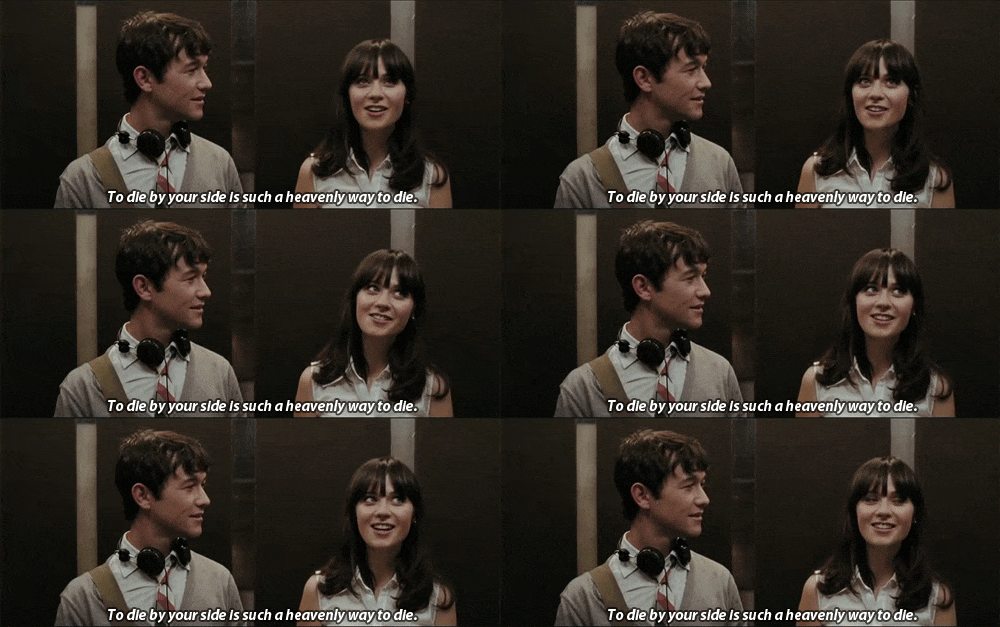
Many mental illnesses involve high stages (hence, the manic part) that can be impulsive, reckless and harmful not only to the person themselves but others as well, and downright dangerous. This dream girl is presented as carefree and spirited, wild and free. Borderline Personality Disorder is no stranger to this and neither am I.
Sure, dealing with me during this manic stage can be incredibly fun. Super fun, actually. Do you want to go shopping? Let’s go. Want to party until the next morning and not sleep at all? Let’s go, I’m down. Want to fall into an existential crisis and hold my hand when I’m having a debilitating panic attack that leaves me feeling suicidal? Are you losing interest? Do you not want to stick around for me to lash out on you because I cannot control my emotions? Where are you going? I thought I was your dream girl.
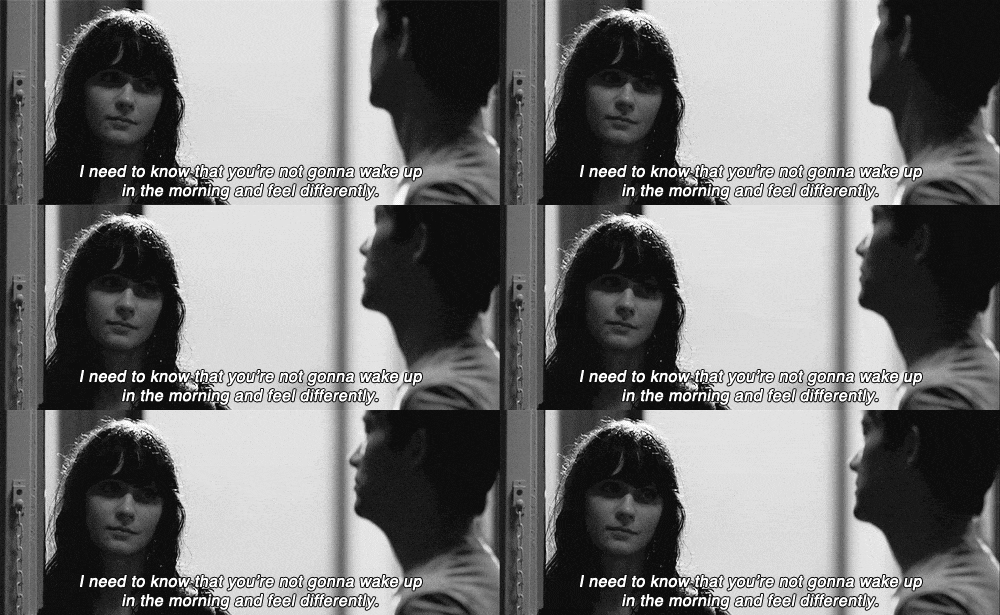
This trope may be one of the worst things to come out of entertainment. I feel like an idol because I am mentally ill. On the other hand, how many people will stay during the not-so-manic stages? Being a dream girl is not an easy feat. Society expects my manic stages at all time, regardless of how I’m really functioning. The reality comes in different forms for different people.
My reality of being a dream girl is not the prettiest. I’ve been on some form of anti-depressant off and on since I was in tenth grade. I spent nine long years believing that harming myself was the only way to deal with the turmoil inside of me. I lost friends, I lost family, I lost money and above all, I lost hope. Sure, things are fine and dandy when I’m not in bad shape, but when I lose it, boy do I lose it. Though I’m this superhuman, day-saving, life-changing, miracle worker; I still struggle with my own inner demons. It is incredibly hard for me to fight off your demons when I’m still challenging my own.
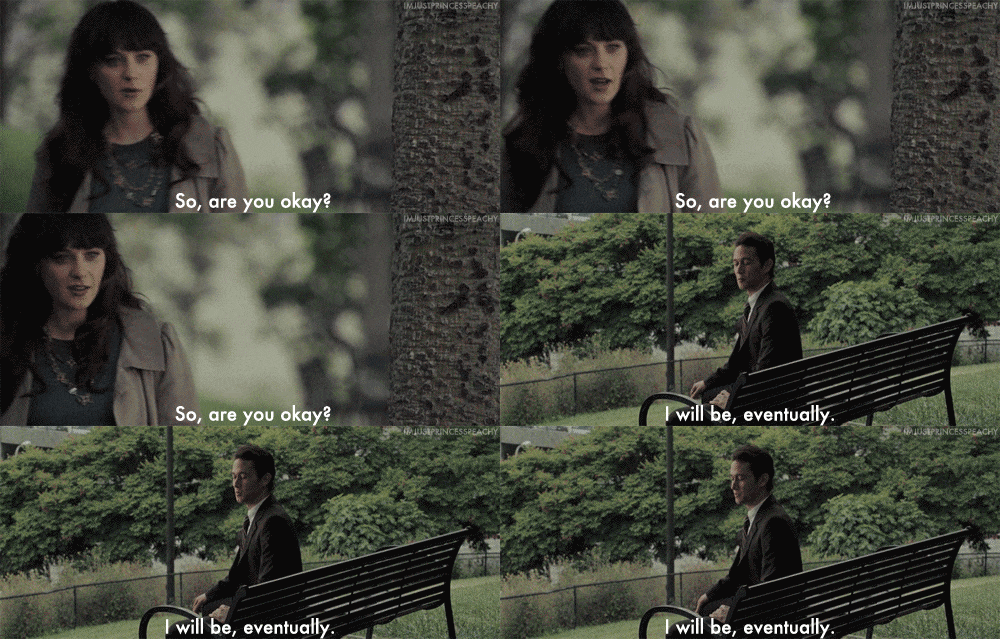
Another downside to this idealization comes in the form of the need to keep up appearances. For years, I’ve been known as the funny friend. With this title comes great responsibility. Bad day? Too bad, you have to make people happy. When suffering with a mental illness, you can be your biggest enemy. Not only this, but you can lose yourself in the perception of others. Living with Borderline Personality Disorder (BPD), my personality is based mainly on external factors. I have a hard time finding my genuine self. I live to please others and be who they want me to be. It is not something I enjoy whatsoever.
When you make me into the dream girl, I become her. This means I cannot show any negative behavior. I must become who you think I am at all times. I repress my emotions, hide away, and become someone who I don’t even know. Especially not when the literal smallest inconvenience can cause me a mental breakdown.
By creating this idea of a larger than life girl who can completely change a life, it takes away from the human existence as a whole. Regardless of whether you suffer from a mental illness or not, it is completely unfair to hold anyone up to such an impossible standard. It is unfair to expect my dream girl-ness to be ever present. It gets exhausting dramatically transforming lives, trust me.
So, next time you find yourself fawning over a Manic Pixie Dream Girl (here’s looking at you, John Green), please reconsider. This dream girl may be battling herself to become her own dream girl. Her energy may need to be spent saving herself, rather than you.

















