Sandburg begins his poem, "Hog Butcher for the World/ Tool Maker, Stacker of Wheat/ Player with Railroads and the Nation's Freight Handler/ Stormy, husky, brawling/City of the Big Shoulders." "Chicago" made a tribute not only to the eponymous city's mythology but also helped advance a more general conception of the American character. We were the unsophisticated and untamed, the plainspoken and uncouth, the rugged possessed of Big Shoulders and able to bear the burdens of the world. This notion is echoed throughout American literature and political thought from Whitman’s songs through the desperate wanderings of the Beats and Jefferson’s farmer-statesman to today’s political discourse. In every corner, we cannot escape this idea of America as an incarnation of its land: grand, sweeping, and free.
This at least, was the sentiment with which I was raised. America was the most advanced country to have ever existed, and it served as the greatest force for good in the world. Ours was a nation that had overcome its own past of slavery, that embodied the pursuance and enforcement of civil rights for all of its citizens, and that served as a beacon for democratic hope throughout the entire world. As I grew up and read more broadly than my school textbooks, I found inevitably that the reality was more complex. The genocide of Native peoples and their cultures, the systematic reliance on slavery, and the internment of American citizens of Japanese descent during WWII all have their place in American history. I do not justify, pardon, minimalize, or wish to omit any of these acts or any others that have left a dark mark on our history. However, though I acknowledge these facts, I wish to say that I still believe that America may still fill its role as the greatest force for good in the world. Through our policies the scientific, social, and economic welfare of America’s citizens and of peoples all around the world has seen a manifold increase since our assumption of global leadership following WWII.
Yet our nation seems embattled and the ramparts of democracy besieged. Politically, our parties have grown ever more polarized and their discourse ever more extreme and divisive. The media focuses ad nauseam on negativity and crisis, often promulgating more tragedy in cases such as our mass shootings. Political pandering and gamesmanship rules the stage rather than consideration for the common welfare. Socially, racial tensions have risen again, and the trust between the police and people has dissolved in many communities. Also, the pace of technological change has accelerated to the point that many, especially the elderly, feel alienated and disconnected from their own country, exiles in their own homes. Economically, wages stagnate, wealth aggregates in the hands of billionaires, and few realize that the economy is no longer in recession. And don’t even get me started on the youth, who graduate with tens of thousands of dollars in debt just to languish for months without a job. Combine all of this with our sustained military engagement of the Middle East, the realization of nationwide surveillance, and an incredible and almost universal sense of powerlessness, and that old sense of who we were, the America of the Big Shoulders, evaporates.
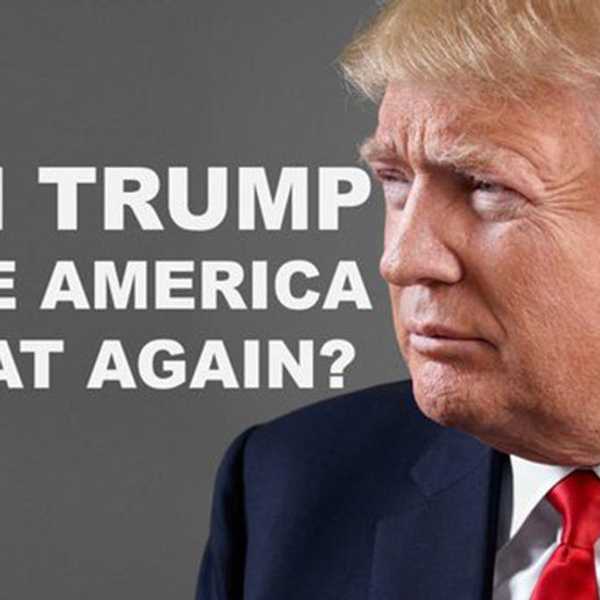
So, in the next few weeks, I’d like to discuss some of these issues at greater length. It’s vital that we not surrender to our cynicism and once more consider our legacy to the future. Shall we be the ones who languish and only ever react to our circumstances, ineffectually and hopelessly? Or shall we be the ones who once more put the world upon our shoulders and upon our backs and move ever forward? I do not know, but I have my hopes. Also, I do not mean to come off as trying to “make America great again” or pander to one political side or the other. We live in the most complex of times, and our nation serves as one of its most influential shapers. Thus, our policies have many effects, for good and ill. So, I am not indicting America’s overall efficacy or continued impact on the world, (though we may level many criticisms at ourselves like the issues I mentioned above). Rather, our sense of purpose and of a national self seems on the verge of being lost, and I hope to grasp some means of reclaiming that through the discussion of these topics, if only just for myself. Thank you for enduring my sentiment, and I hope that the coming weeks will be productive.