


A little bit of a history lesson today, inspired by my love for theatre, and more importantly, by a university tutor I once had, who gave me the encouragement I needed to actually get myself together and complete my undergrad degree.
''The First Blast of the Trumpet Against the Monstrous Regiment of Women.''
Such was the hyperbolic title of the 1558 polemical essay penned by Scottish Reformer John Knox. The phrase 'The Monstrous Regiment' was in this case specifically targeted at those monarchs who also happened to be female, a fact which flew directly in the face of the general male outlook during the sixteenth century. Whilst it can of course be argued that the average sixteenth century male was a product of his time, it is still evident that the status of women in society was much lower than that of a man. Therefore to have a female in possession of an enormous amount of power would have been quite alarming for said average male. Knox himself postulated that the teachings of the bible advised against female monarchs, and therefore any Queen who dared to rule was committing religious sacrilege. (Surprise, surprise.)
Published in 1558, the essay targeted the female sovereigns of Knox's era, including Mary of Guise and her daughter, Mary Queen of Scots, as well as the English Queen - and daughter of Henry VIII - Mary I. It is worth noting that these Queens were all Catholics, and Knox was a staunch Protestant, a fact which would not have endeared these women to the author. Aside from religious differences, Knox felt that God had, during his creation of the human race, 'denied' womankind of 'authority and dominion,' writing:
''For who can denie but it repugneth to nature, that the blind shal be appointed to leade and conduct such as do see? That the weake, the sicke, and impotent persones shall norishe and kepe the hole and strong, and finallie, that the foolishe, madde and phrenetike shal gouerne the discrete, and giue counsel to such as be sober of mind? And such be al women, compared vnto man in bearing of authoritie. For their sight in ciuile regiment, is but blindnes: their strength, weaknes: their counsel, foolishenes: and judgement, phrenesie, if it be rightlie considered.''
Now, as far as I can see, this paragraph roughly translates to:
''For who can deny that it is repugnant to nature, that the blind shall be appointed to lead and conduct as they see fit? That weak, sick and impotent people shall be in charge of the whole and strong, and finally, that the foolish, mad and frenetic shall govern the discreet and give counsel to the sober of mind? And such be all women, in comparison with men who bear the authority. For their sight in civil regiment is but blindness: their strength is weakness: their advice: foolishness: and judgement: frantic, if it be rightly considered.''
Knox clearly indicates that he believes all women are unintelligent, hysterical (the wandering womb thing again, that old chestnut) and impotent, incapable of making the most minor decisions for themselves, let alone for their county. His view that women are second class citizens is bluntly stated and demeaning, relegating women to the status of infants. Knox's words, however, came back to haunt him when the Protestant Elizabeth I ascended the English throne and, shockingly, took umbrage to a man suggesting that she was incapable of ruling purely on the basis of her gender. As it was, Elizabeth became one of the most successful monarchs England has ever seen, ruling for forty five years. Yeah, that's right. Forty - five years. All the while, Knox's political career floundered because his misguided and misogynistic views had offended the most powerful woman in Britain.
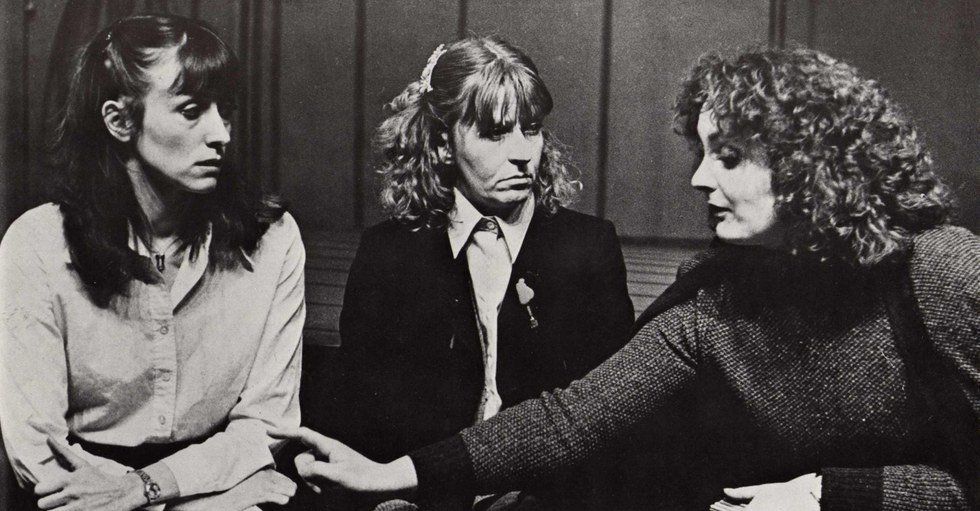
In any case, I digress. I wanted to lend some context to the term Monstrous Regiment, and to highlight just how misguided this turn of phrase is. However, far more interesting are the women who took this phrase and turned it on its head, in doing so creating one of the most successful feminist theatre troupes in history. Established in 1975, the troupe performed more than thirty shows over a course of nearly twenty years, focusing their performances around women and their experiences. Taking the term The Monstrous Regiment as an ironic title, they performed to subvert the traditional portrayal of women in 1970's theatre and to attempt to fight against the marginalization of female stage actresses and characters. However, in spite of their brilliantly radical nature, the troupe did not refuse male actors in their company, nor did they solely perform plays with female characters. Instead, they shifted the focus of the plays they performed onto women, whilst still allowing the male voice to be present within their work, a delicate balancing act which many other companies and playwrights failed to maintain.
Plays performed by the Regiment include Vinegar Tom by Caryl Churchill (author of Top Girls, one of my favourite plays) and, SCUM: Death, Destruction and Dirty Washing by Claire Luckham and Chris Bond. For more plays written and performed by The Monstrous Regiment, take a look at The Unfinished Histories website. Created to map the 'history of alternative theatre,' the sites title is rather fitting, listing the status of the Regiment as 'dormant' rather than 'dispanded,' since the cancellation of the troupe's funding in 1993.
However, in spite of the company's inactivity for more than twenty years, the legacy of the Regiment is not dead. Their work inspired the creation of many feminist theatre groups, and promoted existing theatre companies, including Beryl and the Peril's, Gay Sweatshop and Cunning Stunts. The women and men who took part in those companies, whether it be in the writing of the plays, the performance itself, the designing of costumes or stage management (I could go on) can - and should - be seen as examples of feminism done right. They subverted the social norm by bringing into the public eye not only womankind, but also the issues they dealt with in a male dominated society. They worked to bring women onto an equal standing with men, and pioneered a movement which changed the face of modern theatre forever.

















