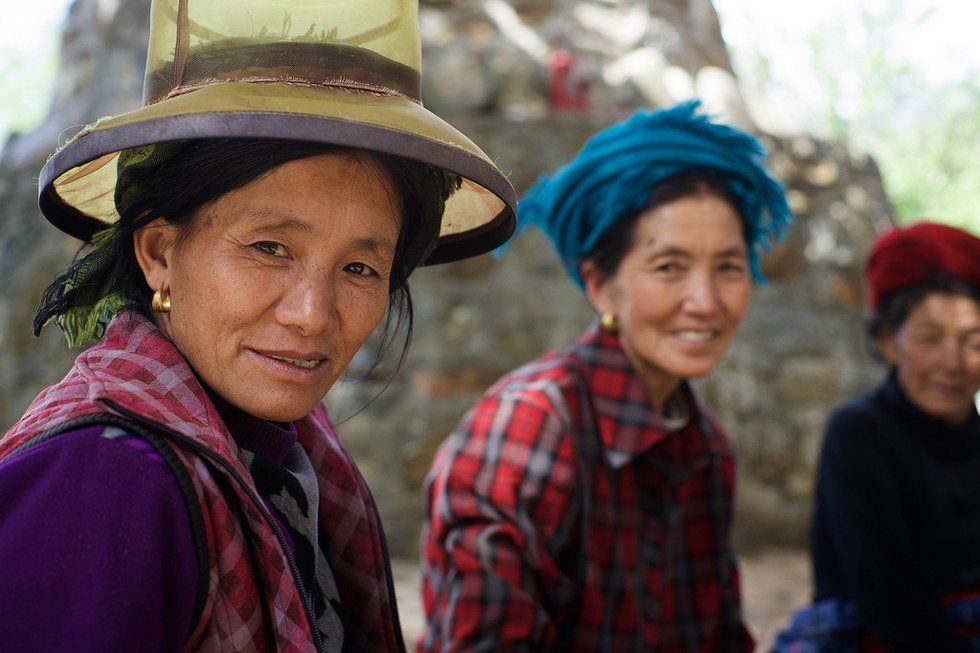
Nestled in the breath-taking Himalayas, near the precarious border of Tibet, the Chinese provinces of Yunnan and Sichuan are distinguished from the rest of the nation by an unusual characterization: the acroamatic remnants of the last matriarchy in the world.
Referred as China’s last matrilineal society, the Mosuo are a relatively obscure ethnic group derived from the Nakhi lineage, known to be practitioners of free love (zouhun) and womanly power. Women in the community act as heads of households and pass inheritance through their daughters rather than through their sons, notions that were generally unacceptable in the neighboring provinces until the time of the Cultural Revolution, allowing for an unprecedented wholistic independence for Mosuo women.
Because of this quasi-liberative depiction of female authority, media coverage in the West tends to exoticize Mosuo women, painting them as erotic subjects prone to excessive sexuality. Part of this misconception can be attributed to the society’s elimination of nuclear families and traditional institutions such as marriage; participating in what is known as “walking marriages” or “visiting relations,” Mosuo women and men engage in sexual contact with each other based on mutual affection in which the man visits the woman’s quarters during the night and returns to his home the morning after. It is not uncommon for women to have many lovers at a time, although most Mosuo prefer monogamous romantic relationships where a man and a woman devote themselves to each other without the constant pressure of marriage.
When a child is born of such interactions, he or she remains with the mother’s family and its father can choose the level of interaction he wishes to have with his child, visiting only under the cover of night. Oftentimes, children are figuratively fatherless since women can choose multiple partners, contributing to a level of ambiguity in Mosuo lineages. A child’s familial association is traced through its mother, therefore creating a genealogical system that favors women as initiators of bloodlines rather than, as in traditional Western culture, vessels for men to propagate their heirs.
Mosuo family structure is of great interest to modern day anthropologists; constructed from a mainly maternal influence, a single family unit usually consists of a grandmother as the head of household along with the second and third generations of the family. Males, even after fathering a child with a woman of another household, stay with their maternal family, acting as uncles and perhaps loose father figures for their sisters’ children. Similarly, pregnant women do not seek the help of the child’s father since the structure of her family allows for unconditional support from her siblings and mother.
But the question remains of whether or not Mosuo culture can be seen as a feminist constitution. As much as media may portray it, matriarchism does not equal feminism, and the liberation of women is not rooted solely in sexual freedom. In a society where families live in subsistence and life revolves around farming, Mosuo women act in dualistic roles as both breadwinner and nurturer for their children, working twice as hard as their male counterparts who owe no obligation in paternity. The lack of responsibility for wife and children has created an interesting subculture for Mosuo men, where they are important but not central to the inner workings of family dynamics and thus remain relatively detached from women of other households. These men, as it appears, serve as brothers, uncles, and the occasional sperm donor rather than fathers, an idea that is altogether unsettling in Western society where men are held to the expectation of family-building. This enables Mosuo women to take direct control of familial affairs since as females, they carry a heavier claim to family life. However, despite women’s jurisdiction in the domestic realm, political power in the community tends to fall to men.
If we are to define feminism as the movement for equality between the sexes, than Mosuo culture is not the proponent of feminism. In this society, women take on the roles of father and mother, dualistically providing and caring for their young, while men take on a disproportionately small responsibility to the rearing of children, may it be their sibling or niece or nephew, but very rarely their own child. In addition, men act in a passive role in their families, often as secondary characters in their household rather than equals of women. Yet, like many other societies, it is the men who hold real power in the larger scheme, specifically through politics.
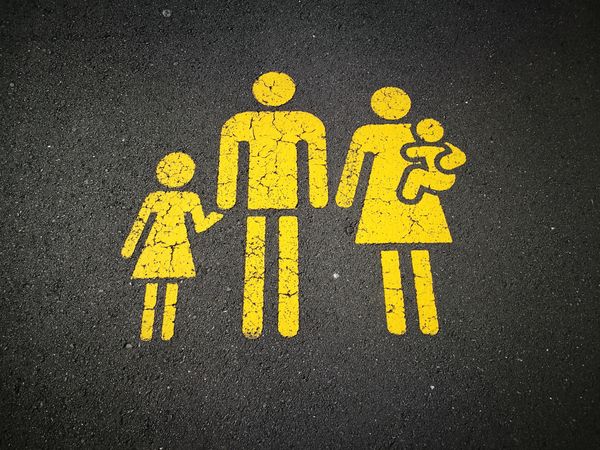
Nonetheless, the Mosuo people encompass an illuminative message in their approach to love and relationships. In a world where marriage is defined as a universal rite crucial to the emotional wellbeing of individuals, Mosuo men and women defies such conventions, proving that nuclear marriage is not necessarily the only way to structure society and romantic endeavors. Throughout history, nuclear family was a method of shackling women, especially in the 50s, to often loveless marriages and forceful procreation. By eliminating the pressure to marry, Mosuo adults engage in consensual relations, conceiving children out of love instead of a compelled duty in building a family. These “walking marriages" not only exemplify the fleetingness of lust as natural to the human condition but also illustrates love in its simplest terms.
Although we cannot fully understand the nature of the Mosuo nor have to agree with their lifestyles, there are lessons we can learn from them. In amidst never ending expectations of our bodies and minds, we can choose to stop believing in the conventions that have been ingrained in us since birth. We can choose to be liberated, in whatever sense of the word we believe it means. We can choose family and happiness. We can choose to live simply and love plainly.