


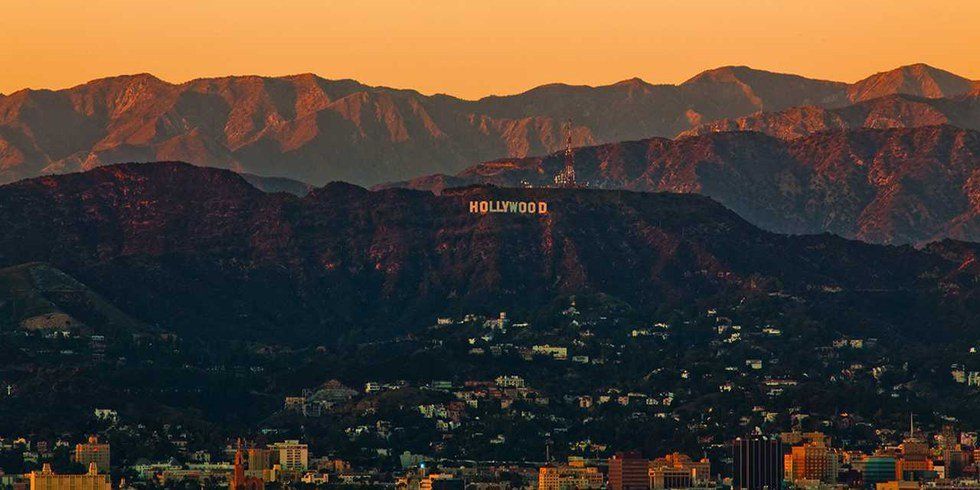
Hollywood produces a lot of very successful movies every year, some fantastic and others not so fantastic. Recently, however, there has been much focus on the lack of diversity in Hollywood. Racism and discrimination are clear societal problems; however, I believe that it is important that Hollywood actively address the lack of diversity at all levels of movie production.
Looking at the Academy Awards it is easy to see the lack of diversity and it only makes sense that the hashtag #OscarSoWhite has become so popular. Of the 20 Academy Award nominees for the top acting awards, all 20 nominees were White, two years in a row. This led to a boycott of the Academy Awards by several prominent individuals such as Jada Pinkett Smith and Spike Lee as well as considerable hype in the media about the lack of diversity. Winning an Academy Award, or even a nomination, can create major momentum for an actor’s career. Not only that, but winners become members of the Academy who then nominate the next round of nominees. If all the nominees are White, the lack of diversity is perpetuated. Fortunately, the Academy did respond to the criticism. The President of the Academy of Motion Picture Arts and Sciences, Cheryl Boone, acknowledged the issue and vowed to make changes that would bring about a more diverse group in 2016.
But the Academy Awards come at the end of the process. In order to really consider the level of diversity in Hollywood, it is important to consider whether diversity is evident at all levels, beginning with examining which projects are selected and supported, what stories are told in movies, which actors are cast in what types of roles, and how diverse are the many contributors to the movies from the lowest entry level job right through to the directors and producers.
The University of Southern California, Media Diversity and Social Change Project, has examined race and ethnicity in films and behind the camera and presents data from 2007 to 2012. In examining the 100 top-grossing films from 2012, they found that only 10.8 percent of speaking characters were Black. The numbers were even lower for other racial/ethnic groups with only 4.2 percent Hispanic, 5 percent Asian and 3.6 percent other or mixed race, with similar numbers each year since 2007. In addition, this group looked at the percentage of characters of color in individual movies. Although the census shows that 13.6 percent of Americans are Black, only 9 percent of films in 2012 included a percentage of Black characters that reflected that of the U.S. population. The lack of diversity is not just an issue for actors but for directors as well. Among the top-grossing films from 2007-2012, only 5.8 percent had Black directors. The problem is even worse for Black women; only two Black women directed one of these 500 top films across this period. Importantly, the race of the director does influence the diversity of the actors in films. In films with a Black director, 52.6 percent of speaking characters are Black whereas in films with a non-Black director only 9.9 percent of speaking characters are Black.
This is a difficult topic but it is an important discussion that we need to have as a society. Some have argued that Hollywood is just nominating the best actors. However, based on the data above, it is likely that many of the best roles are being given to White actors who are then in the position to get the nominations. There have been many films where White actors play the role of a character of a different race. Indeed, the whole film industry is heavily dominated by Whites in both acting schools and in casting offices. There are also many Black actors who have given outstanding performances in a specific role who were nonetheless overlooked by the Academy, which is 94 percent White and 77 percent male.
It is important to recognize the significance of the lack of diversity in the film industry. Our country is becoming increasingly diverse every year; the U.S. Census predicts that within 30 years, more than half of all Americans will be members of minority groups. It is now time that the movies we watch accurately reflect the diversity of our country and that there are equal opportunities for employment at every step of film production.

















