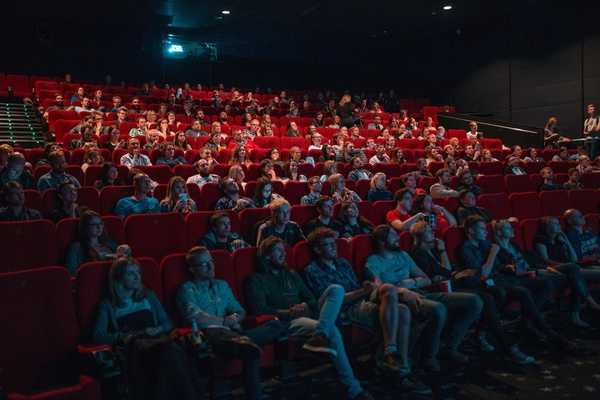
Cozy beds, snuggled in blankets that smell like home; movie theater seats that never seem to find the right angle; squeezed under the arm of a warm body while you sit, nestled, next to a campfire while the cold air nudges your back; hands curled around a chilled bottle of beer, legs perched on the bar stool below you, leaning in to hear over the music.
Bedtime stories, movie scripts, lyrics, ghost stories, bar stories - they all have one thing in common: we love them. They tell us of other places, people and experiences. A good book draws us in, makes us a part of a fictional world. Made-up characters take on the very real importance of a friend, and long after the story is over, we wonder about them, like childhood chums left behind. A good storyteller is honored and revered. Bards sat with the royal court, just beside kings and queens and princes. Poets in ancient Rome, like Virgil, received visits from the Roman Emperor himself. And now, directors, actors, musicians and writers occupy a special place in the hearts of the general public.
Why is it that stories are so important? Perfectly timed retellings of familiar events take on a life of their own, and good jokes are passed on ad infinitum. We love to be removed from the familiar. Stories let one escape the mundanity of everyday life and peek through the eyes of someone else, if only for a moment. A good story piques our interest and makes us think about values, morals and rules.
The story itself is a part of the human experience. Before our eyes, we are transported away from the mundanities of our lives into fantastic places, where life is grand and the very observation of the characters brings clarity into our lives. It is easy to see, from the outside, just where a romance went wrong, or a plot twisted away from the ordinary into the extraordinary. As we look at the lives of fictional characters, we see through the eyes of another for a little while.
Yet, it is the very process of storytelling - of linking each separate event in our life together into a coherent thread - that brings understanding to our own lives. As Oliver Sacks once said, "In the end, we become the autobiographical narratives by which we 'tell about' our lives." As we look back and link together each bit of memory and fact together, we find out who we are and what exactly is important to us. It's the same concept that applies to explaining a complicated fact to a child: that is, we have to truly understand the root explanation of a fact to convey the necessary information.
Storytelling will forever be a way for us to connect with each other and with the overarching narrative that is our lives. It will keep us entertained at bars and movie theaters, in living rooms and around bonfires, and will give our lives clarity and meaning. Stories will show us the value of listening closely to another, while at once looking in on ourselves; stories will always be a way that we connect and empathize with the world around us.