
English singer-songwriter, Ed Sheeran, developed a stutter at a very young age. When he was 9 years old, his father bought him “The Marshall Mathers LP” by Eminem and he learned every word of it, which remarkably led to him losing his stutter. In his speech at the American Stuttering Institute Gala, Sheeran explained how Eminem’s album helped him with his stutter, stating, “...he raps very fast and very melodically and very percussively and it helped me get rid of the stutter,” (Ed Sheeran full speech "American Stuttering Institute Gala" 2015). Most people who stutter when they speak are able to sing without their stutter showing, but for that to eventually translate into the loss of stutter in speech is quite important (Clements-Cortés, 2012). Although Ed Sheeran was able to rid himself of his stutter by rapping Eminem, there are many people who have more severe stutters, as well as other types of disabilities, which can only be helped with more intensive forms of music therapy. The success of music therapy in cases of stuttering and other disabilities demonstrates how beneficial music therapy can be, and can be used to argue for a more widespread use of music therapy for people with special needs.
The American Music Therapy Association defines music therapy as "the clinical and evidence-based use of music interventions to accomplish individualized goals within a therapeutic relationship by a credentialed professional who has completed an approved music therapy program" (“What is Music Therapy?”). Music therapy is used to help people overcome emotional, cognitive, and social issues. It is most often used for people with developmental or acquired disorders, or those who are considered to have a disability or special needs (F., 2013).
The Individuals with Disabilities Education Act (IDEA), which is intended to provide students with disabilities with free public education, defines a child with a disability as a child with intellectual disabilities, hearing impairments, speech/language impairments, serious emotional disturbance, orthopedic impairments, autism, traumatic brain injury, other health impairments, or a specific learning disability. It also specifies that children with disabilities or special needs often also require special education (Individuals with Disabilities Education Act). Children with special needs are generally at a higher risk of having a chronic physical, developmental, behavioral, or emotional condition. They also could have mild to severe cognitive delays, which can cause them to struggle to understand concepts, to hold focus, and have extreme physical over-activity or under-activity motor skills. These physical problems and delays are often combined with emotional problems, making it difficult for children to express, verbalize, or understand emotions (Constantin, 2015). With the use of music therapy, children with special needs, including stuttering, are able to learn to overcome or better cope with these obstacles.
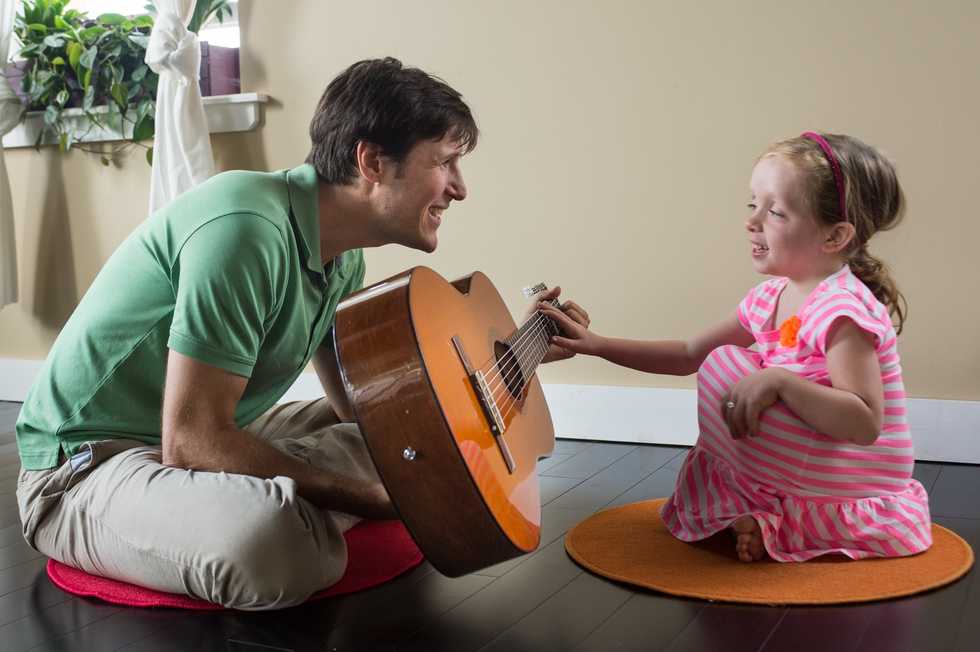
Music therapy has been shown to help children with special needs express and verbalize their emotions over time, through the use of tempo, melody, intensity, and sound quality or timbre. It also helps with concentration, allowing them to focus on tasks for longer periods of time. Additionally, music therapy encourages communication and helps those with special needs increase their sentence length and fluency, and learn the appropriate pitch and volume in which to speak. Through the use of rhythm, music therapy also helps those with special needs work on issues of poor coordination and balance (Constantin, 2015). Music therapy can take many forms, such as singing, playing instruments, active listening, rhythms, and games. The best form of music therapy depends on the particular disability it is targeting. In the case of stuttering, music therapy in the forms of singing and rhythm have been shown to produce the best results in reducing or eliminating stutter (Clements-Cortés, 2012).
Stuttering is a condition that affects the flow of speech with broken repetitions of words or word fragments (l-l-le-let’s go), prolongations (lllllllllet’s go), and the blockage of sounds or inability to make sound. Stuttering is often accompanied by physical features such as unusual facial expressions and jerky body movements along with states of struggle and excitement, which are associated with an effort to speak (“Stuttering Facts and Information”). There are many proposed causes for stuttering. Psychologists believe that people develop stutters through psychological fears related to speaking, like the fear of speaking in public or on the phone, the fear of mispronouncing words, or the fear of not being able to speak effectively. Since stuttering usually develops during early childhood, some argue that stuttering develops when children are struggling to find the words to express themselves, or when there is a disconnect between thought process and verbal ability. Other hypotheses about the causes of stuttering are that it stems from the expression of past conflicts that were never resolved, or that it is a result of a child speaking too excitedly and quickly, which causes them to stumble over their words (Clements-Cortés, 2012).
In addition to early developmental problems, genetics have also been shown to have a connection to stuttering. Approximately 60% of people who stutter have family members who also stutter (“Stuttering Facts and Information”). The reason for this correlation is unknown, and further research to study this issue would be beneficial. Neurochemistry has also suggested a correlation between the parts of the brain associated with movement, and stuttering. Additionally, people with a stutter have been shown to have increased activity in the right side of the brain during speech, while people without a stutter show more activity in the left side of the brain, which is the side of the brain that is more associated with language (Clements-Cortés, 2012). This shows that there is a disconnect in processing speech and language with those who stutter (“Stuttering Facts and Information”).
Because stuttering is a condition caused by disruptions in the flow of speech, the aspects of music therapy considered most closely related to stuttering, and most successful in addressing stuttering, are singing and rhythm. Speech is produced through a combination of respiration, phonation, and articulation. Similarly, the key aspects of singing are breath control, sound, and voicing. By singing, one learns how to control their air release and textual phrasing, and slowly develops the respiratory muscles that allow them to speak fluently. Because some people who stutter sometimes struggle with producing sound entirely, singing is a good way to cultivate the production of sound. Singing also encourages the elongation of syllables and phrases, which can help those who stutter overcome their struggle of shortening and repeating syllables (l-l-le-let’s go).
In 1982, a study was conducted which looked at the effects of different methods to enhance speech fluency in those who stutter, one of which was singing. Participants were told to sing a song that they liked for ten minutes, and the results showed that singing reduced the frequency of their stuttering by more than 90%. “Singing uses continuous voicing, which helps to increase the connectedness between syllables and words,” so the freedom found in singing can eventually be transferred to speech patterns (Clements-Cortés, 2012). While singing is mainly correlated to patterns of speech, rhythm is correlated to both speech and movement.
Stuttering is often accompanied by jerky body movements, which are caused by a “rhythmic barrier between speech and body” (Clements-Cortés, 2012). Music therapy in forms of rhythm can help mend this disconnect, resulting in the reduction of stuttering. A common way of doing this is Auditory-Motor Mapping Training (AMMT), which “trains the association between sounds and articulatory actions with the goal of facilitating speech output” (Wan, 2011). AMMT combines singing and the use of percussion instruments to develop speech fluidity. The validity of the use of AMMT to improve speech and verbal output is supported by neuroimaging research, which shows how the neural resources for music and linguistics overlap (Wan, 2011).
A similar music therapy technique is Rhythmic Speech Cueing, which involves speaking rhythmically along with a drum or metronome. By doing this in beat patterns that are similar to normal speech, it improves fluid timed speech. This is why Eminem’s fast-paced, rhythmic rap music was able to help Ed Sheeran lose his stutter. All of these techniques help reinforce a connection between speech and body, because rhythm is something felt throughout the body (Clements-Cortés, 2012).
Music therapy also has the ability to calm the emotions associated with stuttering. Musical dynamics can help people who stutter learn to control their volume and tone of speaking, which prevents them from raising their volume to an excited state which might trigger stuttering. Because of the calming effects of music, the emotional and cognitive functions of those with a stutter can be enriched through guided relaxation with music. And since many cases of stuttering stem from a fear of speech or an inability to express emotion, music therapy is capable of helping people with a stutter learn to express these fears and emotions (Clements-Cortés, 2012).
Music therapy has had similar positive effects on children with different disabilities, providing them with a setting for their social skills, emotions, and self-esteem to thrive. A study was done on a sample of nine children with disabilities including mild to severe mental deficiencies, down syndrome, autism, and schizophrenia. At the beginning of the study, the children were not able to verbalize emotions or show any type of emotion. By the end of the study, they could recognize basic emotions like being happy or sad, and were even able to display the emotions. When asked how they felt during the sessions, “...their answers were positive, even excited” (Constantin 2015). At the end of the study, the children had developed a correlation between the major scale and the emotion of happiness, drawing smiley faces upon hearing it.
Of course, music also helps those with minor disabilities as well. As someone with Attention Deficit Disorder, music has always been a huge part of my life. Although I happen to be someone who is very involved in music, I have found that music influences ADD in interesting ways. A lot of times, when I am trying to focus on something, I start humming or singing without even realizing it. There is some kind of connection between music and focus for me. However, I can only listen to instrumental or classical music when I am trying to focus on something because lyrics will distract me from the task at hand. Another interesting connection I have noticed between my ADD and music is that, while there are many things that I struggle to focus on, the one thing that I can consistently focus on is music. I cannot focus on my homework late at night, but I can write and record music from 9 P.M. until 2 A.M. without a break. While I am always noticing the effects of music on my ADD, I recently had the privilege of witnessing the remarkable effect that music has on the Joyful Noise choir.
Joyful Noise is a special needs choir consisting of forty-five people with physical and neurological disabilities, ranging from age 17-70 (“About Us”). The Lehigh University Choir, which I am a member of, has been working with Joyful Noise in preparation for the concert we are doing with them. Rehearsing with this group while I have been researching this topic has been fascinating, because I have been able to see the effects of music on people with special needs firsthand. One thing that I noticed immediately is how their facial expressions light up the second the music starts. While many of them did not seem to express much emotion between songs, the second the music started playing again they began to portray the emotions of the song. One song that we sing with them has the lyrics, “Sometimes I’m happy, sometimes I’m blue.” The song continues to list more emotions, and many of the members of Joyful Noise would change their facial expressions as the song went on in order to show the various emotions. I saw how music truly does teach people with special needs to verbalize, express, and recognize emotion. One mother of a member in the choir spoke to us about her son’s experience with Joyful Noise, and what she said demonstrated the important role that music plays in the social abilities of special needs children.
The mother talked to us about her autistic son, Kevin, now in his mid-40’s, and how music improved his social skills growing up. She said that she always used to sing to Kevin when he was little, and that he would never sing with her. When she stopped singing, he would repeat what she had just sung, but when she was singing he did not want to join because he liked to listen. When Kevin was ten, the pastor at their church invited him to join the youth choir, and his mom said that it was not a good idea because Kevin will not sing with other people. The pastor told her to have him try it anyway. For a few years, Kevin stood with the rest of the choir but did not sing with them. But he eventually began to sing with the rest of the choir, and by the time he joined Joyful Noise, he no longer had a problem with singing with a group of people. Over time, music improved Kevin’s ability to interact and participate with a group considerably.
All of these examples demonstrate that music is central to humanity, bringing people together but also allowing them to find solitude. Music helps people understand and shape their emotions, regardless of whether or not they have a disability. We should take advantage of the physical and emotional therapeutic properties of music to help those who have disabilities. Having a stutter “severely impairs communication” and can have “devastating socioeconomic consequences” (Clements-Cortés, 2012). Music therapy can help those who stutter improve their flow of speech and get more in-touch with their body and emotions, allowing them to reach their full potential. It is likely that, without the fear of stuttering, those who once had a stutter will become more successful. Similarly, the ways in which music therapy helps those with other disabilities, like by improving their social skills and emotional expression, are likely to greatly improve their overall quality of life. The results found in the research on music therapy are too significant to be ignored.
Many special education schools already have music therapy embedded in their curriculum, and hopefully music therapy programs will only continue to grow. The benefits of music therapy should continue to be researched and music therapy programs should be offered to all people with disabilities. Parents of children with disabilities should make it a point to include music in their child’s life, like Kevin’s mother did, and should strongly consider taking their child to music therapy sessions. Music therapy can help people with a wide variety of disabilities by strengthening their social abilities, emotional expression, and verbal communication. This will lessen the impact of the disabilities on their lives and allow them to contribute more to the world.
References:
"About Us." Joyful Noise. Web. 16 Apr. 2017.
Clements-Cortés, Amy. "Can Music Be Used to Help a Person Who Stutters?" Canadian Music Educator / Musicien Educateur Au Canada, Vol. 53, No. 4, 2012, pp. 45-48. EBSCOhost. Web. 15 Apr. 2017.
Constantin, Fulvia Anca. "Emotional Effects of Music Therapy on Children with Special Needs." Journal Plus Education / Educatia Plus, vol. 12A, 2015, pp. 178-83. EBSCOhost. Web. 29 Mar. 2017.
“Ed Sheeran full speech "American Stuttering Institute Gala" 2015.” Youtube, uploaded by Marcus .W, June 11, 2015,
F., Holly. "Singing without a Stutter: Music as a Speech Therapy Tool." Speech Buddies. 31 Jan. 2013. Web. 15 Apr. 2017.
"Stuttering Facts and Information." Stuttering Foundation of America. Web. 15 Apr. 2017.
United States, Department of Education. Individuals with Disabilities Education Act. Pub. L. 101-476. 104 Stat. 1142. 10 Dec. 2015. Print.
Wan, Catherine Y., Loes Bazen, Rebecca Baars, Amanda Libenson, Lauryn Zipse, Jennifer Zuk, Andrea Norton, and Gottfried Schlaug. "Auditory-Motor Mapping Training as an Intervention to Facilitate Speech Output in Non-Verbal Children with Autism: A Proof of Concept Study." PLoS ONE, 6.9, 2011. Web. 15 Apr. 2017.
"What is Music Therapy?" American Music Therapy Association. Web. 15 Apr. 2017.















