
Imagine an entire city waking up one day to its perfectly normal routine. The sun is coming up and the inhabitants of the city are preparing for the workday ahead of them. A few moments later, the lives of every human being residing in that city, not to the exclusion of the residents of the neighboring cities, will change for eternity.
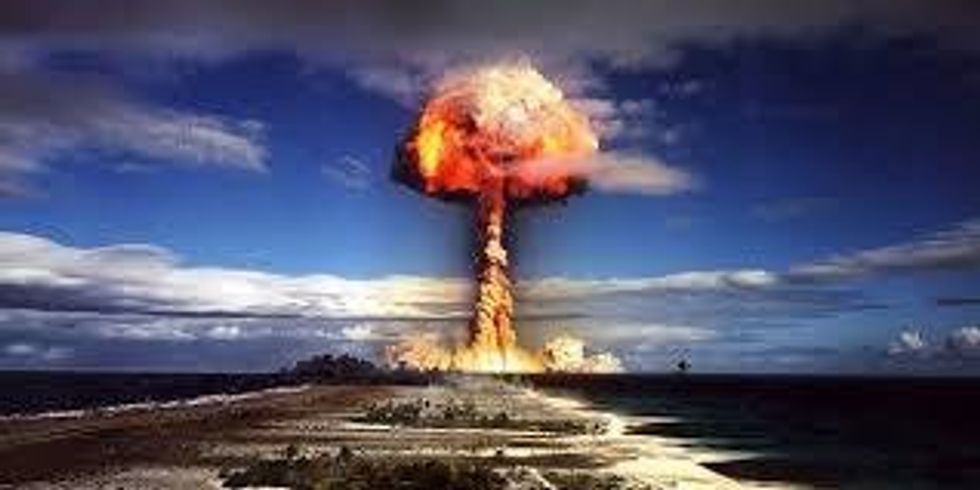
A nuclear bomb, sent flying down from an enemy state’s war plan up above, has hit the city and decimated a major portion of the city’s population. Innocent, unsuspecting people, dead within minutes and hours of the strike. And then, just a few days later, another city within the same country becomes victim to the very same circumstances. As if the direct devastation of the bomb were not enough, radiation-induced cancer affects and kills generations of individuals who were unlucky enough to be born in one of those two cities. Unfortunately, the aforementioned scenario is not a fabrication of my mind, but a very real piece of history.
Human beings seek to maximize the outcomes of their lives. This usually means that humans desire to be as happy as they can be, whether it be by the means of love, money, or power. Despite this, when humans come together in the form of states and governments, they seek the ability to destroy the human race altogether, believing that this ability is the key to power for their state or an eternal place in historical texts.
Our state-centric international political system creates an unnecessary competition between states that are in search of the in-tangible and irrational goal of hegemony of the world. This, by a number of metrics, is what lead the United States to drop the two bombs on Japan during World War Two. The U.S. had the intelligence (although this is refuted) that Japan was going to surrender before America had dropped the bombs. Although the U.S. justifies her actions by speculating that the nuclear attacks saved lives because it ended the war sooner, the more likely reason is that the United States wanted to express their military might to the rest of the world, especially the Soviet Union.
The international community has made attempts to effectively abolish nuclear weapons in the Non-Proliferation Treaty and the Arms Trade Treaty. Further, General Assembly Committee One is dedicated to the controlling of weapons of mass destruction. Despite these efforts, the world is still filled with nuclear weapons. Russia, France, the United Kingdom, the United States, India, Pakistan, and Israel all possess nuclear weapons. Further, North Korea and Iran are set on building nuclear weapon capabilities.
One practical reason that makes it hard to abolish nuclear weapons is the double standard that exists. The aforementioned states see no problem with themselves possessing nuclear power, however are dead set on ensuring Iran, North Korea, and any other state those countries do not trust, never possess the capabilities to produce a nuclear bomb. If the states who exempt themselves from the noble goal of disarmament of nuclear power would abolish it within their state then they would carry greater moral authority and credibility when negotiating with the likes of Iran.
States must be encouraged to implement peaceful diplomacy with one another on as many fronts as possible. The desire for nuclear weapons is enhanced by the fear that an enemy state will attack yours at any moment. This is why Israel possesses a nuclear bomb but is determined to ensure Iran does not get its hands on one. If we build confidence amongst countries then it will be easy to convince states that there is no need to possess such a deadly weapon.
Considering we live in a world where the international moral code preaches about the importance of the preservation of human life, it is essential that we move towards the abolishment of a weapon that affords a given state the opportunity to kill a countless number of human beings. It is time we forget about the intangible goals of hegemony, power, and reputation and start fighting for the goal of the preservation of human life.