


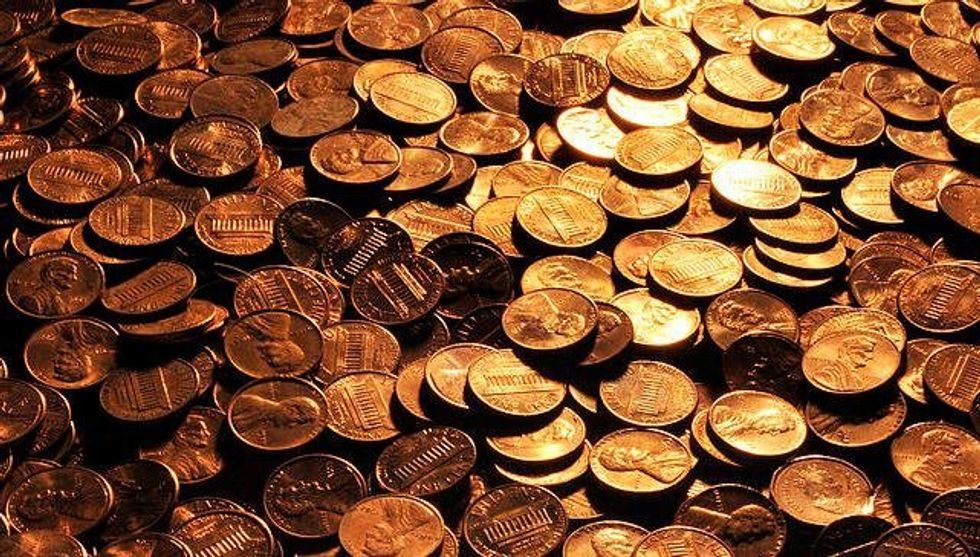
Pennies are a burden. I don't think anybody views pennies as cash - but more like collector's items. Why else would people keep them in jars rather than their pockets? They aren't a useful currency to lug around because they will weigh down your purse before you have enough to purchase anything of value. They are a frustration for both customers and retailers and I can't understand why in this day and age they are still in circulation.
Perhaps I'm being petty. I've ranted to friends before about pennies only to find out that no one felt as strongly as I did about them. And I guess I understand - with credit cards and online transactions replacing physical currency, pennies might become some nostalgic relic that remind us of a simpler time, where the newspaper cost only five cents and Joe's Hardware Supplies was just around the corner. But really I don't understand, because the penny should be obsolete and it seems unknown interests are keeping it alive.
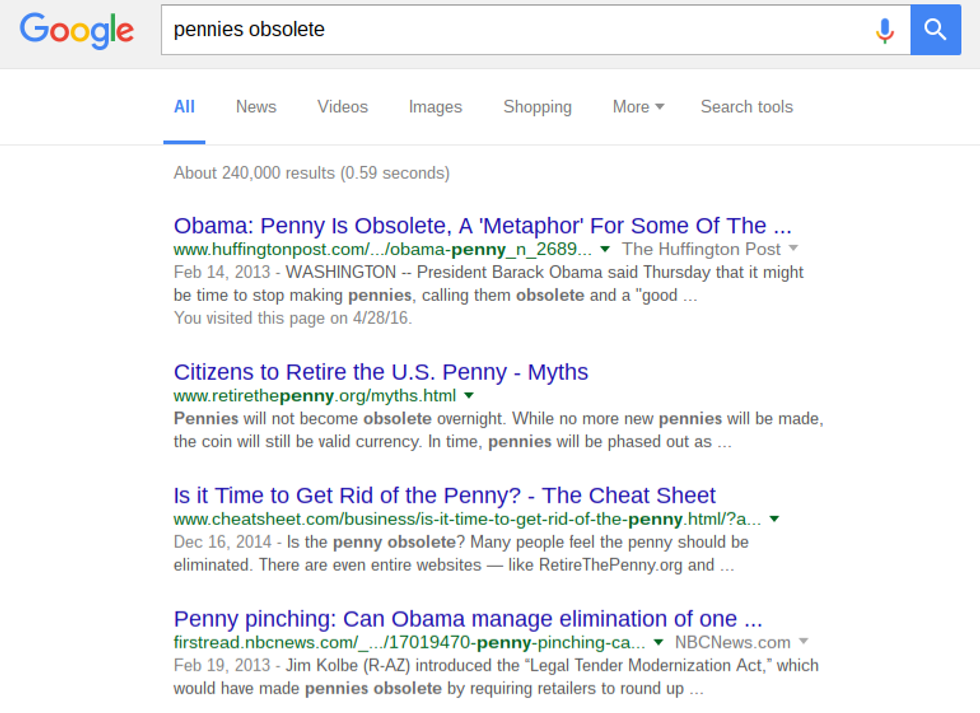
Even Obama seems to think so.
Reports have been made in recent years about the zinc industry's role in pro-penny lobbying and op-ed publishing. Zinc constitutes a good portion of the coin's metallic makeup so they would have a stake in its survival. Especially considering that the value of zinc has inflated to the point where the cost of minting a penny far exceeds its actual worth.
A report from Fortune also mentioned that ACC, a group conducting public opinion polls concerning the penny, was led in part by members of the zinc lobby. Another recent poll that concluded that the penny still had a place in our hearts was spearheaded by Coinstar. Coinstar, which also owns Redbox, makes the majority of its income from loose change deposited into the machines.
While this puts some things into perspective, author reports from Forbes argue that the zinc lobby's stake in the penny's survival has been exaggerated. According to data published by the USGS, the zinc industry makes about $25 million annually from penny production. With the claim that $200,000 is spent per year on lobbying, Forbes argues that this does not make much sense financially. Zinc still makes a considerable amount of money in the international metals market, and making the penny obsolete would not be a fatal loss to the zinc industry.
Internationally, many countries have abolished low-denomination currency. The most recent case is Canada, which eliminated their version of the penny in 2012. Countries in the Euro zone still retain their one-cent coins, but they have much more value than our penny and it makes sense to carry them around. I used to work as a cashier in an international hotel, and I frequently had to help foreigners sift through their purse as they tried to calculate the exact change. Most of them complained about how useless the penny was, and most caught on to the fact that most Americans round up and expect change rather than fork up the exact price.
However, in countries where the United States economy is influential and the GDP is much lower, pennies still have some weight. Opinion polls generally reach the conclusion that lower-income earning individuals still prefer the penny being in circulation, as opposed to higher-earning individuals.
I suppose, like the coin itself, the elimination of the penny is a double-sided issue. To me its relevance is fading, and one day it will truly be a collectors items. Until then, the jar on my counter will stay full.

















