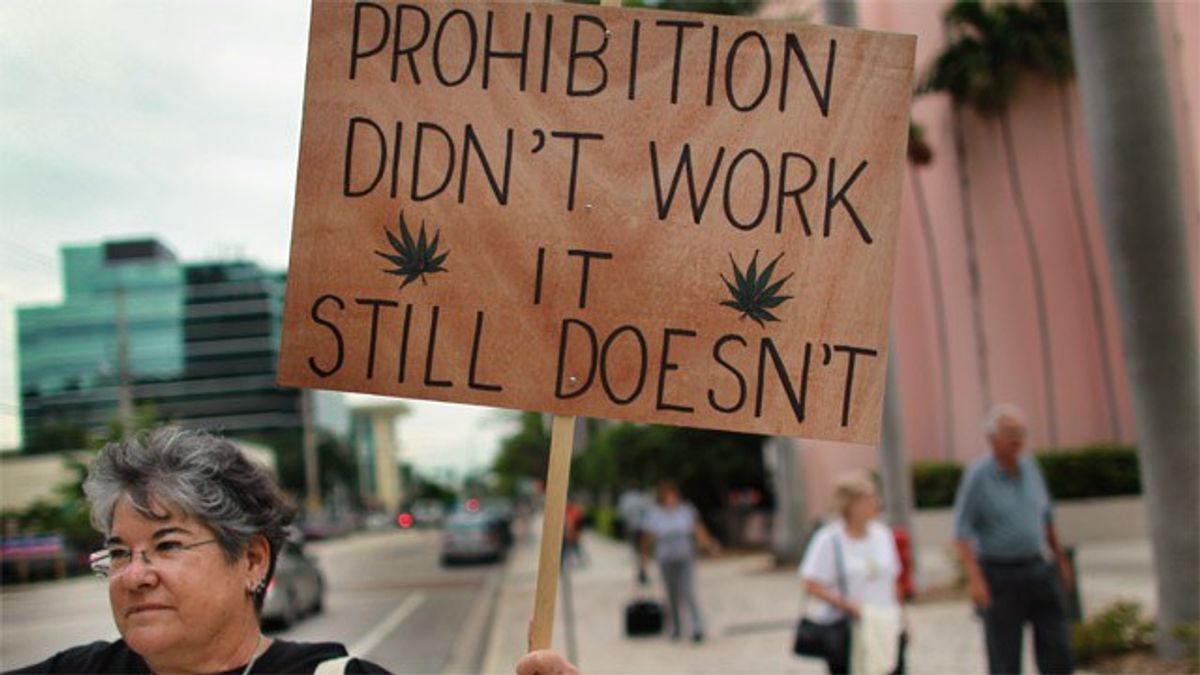
The War on Drugs is a federal, state, and local policy of drug prohibition and criminalization in the United States. Although marijuana regulation began even before the Great Depression Era, this current policy began under Nixon around 1970. The drug war gained more teeth in the ‘80s and ‘90s under Reagan and Bush Sr. in the form of mandatory minimum sentencing, expanded media campaigns, and harder hitting military involvement in the drug trade. Proponents of the War on Drugs argued that drugs are vices that are harmful to oneself and society and, thus, they need to be banned. However, as American political philosopher Lysander Spooner explains, vices are not crimes. Also, French political philosopher Frederic Bastiat explains that if the victim is “society,” there is no crime. People of all political stripes have reason to be skeptical of the War on Drugs.
The Cost

The War on Drugs has proven to be quite a strain on federal, state, and local budgets. Ever since its inception, federal, state, and local governments have spent $1 trillion on enforcement. Federal budgets spend an estimated $15 billion annually on drug enforcement, treatment, and prevention. State and local governments have spent an estimated $25.7 billion. A combination of statistics from The Department of Health and Human Services and the International Centre for Science in Drug Policy shows us that spending has skyrocketed over the years while drug addiction rates have stayed relatively unchanged. A conservative could look at this wasted taxpayer money as an example of wasteful government spending. A liberal could be angered that this wasted taxpayer money was not been spent on schools, infrastructure, or poverty alleviation programs.
Creation of the Drug Trade
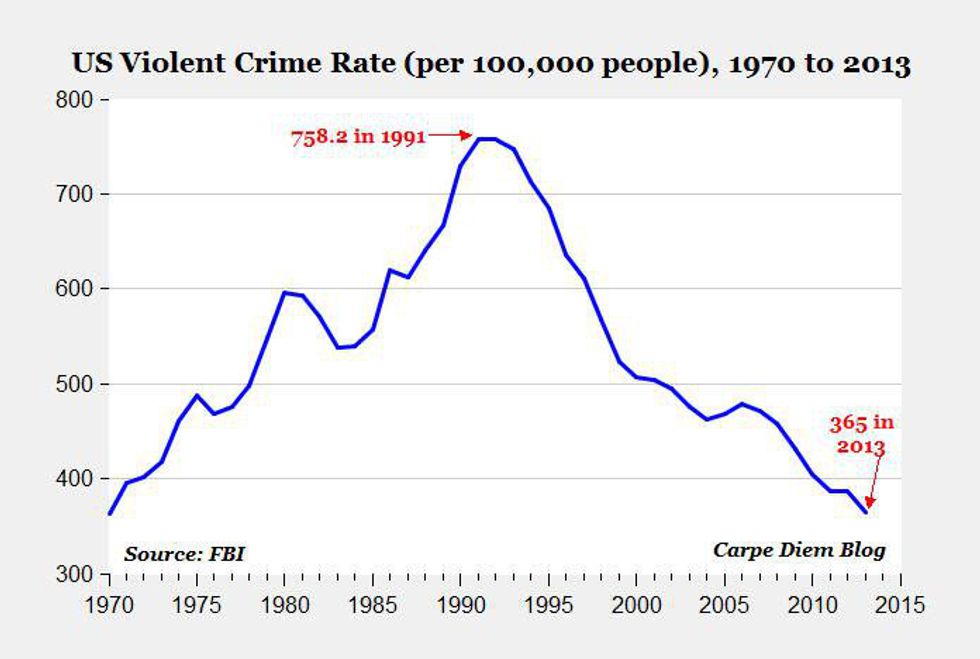
When the government bans a good that’s in high demand, a potentially free, peaceful, and open market is replaced by a violent black market. Similar to the effects of alcohol prohibition, entrepreneurs are replaced by gangsters or drug cartels. In a legal and free market for drugs, competitors gain notoriety by providing a purer product and better service. In the black market drug trade, cartel leaders gain competitive power by violently killing their competition and creating more potent products by lacing marijuana with harder drugs. From the ‘80s to the ‘90s, violent crime steadily rose until its peak year in 1991 and steadily decreased thereafter. The rise of cartels and gangs played a huge role in this crime spike.
The United States Prison Population has Exploded

Before the War on Drugs began, the United States prison population remained relatively stable. However, after the drug war and the subsequent sentencing changes in the ‘80s, the prison population exploded, far exceeding the rate of population growth. The United States has about five percent of the world’s general population, but it has approximately 25 percent of the world’s prison population. While a fairly significant amount of prisoners are in simply for the possession of illicit drugs, other people are in for some violent offense. As violent crime decreased in Portugal after decriminalization of drugs, we can infer that a fairly significant amount of these offenses are committed within the framework of the violent illicit drug trade. The rate of arrest for marijuana possession has risen sharply since 1980 while violent offenses have decreased since 1991. A conservative should, once again, look upon the high costs of filling prisons while a liberal should be outraged that the government is violating civil liberties.
It is morally reprehensible for the government to arrest its civilians for simply possessing a drug that it’s opposed to or afraid of. The War on Drugs as a whole has been a large strain on state and government budgets with little effect on addiction rates, caused the creation of a violent black market for drugs, and lead to the United States having the largest prison population in the world. Conservatives can take issue with the War of Drugs due to the government’s vast overstepping of power and the wasted spending. Liberals can take issue with the drug war due to the explosion of the United States prison population and the wasted money that could’ve been spent on other programs.