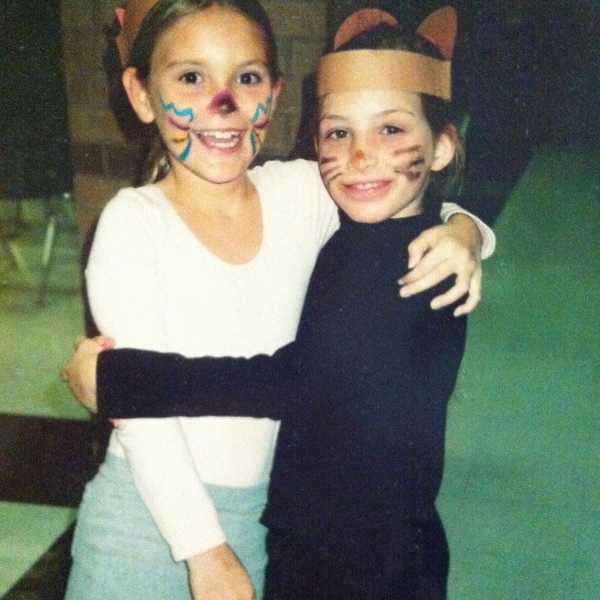
I want you to think back to your days in elementary school. The days when everything was easy, and the biggest things you had to worry about were what you wanted to eat for lunch (even though it was obviously pizza, if they had it. Duh). You learned your multiplication tables, you read those books and took Accelerated Reader quizzes, and you learned how the world worked in science. All of this was the everyday norm, those were our classes, but there were others. For some people, and I think it was probably most people, when the teacher broke out crayons and markers, it was about to get good. You got to just do whatever was on your mind! You want that elephant to be green? Do it. You want to draw a spaceship made out of pizza? Go for it.
Visual art, and its close friends--music, dance, theatre, and poetry--they’ve always been a whole different breed. They incited a break in the monotony of learning PEMDAS, how to say the states in alphabetical order, and learning grammar. You got a break to just screw around and dump out all of those daydreams, imaginations, or expressions you had in your head all day. You could draw, or play an instrument, or learn to dance. Those moments are some of what I still remember the most from elementary school, and they’ve all affected my life to this day.
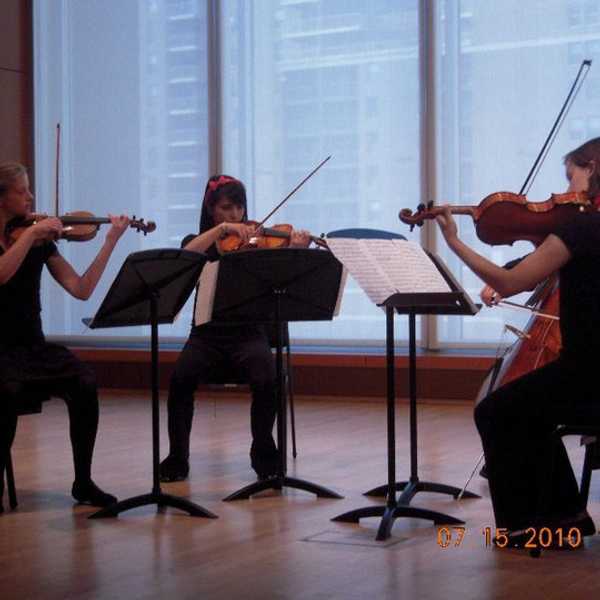
For my third grade self, it was playing the violin. I wasn’t awesome at drawing, I couldn’t dance, but I felt like I was playing violin pretty well. Honestly, I don’t even remember picking to play violin; my parents could have just told me to do it. However, it was something I always remember looking forward to. It wasn’t math or memorizing the dates that things happened in the United States, it was music. I could go and sit and create something, I could make sound that I am quite positive was atrocious at the time. Now, despite that I haven’t played a string instrument since high school (I switched to viola), I still hold with me the musical education I had. I can still read sheet music without delay. I can tell what is sharp or flat, what is under tempo or over. I love music, and learning how to create it was amazing for me.
Everyone of you had that thing in school, and I am positive that it wasn’t just the arts, I know some of you were lawyers or doctors at the age of eight, the ones that rushed home to knock out their math homework with excitement in their eyes (I really hope I’m wrong on that example, math and I are NOT friends) and that is all well and good, and the point of this article is not to dissuade you from continuing to get that business degree or, for any younger folks, it is not to convince you that every last person in the world can become a professional artist of some form. The point of what I am about to get into is that without art, the world would be pretty terrible, and we should definitely not stop teaching them.
Imagine a world without design, without performance or music. Pretty dismal, eh? Everything we look at, everything we do, it’s touched by the arts in some way. Your drive to work? The cars next to you are designed to look the way they do, while also being efficient machines. Billboards show you upcoming events and appealing businesses. The music on the radio or played from your phone is almost ever present. We have architectural marvels that are functional and beautiful, advertisements compelling us to buy the next big thing, musicals and dances that bring us to tears, and every one of these things, all of these people, they are filled with a creative energy. They are filled with the need to express and create, to move someone as they are moved. Be it negative or positive, the greatest minds throughout the history of the world have been artists in their own right, innovating new designs to take our world and shake it at its very roots.
Despite all of that, we are seeing a constant battle -- or better yet, massacre -- of the arts and all that they do for our world. How can we have the things we do without the artists and creatives that live now, without fostering the growth and exploration of new ones? What if the next Michelangelo was born yesterday? How will they ever live to their true potential if we are capitalizing on the ideology that we need to drop art and art history classes from our curriculums? The thought of it terrifies me. I’ve seen it all too well -- I was an art education major for the good part of my college career, that is, until the program was dropped and it made it much more difficult (although possible) to graduate. I made the decision then to switch and become a photographer. Now the university has brought the art education program back, which is great, but I will not pursue. Not yet. With moves like that, we would see a trickle down effect of horrible proportion. No art teachers? That leads to dwindling numbers of artists as we progress. No more artists means no more art teachers, and it burns itself out from there.
On top of a scarce number of art teacher jobs available and dwindling programs, we see the ever-popular STEM concept of teaching. STEM stands for Science, Technology, Engineering, and Mathematics. The core knowledge areas that are taught to every student in the United States. That is what we define our school system on, leading every student to develop in one of those areas, and the importance of these areas are stressed so much. “You have to kill that CATS test (or the standardized test of your state)!” says your teacher, twitching as they know that funding and jobs are at stake. If we, the cattle of the education system, do not perform and show the teacher’s ability, we reflect poorly on them, the school, and the district. Now, I am all for showing that my teachers are great at their jobs, however the more that these standardized tests and measurable, tangible subjects are taught and used as the measuring post for schools, the more we will see arts fade out. What of the intangible? What of the parts of our minds that can’t be measured by "Distinguished" and "Proficient"? See, kids thrive on art.
Even from the earliest parts of life kids are bouncing to music, or vocalizing in some way. They’re dancing and coloring. We develop, as humans, through art and some of the most profound moments are portrayed through art. We use the arts to discuss the problems, loves, beauties and praises that simple words that follow the rules of syntax can’t ever seem to hit. We currently push our kids to learn four different ways to find the formula for the hypotenuse of a triangle, not basic accounting, or how to cook or survive in the working world. We have conditioned so many to think not only that the arts are an impossible area of surviving in the modern working world, but also that they are unnecessary. We don’t think about the creative problem solving skills that they foster. The health benefits that dancing brings. The coordination it takes to play an instrument, or how logically based reading sheet music is. The communication skills that come from acting and performing on stage, the pure joy brought by creating a piece and watching people feel when they see it that makes them truly think. I can’t even begin to describe how painfully, incredibly, and horrifyingly wrong it would be to take the arts away from our children.
So, coming from someone who is currently working as an artist (and that is before graduation) it is possible. It is possible to take your love and passion and apply it, to feed your family or yourself with a job in the arts. You designers, photographers, dancers, actors, singers, please never forget how blessed you are to have the ability to create and to give to others using that skill. Please, readers, advocate. Advocate keeping the arts in our schools, advocate keeping what makes our world colorful. We need to show the next generations that it’s okay. If we kill the next Vivaldi, the next Chopin, Shakespeare, Banksy, or Vermeer before they even know what they are capable of, what is left? In my opinion, a world without joy.