Whether you slacked off in your high school government class, were out of the country, not from the country, or just generally apathetic towards American politics, you might have been confused by all the media buzz surrounding the Iowa caucuses. What is it? How does it work? Why's it such a big deal?
The following will attempt to clearly answer all of those questions.
When presidential election season comes around, the Iowa caucuses are the state's method of choosing delegates to send to the national convention.
Compared to primaries which operate on a statewide level, caucuses go the more local, home-grown route by starting in the precincts and then working up to selecting county convention delegates.
 The county precinct map of Iowa
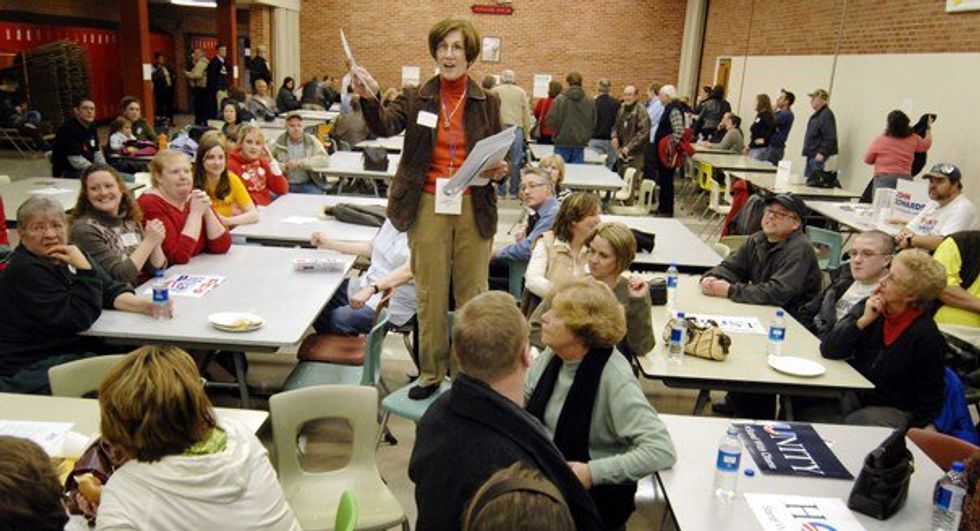
At the caucus' core, registered party members will attend local meetings to discuss their party's candidates, discuss their platform, and of course vote. However, there's a difference between how the voting in the Republican and Democratic caucuses work
Republicans vote with a secret ballot. Pretty straightforward. On the other hand, Democrats will physically sort themselves into groups based on which candidate they support and will attempt to convince their fellow party members to switch, which can happen as late as midway through the caucus. There are differences in other details too, such as the requirements for a viable candidate, the percentage required for a candidate to receive delegates, etc.
Both caucuses eventually end with delegates being sent to represent candidates in their respective national conventions where the presidential nominees are officially selected.
The importance of the Iowa caucuses mostly stems from the massive amounts of media coverage, plus it's the very first state on the presidential primary schedule. It's basically a stepping stone for candidates to make it or break it since the voting results reflects on their popularity and strength.
For more information, here are Vox's in-depth article and a YouTube video that give an overview of the Iowa caucuses.