I cannot say I am a psychologist and I cannot say I am a sociologist. I would not be able to engage in an intellectual conversation about the way the brain works or any of the millions of reasons why humans think and interact the way they do. However, I will claim to be an expert people-watcher.
I love watching the way humans interact with each other in those awkward moments of honesty and think it’s hilarious to watch someone completely avoid human interaction by any means necessary. If you’ve spent any amount of time sitting on a park bench or simply observing the world around you, I’m sure you’ve partaken in your fair share of people watching.
The other day as I was leaving one of my classes, there were two girls walking in front of me. They weren’t far ahead so I could understand their conversation. I wasn’t paying much attention to them until I heard one of the girls say there was no way she could go to the bars that night. Her friend responded with a list of reasons as to why she could go out. The first speaker paused for a moment and then agreed, she had changed her mind that fast. I thought to myself, “Wow. That wasn’t much of an argument. I wonder why she didn’t even put up a little fight.” Then it occurred to me, humans are incredibly susceptible to persuasion.
To a certain extent, it’s almost as if we crave it. For some reason, we are drawn to the idea that we are set on our beliefs but crave for people to attempt to change them. Often, it usually works. Why is that? How does persuasion work?
At first, I thought that it might be because humans like to be told what to think. In today’s society, it’s impossible to walk outside without experiencing some form of communication whether it be verbal, auditory, or written. This being said, it’s become all too easy to let society tell us what to believe through the constant swarm of messages attempting to achieve communication with us. Is it because we’re lazy? Are we no longer capable of developing core beliefs we can stand by?
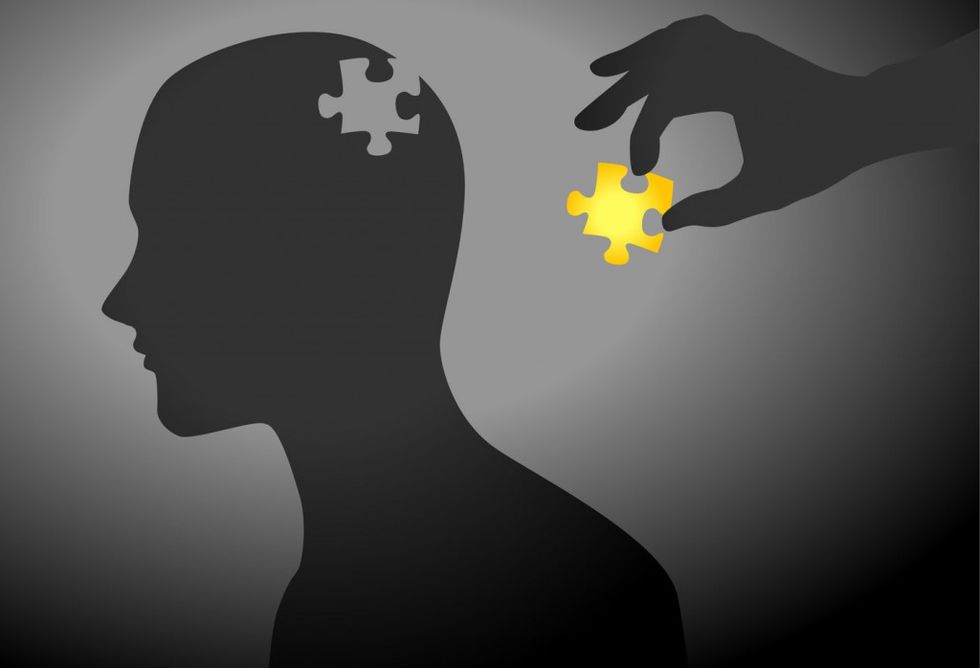
The answer is no. We can. The brain forms beliefs the same way it forms self-esteem. It follows patterns that we experience and turns them into pathways that are basically engraved into our brains. A person is more likely to have a strong belief about an experience or emotion that has directly related to their past. These experiences develop into the beliefs that people often carry into their adult life. So, if these beliefs are physically part of who we are as a wrinkle on our brain, how is it that we somehow forget them the second we are confronted with persuasion?
Persuasion can be interpreted in many ways but is loosely defined as symbolic communication between two or more people with the intent of changing, boosting or forming a belief of the person being persuaded. That is a more technical definition, but most people know persuasion when they see it. It comes in all forms and we can usually comprehend when someone or something is attempting to persuade us. Why doesn’t that set off a trigger in our brain to remind us of our beliefs that we already hold?
I have a hypothesis.
Could it be that the modern society growing around us is eroding our ability to truly believe in something through its relentless attempt to communicate a thousand beliefs at one time?
Imagine sitting in a room with a group of friends while the television, radio and iPod are playing at max volume. It would be difficult to concentrate on any single audio message attempting to communicate with you. Most likely, you can get a jist of everything going on but you will not be fully invested in any of the audio stimuli around you.
Now, compare that to the way society attempts to carve beliefs into the human brain by any means possible. If you were to log onto any form of social media, you would immediately be exposed to a thousand different beliefs. As you continue to see the same beliefs over and over again they form the wrinkles in your brain like I stated before. The thing is, at what point do the beliefs become deep enough? If you have thousands of deep beliefs, are they truly that important to you?
The answer is up to you. There is no factual statement that says you will or won’t chose to believe in something. Honestly, that’s a little scary. With the ever expanding technological advances among us, how is it that humans are somehow moving backwards? We are slowly falling into a routine of blissful ignorance. We, as humans, are defined by the beliefs we hold in our hearts and minds. They make us individuals because no two humans have lived the exact same life. We encounter different experiences and develop different beliefs as a way of becoming an individual. Who are we if we do not stand for anything? Are we okay with becoming a robotic society that believes whatever the latest trend is and then moves on to believe something else as soon as everyone else does?
Who becomes the leader?
Simply put, it should be you. You, the human, have a responsibility to allow your mind to grow. You should crave the satisfying knowledge that radiates from the person who knows who they are. We continue to fight for beliefs we know nothing about simply because we were told that it’s what we should believe. You should be the one to change that. You should be the one to pause and listen to the words you are hearing. You should be the one to comprehend the events you are seeing.
Put your phone down, walk outside, and reward your body with the gift of belief. Be the strong human you were born to be and say no when you mean no and say yes when you mean yes. Learn to care and learn to not care. Learn to thrive. Be something that excites you.
Persuasion is a fascinating concept that will always exist in our society. However, that does not mean it has to control our society. Persuasion doesn’t have a brain. Humans do. We are the ones who determine our beliefs.
Take a deep breath, count to ten, and make your move. For all you know, you could be the leader who jams society’s mechanical spin and regains the ability to access the wonders of human belief. You could be the one who regains the ability to live.
Now, do it.