Krzysztof Kieslowski’s, "The Decalogue" is a little-known treasure. Produced and aired on Polish television in 1989, the series consists of 10 episodes, each roughly an hour long. Each episode, as the title alludes, examines elements of the 10 commandments, though little religious sentiment can be found in the stories’ themes. It’s certainly a favorite among critics worldwide, however the series receives little attention from general audiences, which is understandable, given Polish made-for-TV mini-series are not typically thought of as popular. For those who do watch it - it is unforgettable.
According to IMDb’s trivia, Stanley Kubrick considered The Decalogue to be the only masterpiece during his time (presumably other than his masterpieces). Roger Ebert gives it high praise as well.
The episodes do not necessarily contain an examination of one particular commandment, though each has a commandment for a title, and they do not involve a grandiose moral message – in fact, quite profoundly the contrary. The Decalogue represents a gritty take on the everyday struggles of human life, where moral quandaries abound. The episodes each take place in the same apartment complex in Poland; yet each tale follows entirely different people, totally unconnected from each other, save for the location in which they live. The stories paint a picture of real life, plausibly real people, under quite realistically bleak circumstances. Peoples’ lives intertwine, and through every interactions, we come to understand the moral ambiguity and unpredictability of our actions.
For me, the first episode is the most striking, in which an intelligent father and his young, genius son are still coping with the loss of their mother. It is the dead of winter and the son wants to go skating on the pond, so the father, using his computer and data collected from the weather service, determines mathematically whether the temperatures outsides have frozen the pond sufficiently. It all seems quite thorough until we are shown events taking place at a school up the river from the pond, events which the father could not have predicted. Perhaps too much trust was placed in the computer, which looms over the room sometimes like a strange deity, the father clinging to its assurances after the disruptive wake of his wife’s untimely death. The results are tragic, and one cannot help but wonder how, even with the most precise and advanced scientific calculations, reality still eludes us. The computer, a machine, cold and calculating, glowing and void, might be taken as a symbol of our false hope for finding certainty in scientific understanding of reality.
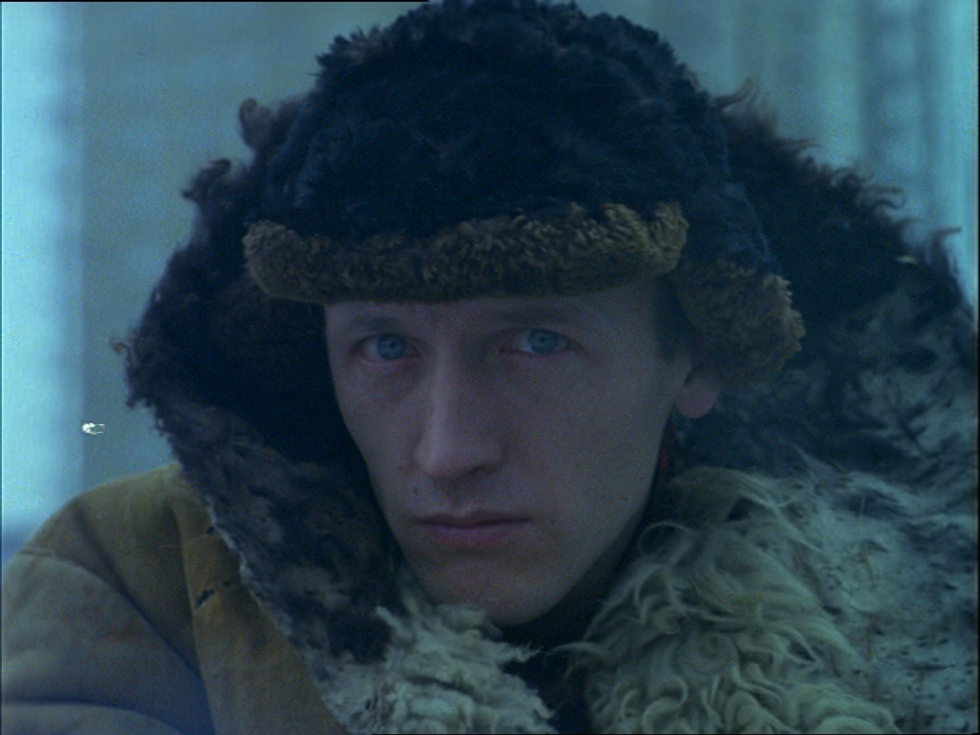
Throughout the series, a shift is often made to a character that remains unexplained. Many critics refer to him only as “the watcher.” He is a lonely man, possibly homeless, sitting on the frozen bank of a river, just starring sadly. Kieslowski does not give us much explanation beyond “the watcher” simply being someone who watches our lives, with little approval over the way in which we live.
The series may be ten hours long and in Polish, but I can promise you that it is worth sitting through. Its pacing tries to give the viewer a sense of the subtlety of everyday life, though if one has patience, the sudden twists offer a dramatic glimpse at the underlying absurdity of it all.






 man running in forestPhoto by