Some art refuses to be defined, because when it comes to art, there is no truth, only interpretation. Contemporary or postmodern art is a form of self-expression, coming from the impressionist idea that, “beauty is in the eye of the beholder.” The contemporary culture despises objectivity in general, they adore cultural relativism in morality, subjectivism and the primacy of feelings over facts. Everything is to be accepted and tolerated except those of objective standards. Objectivity in art is paradoxical considering that art itself is of conscious human creation. Literally, anything that is created by humans can be considered art, and not everything has to be oil on canvas. Contemporary art sparks curiosity, asking questions instead of providing answers, which is why people are so drawn to its personal contextualism.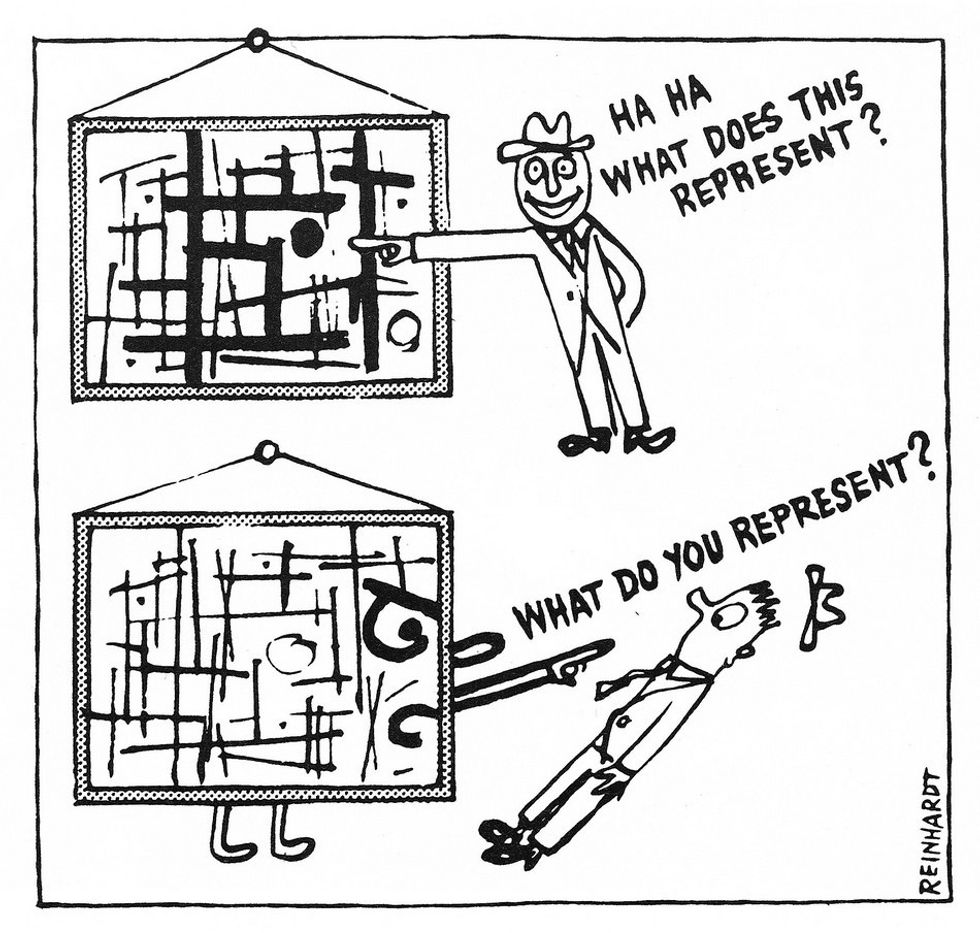
Which poses my question: Why can’t we have both objective and subjective aspects of contemporary art?
I believe it is important, at this point to differentiate both objective and subjective art. Objective art, as defined by Russian mystic George Gurdjieff, is any painting or artistic work that was created with deliberate conscious effort, free of subjective influence, such as, works by Michelangelo or Raphael. Subjective art is belonging to the "thinking subject" rather than to the object of thought, meaning it is absolutely private and personal. Simply, an artist will paint something without any vision for the spectator who will see it. But, art is opinionated, and we all have our preferences; personally, I prefer the Renaissance, Romantic, and Baroque periods. But, I strongly believe all art should be respected, no matter how absurd it may be. Because all that art is, which can be agreed upon, are windows into the lives of artists.
Jackson Pollock, famous for his drip paintings, described them to be “spasms of energy and unadulterated painting without any kind of meaning,” giving a clear depiction of the inside of his mind, being a chronic alcoholic. Salvador Dali's paintings about melting clocks and additional digitized versions of the same, marked the corresponding discoveries in the fields of science at that time, namely in theory of relativity, time dilation and quantum mechanics. Jean-Michel Basquiat, a Brooklyn-born artist, died of heroin abuse at the young age of 27 and left behind his soul in the incomprehensible strangeness of his work. Vincent Van Gogh painted wheat fields and tempestuous skies mostly, as an underlying hint towards the lonely life he lived, culminating in madness and suicide. All of these artists focused on the reflection of human life. Much like Frida Kahlo said, “I am not a surrealist, I am just painting my reality."
Contemporary art patrols an unpredictably changing territory, it embraces, subjectivity, creativity, intellect, emotion, and fantasy. It’s flamboyant, shocking and sensational to quote any tabloid press. It’s elephant dung-decorated linen or an enormous balloon dog sold for 58.4 million. There is no conventional style or medium, it's allegorical, it's abstract, deeply intimate, it’s human-made, it's oil on canvas, an architectural monument, an installation or performance. It’s eyeful “aesthetic” and conceptual in the same instance, it’s sarcastic and ironic sometimes, even simultaneously. The problem explaining contemporary art is that it's nothing like gothic or neo-classical art, or relatively, any other kind of art. It's hundreds or more art styles that come together as a whole, known as artistic pluralism. It’s abstract expressionism, not a uniform style, and it's as varied as life itself.
However, art, throughout the years has changed, and each artistic movement influences the next, but something happened on the way to the 20th century. Art historians agree that the controversy began with the introduction of Dadaism, Dadaism was a form of artistic anarchy born out of disgust for the social, political and cultural values of the time. The movement questioned long-held assumptions of what art should or shouldn't be.
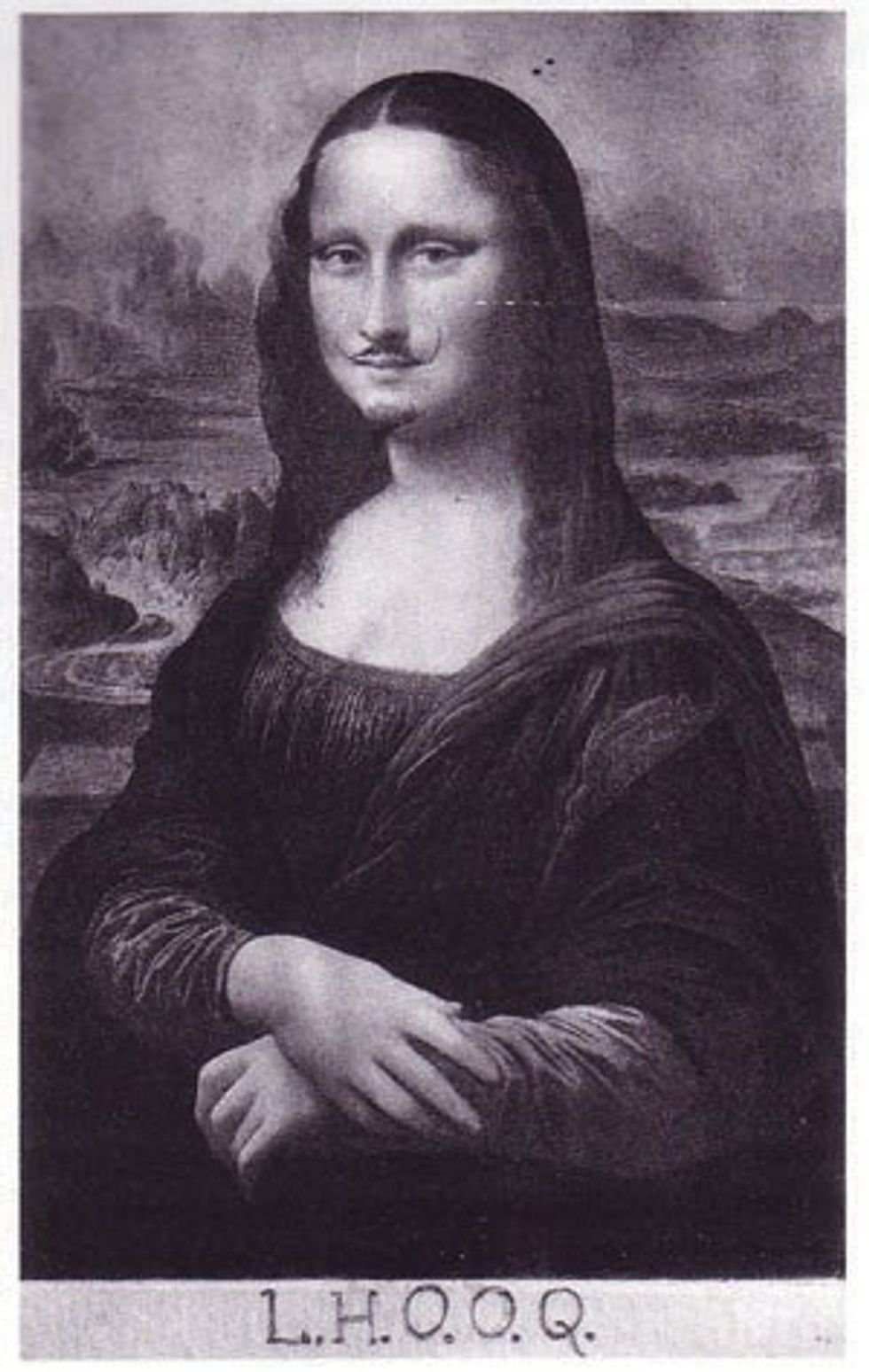
Similar to contemporary works of today, which mirror contemporary culture and society, it attempts to avoid conformity and reject the cultural mainstream. Marcel Duchamp, a pioneer of Dada, proclaimed himself, "I force myself to contradict myself in order to avoid conforming to my own taste.” The day Duchamp created L.H.O.O.Q., the painting of Mona Lisa with a mustache, art was no longer retinal but involved a mental, intellectual or critical aspect to it. Thus, the commencement of once again, an artist rebelling against the established tradition, beginning subjectivity in art.
Take a look at the Fountain, another work by Duchamp, in accordance to the BBC and other art historians, it is considered one of the most influential artworks of the 20th century. The practical joke that launched an artistic movement. The man valued humor, telling a New York newspaper that, "People took modern art very seriously when it first reached America because they believed we took ourselves very seriously. A great deal of modern art is meant to be amusing."
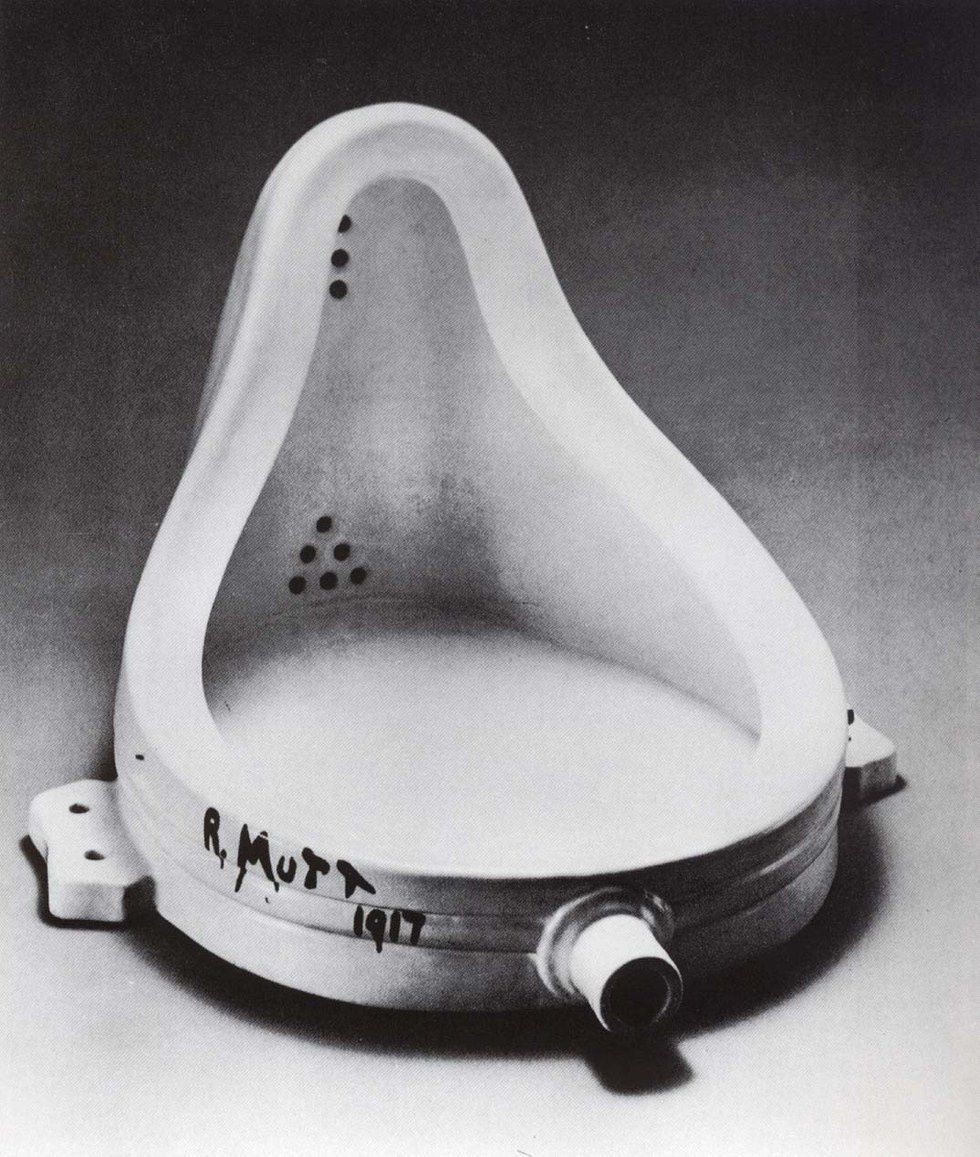
Nowadays, Marcel Duchamp is known mostly for his Readymades, mass-produced objects from urinals to bike wheels on stools – ergo, changing the course of art history and what we consider art. Dadaism helped provoke the question, what is art?
The only thing is, he never did declare these objects art. In accordance to him, they were “a very personal experiment” which he created “with no intention other than unloading ideas.” Which is what art would like to be understood as now, a way to unload ideas, but critiques enjoy believing otherwise, considering the objective aspect of an art piece. Sadly, the art world is merely a place of contradiction now, an opinion can no longer be housed without an argument in return, which is why this era of contemporary art sucks. It challenges moving ideals, but people are too slow to recognize the fact that change is inevitable. We've evolved from cave paintings to frescos to oil on canvas, and we're currently at this point where you can hear people saying, "What happened to artists like Leonardo da Vinci and Donatello?" Well, one can argue in return with, "What happened to artworks like the cave paintings?" It's virtually the same thing, and humanity has moved on. You can pretty much say that Banksy's satirical street art are modern-day cave paintings, and every current contemporary artist has evolved in their own ways by incorporating former art-styles into their work. In my opinion, whenever an artist pours themselves into whatever they are working on and tear up every inch of their souls to do so, then that piece of work should be respected regardless of what it is, and that is what should be considered art.
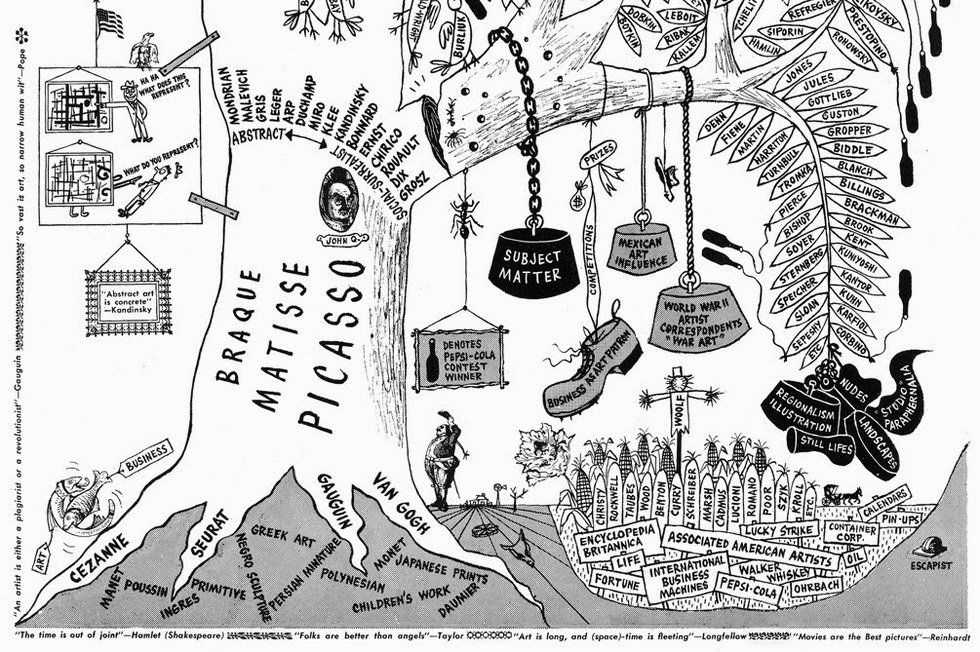
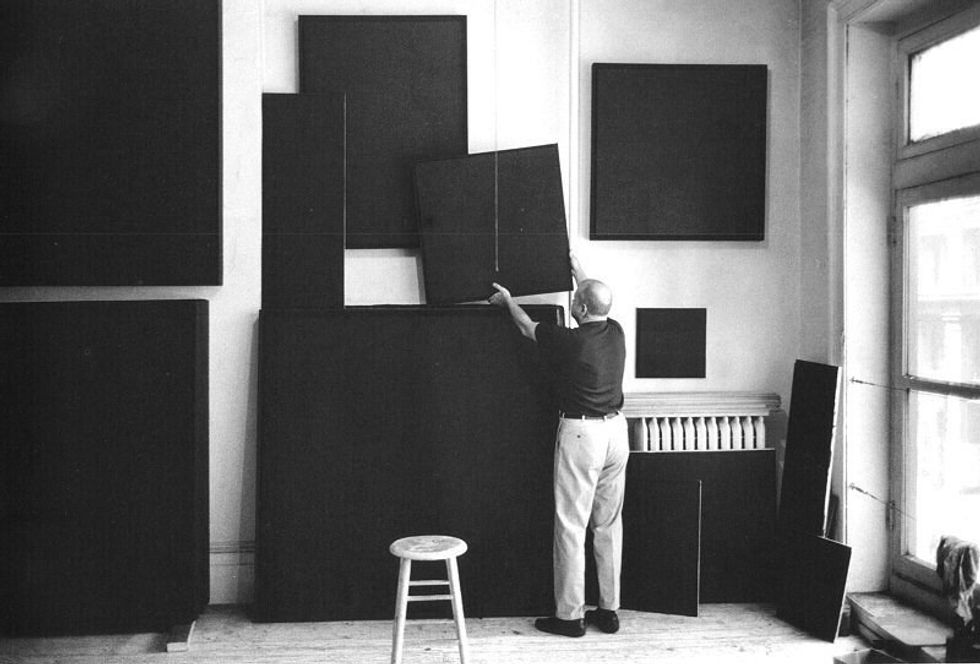
Ad Reinhardt, a painter and comic-strip artist from New York City in the 20th century, was well-known during the Abstract Expressionism Movement. In the last ten years of Reinhardt's life, he focused mainly on abstract black paintings, which challenged a viewer's patience. None of his paintings were completely black, even if they looked so, they all contained a hint of various tonalities and mysticism. Reinhardt experimented with "slow art," which established the relationship between the art piece and the viewer, it's collaborative and it was unachievable without the spectator's presence. It take's a matter of time to understand what lays behind each single one of his black paintings, like any painting really, but these bore no reference to anything outside themselves. His black paintings are excellent teaching material when it comes to learning how to view art. Just as he challenged the viewer's patience, if upon initially viewing a painting you question it, take a little more time to understand and literally, look between the lines. You may be surprised at what you may find.
Apart from it all, appreciate art because it appeals to your humanity. Everyone has their own opinion on it, it all boils down to personal preferences. Throughout history, people have ridiculed art because it challenged established tradition. Vincent Van Gogh, who is considered one of the most influential painters of all time, received little to no recognition during his lifetime. His paintings were described as being too dark and lacking the bright liveliness seen in the impressionist paintings of the time because he decided to revolutionize the current art himself. Humanity has always been subjected to change, it’s inevitable. Yet, some people value the subject matter more than the visual execution, and others prefer the latter. But, no matter what, eyebrows will be raised left and right, everyone has their own personal opinion on contemporary art and all artwork whose soul was poured into it, should be accepted. A subjective-objective truism is possible, you can have both a deliberately conscious art piece that is simultaneously intimately made for the artist himself. Objective factors are subjective upon the individual. Just as Leonardo da Vinci said, "Where the spirit does not work with the hand, there is no art."