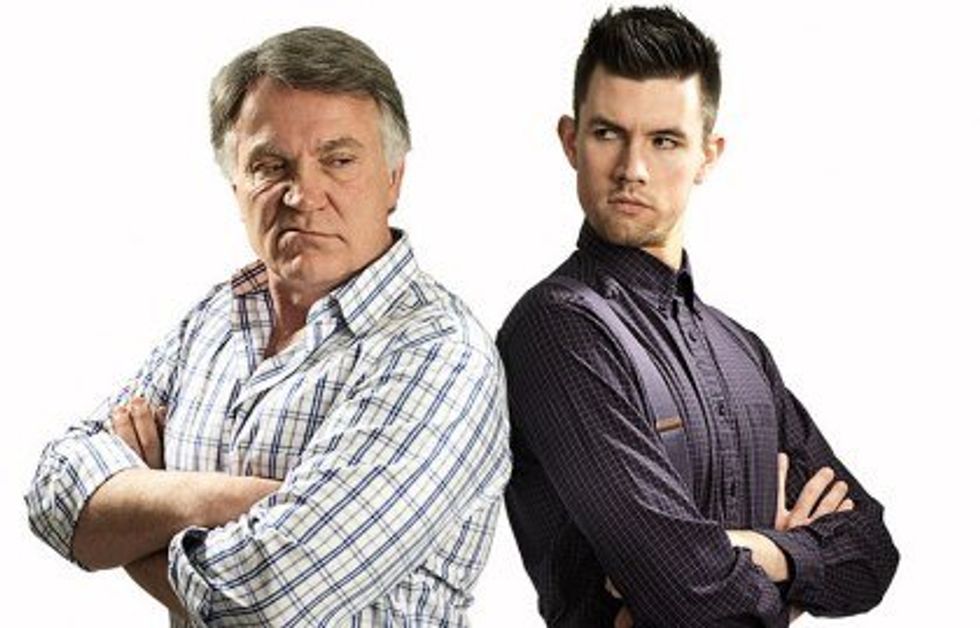
There exists a universal relationship built on reciprocal trust that lasts for almost more than a few decades: the bond between the parents and the child. The parents, which have lived far longer than the child from the moment of his or her birth, cares for and guides the child as it grows and matures into the world. The mother and father is then trusted by the child for their learned life experience. It is obvious that the child cannot grow without the parent, and that the parent definitely has something to offer the child. Yet somehow, we forget this along the way…and then the tension begins. A friction between both generations spark constant feuds and questions the other’s credibility on everything: politics, personal experience, a belief, or lifestyle decision. Maybe they are your parents or grandparents. Maybe it is your teacher. A deacon at your church perhaps, or someone that you work with. Whomever it was, that frustrating disconnect between two vastly different generations is the same, and our talent for clashing against each other subconsciously raises our awareness to how different and unique we each are. It’s not that we desire for that barrier to be there, or that we consciously create it. It’s just that we unfortunately forget to take a moment realize that the differences between generations doesn’t necessarily mean that we can’t respect the other’s views and come to a compromise.
How unfortunate that both generations have short term memories.
Somehow, that generation gap rears its ugly head, potentially turning a simple situation into perplexing one. This isn’t a new trend, though. For many decades there have been subtle shifts in society’s crust that resulted in this devastating chasm between the older generation and the millennials. We try to overcome it, try to bridge that gap and come to a mutual understanding. It isn’t easy, but definitely possible. In fact, it is something that people on both sides of the canyon should strive to achieve. Constantly. Unceasingly, and with determination. Because one cannot exist without the other, and both have much to offer the other in return.
I can relate to this on a personal level. There has been, and still are, many moments in my life when the stark difference between grandparents and myself is glaringly obvious. They were born in communist Eastern Europe, whilst I was born in the capitalist United States. They have lived and survived the Great Depression, WWII, and Cold War, and immigration to a foreign country and culture. The only experience I have that may parallel to that is toward the latter, when I moved from the west coast to Tennessee. Their eyes and ears have been witness to many events, and their memories are mighty mountains that I can only slightly gaze upon from a distance. My two decades plus on this earth barely resembles a speck in their timeline. They have felt the pains and sorrows of their mistakes, and the joys and wonders of making good decisions—even if these decisions may have been the most difficult of their lives. My awareness of my decision making and the consequences thereof are just barely beginning to expand. Their wisdom was hard earned and hard won; and they have smiles on their faces with God’s praise on their lips.
Yet what they have in wisdom they lack in youthful enthusiasm. My generation, the remnants of the last century and the babies of this new one, is on fire for life. We are lustful for adventure, for innovation in everything, for the discovery of the unknown. We have new trends in fashion that holds bare echoes of past trends, and new job markets that were once nonexistent. We have technology that minds only dreamed of having decades ago, and enough terminology invented to define them. The nations around the world are more connected than ever, and globalization is a definite possibility within the near future. Yet in many ways, we are still children; like little toddlers, we are learning to live in the world we were born into and inherited we zesty youths. What we have in passion and zeal for life we lack in experience, and wisdom. We tend to be hardheaded when it comes to understanding the past of our world and country, its people, and it affects our future.
I believe that an equal exchange can be arranged. In fact, I think it should a key priority in both of our lives. With respect and a willingness to learn as the foundation for the bridge, people on both sides of the chasm can meet in the middle in mutual understanding and offer what we have to each other. A balance can then be created, and perhaps one day the chasm would cease to be so vast. Imagine what the world would be like if the generations walked hand-in-hand! What the youth would gain in experience in wisdom, the older would gain in a rekindled passion for living with enthusiasm. Without one hindering the other from being who they are, without trying to change the other into a mirror of themselves, think of what both can achieve? Working together, think of how many of today’s modern problems might cease to exist? I believe that it is possible, and maybe, just maybe, the world might be a more stable place to live. It is obvious that the past cannot exist without the future, and vice versa.
It all comes down to this: the older generation are not strangers to living, to trying to make a life in whatever time and environment that was given them; we younger ones are not creating and building a future without the foundation of those that have gone before us. However, we are not content to let things be when there exists infinite possibilities in improve life, to explore and discover beyond what we have known, and make a legacy of our own.
I propose we cease to alienate the other, and try to remember that we are all human beings, trying to live in this journey called life. Instead of allowing it to become a lonely walk, how about we try to make room for company?