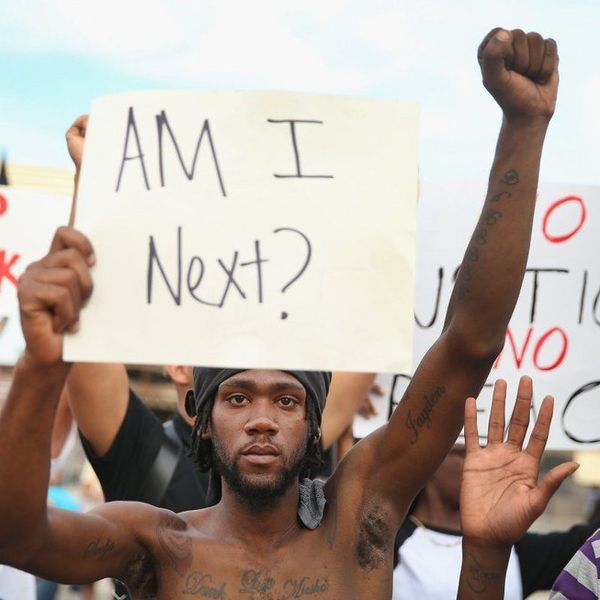
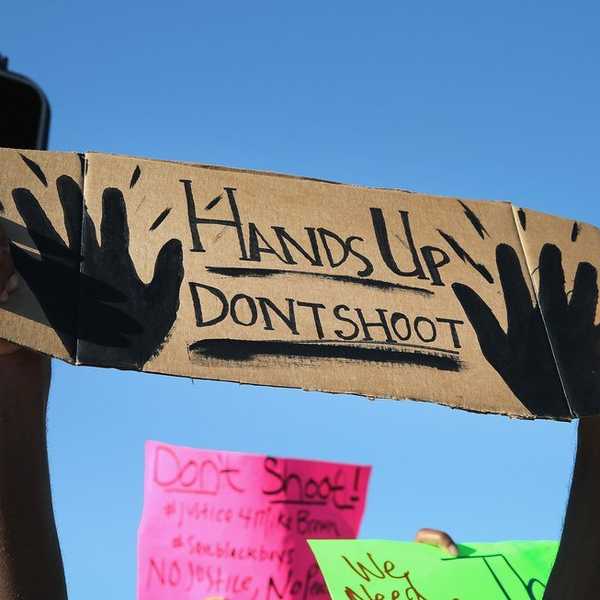
These days, it’s impossible to turn on the news without seeing another tragic story of a young person of color killed by a police officer. The deaths of Freddie Gray, Sandra Bland and Tamir Rice due to police violence drew national attention, debate and the birth of the Black Lives Matter movement. Some call it racist police brutality, and some call it “standing your ground” against a perceived threat. The line has become increasingly drawn between people of color and law enforcement.
But what's life like when both sides of that line live in the same house?
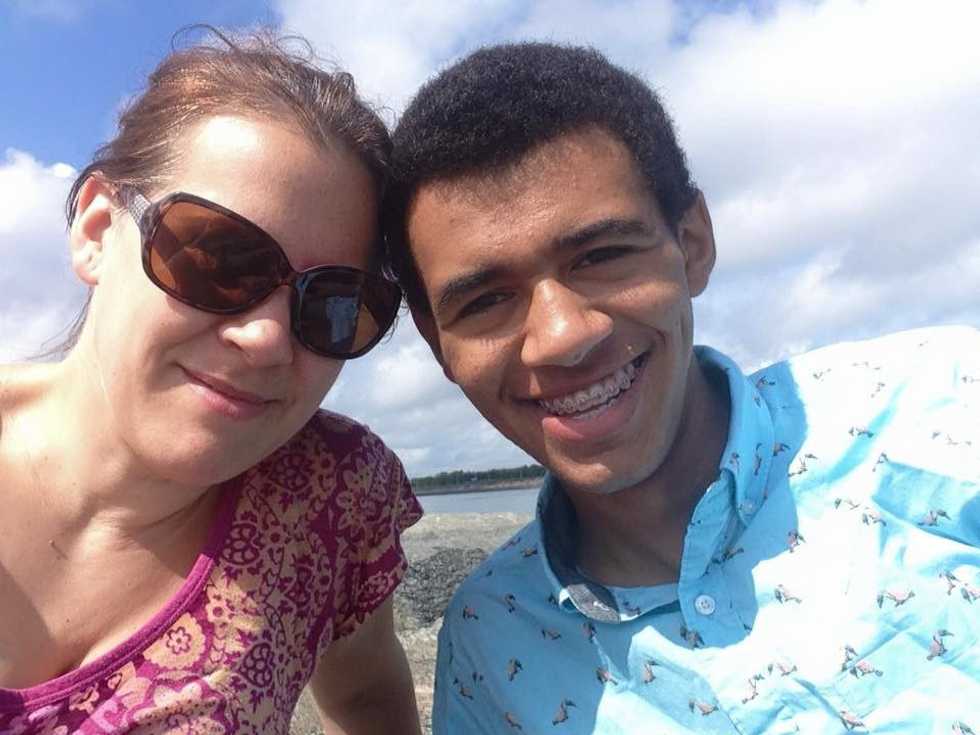
Chautauqua Ordway is a high school senior who lives in Natick, Massachusetts with his mother Jennifer. Chautauqua is half-black and considers himself to be a person of color. Jennifer is white -- and a sergeant in the Wayland Police Department. Chautauqua and your author were friends in high school (and prom dates, for those who enjoy digging for awkward photos) and the Ordways graciously agreed to be interviewed about the increasingly vivid blue and black line dividing our country.
Chautauqua:
I was 8 years old when my mom became a police officer, and my grandfather has been a police officer my whole life. It’s a little scary, that there are so many people that are very anti-police. When I was younger, my mother’s friend was shot in the face. He was chasing a suspect, trying to keep the community safe, and he was shot in the face. Police officers are shot or attacked during routine motor vehicle stops. When my mom pulls someone over, she never knows what to expect. When she gets called to any scene, she doesn't know what to expect. The other day, she was dragged by a car when she went to tell the driver that he needed to stop in a construction zone. I’m sure she didn’t think when she approached that car that she’d end up in the hospital or out of work for weeks, but that’s what happened. She’s a tough person, but she’s my mom, so I worry a little.
I didn't grow up afraid of the cops and I’m not afraid of them now. In my whole life, I have never had a negative interaction with law enforcement, including officers that have no idea that my mother is a police officer. The last interaction I had with a police officer was at night. It was very dark out. I had pulled over - poorly - to send a text message. A police car pulled up next to my car. I was really confused. I thought I was going to be reprimanded for my poor pulling-over skills. Instead, the officer just wanted to make sure I was okay because I had pulled over. This is what many officers do, make sure that citizens are safe.
Sometimes it shocks people to find out that I’m a person of color who isn’t afraid of the police. Donald Trump rightfully took a lot of heat for saying that Mexico was “sending their rapists.” In saying that, the orange man was just plain wrong. Generalized statements are often wrong. So, to say that police officers are racist, is wrong. Are there some officers who are? I haven’t met any, but I’m sure there are. This doesn’t excuse the officers and their actions, but making blanket statements about the police as a whole is extreme. There are teachers who have hit or seduced students. The abusers should be handled swiftly, but it would be unfair to say that all teachers are abusers. It would create a very difficult climate for teachers who just teach.
I’m very aware of the violence against people of color in America. Historically, people of color have not had a good relationship with the police. It can be hard to trust an organization that has had such a troubled history with people of color. However, much of what gets publicized today is the worst of the worst. This should not be ignored, but it should not be seen as a typical situation.
Jennifer:
I think being in law enforcement has absolutely heightened those worries and fears that every mother has about her children. Police officers are exposed to people at their worst and respond to calls for people at some of their darkest moments. People don't often call to say, "Hey, I'm having a great day, can you come on over?" Seeing what I have seen and knowing what I know has certainly made me more worried for my son -- his race has nothing to do with that worry and concern.
I will never be so ignorant as to say there is no racism in this world or that I've never encountered it personally or professionally, but I thankfully I have not seen an officer respond differently due to racism. Nationwide, I can't speak as to whether or not racism plays a role in the actions of law enforcement, but many people don't fully understand the actions of police seem quick to assign the cause of any aggressive behavior to racism, which is not necessarily -- and in my belief, frequently not -- the case.
I am not going to break down each and every incident that's taken place, but I think people should know that most officers, if you take the time to ask them -- such as you are doing now, Halle -- got in to law enforcement to help people, to make a difference, and to support and protect the community. They don't get in to law enforcement to shoot people or get in car chases. If they did they would be quickly disappointed -- those types of incidents are quite rare.
When we ask the questions we ask or take on a particular perceived attitude, it's because we are trained to do so based on the circumstances, the surroundings, the time of day. Our motives and intentions are typically positive. Just like citizens don't want us to have preconceived notions or ideas about them, officers don't want you to do the same about us. Ultimately, most officers just want to do their jobs and return to their families at the end of their shift.