

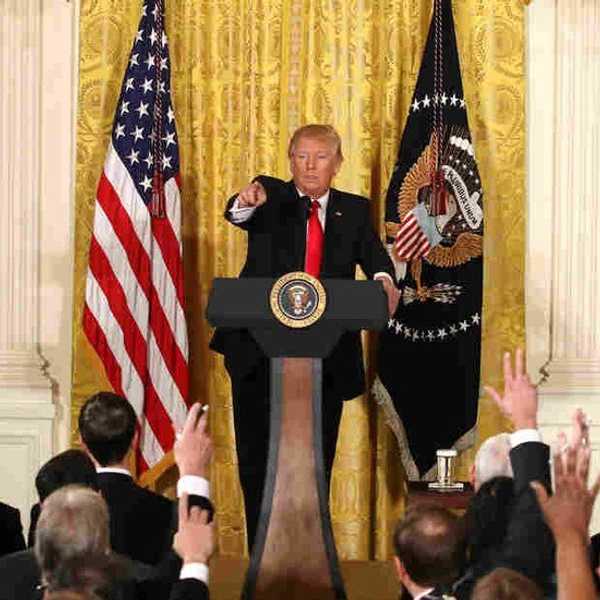
The White House made it's first move against the media, following a long barrage of anti-media comments and remarks made in front of camera and in front of conservatives. President Trump has indeed broken the bridge between the government and the media laid out by President Obama, forcing the media into a position where it is hard to maintain neutrality and non-partisanship (at least for the major, credible news sources).
By breaking this "friendship", the media is now making a move to emphasize the inaccuracies in the Trump administration and bringing more scrutiny to his plans. And this is a very good thing for the media and for their viewers.
First off, let us go back a few years, into the Obama administration. A lot of people did notice that compared to the Bush administration, the media was more "light" with coverage of the Obama administration, emphasizing on the failure of the Iraq War rather than the failures of military action in Yemen. Now, this doesn't necessarily mean you should buy into the "pro-Obama bias" that exists in the media, a point that has been pushed a lot by conservative outlets to think tanks. Whether or not there was an actual bias for Obama isn't necessarily important; what is important is the willingness of the media to hold the government to scrutiny.
A contributor to the Atlantic has noticed a trend in journalism; journalists who ask "softball questions" and present questions that don't oppose government officials tend to receive better access within the White House. A second point that was significant (especially in recent years) is that the press is not willing to be confrontational in times of war, and the last few years of Obama was marked by the war on ISIS, conflicts in Yemen, Libya and Syria, and Russian aggression in the Ukraine.
Of course, this still does exist today; many conservative outlets such as One America News Network has been granted White House access for being a very conservative-slanted news outlet. And Trump inherits a possible major war in Syria.
However, Trump goes an extra step forward by confronting the
media in the middle of their unease. "Fake news" has been a term thrown
around more and more often (indeed, Google reports an exaggerated spike in people searching for "fake news").
Now, going further back and onto a second point, President Bush was scrutinized in his own rights as well, but there was a lack of the constant "Fact checking" due to the lack of one thing that was prevalent in the Obama years; independent news. OccupyDemocrats, Buzzfeed, Huffington Post and all other "progressive" sites have risen over the past few years, at a higher rate than the Bush years. And of course, this gives the perception of "liberal bias" in the general media because there are liberal-leaning sites that have risen more than conservatives (as conservatives prefer to be bunched up in single areas like TheBlaze)
When we look at the relationship that the media had with Obama, whether out of bias or incentive, and compare it to Trump's relationship, there definitely is a fracture in the current relationship.
But what can we get from it? Simply put, the media will begin to fight back, whether or not they want to. More government accountability and scrutiny is needed. A lot of far-right and far-left people have a distrust of the mainstream media (FOX, CNN, ABC) because there does exist a sort of tendency to lean towards pro-government and anti-government.
The past few years were pro-government, and we can hope that the media will center itself and report with objectiveness, the same kind seen on C-SPAN and Associated Press. The media is an important tool in politics and gives people a glimpse into what is going on. By skewing it to pro-government sentiment, the media fails to do its job and is ineffective.
Hopefully now, this will be a wake-up call to the media to start putting accountability to the government.

















