"We're the first generation to feel the impact of climate change and the last generation that can do something about it."
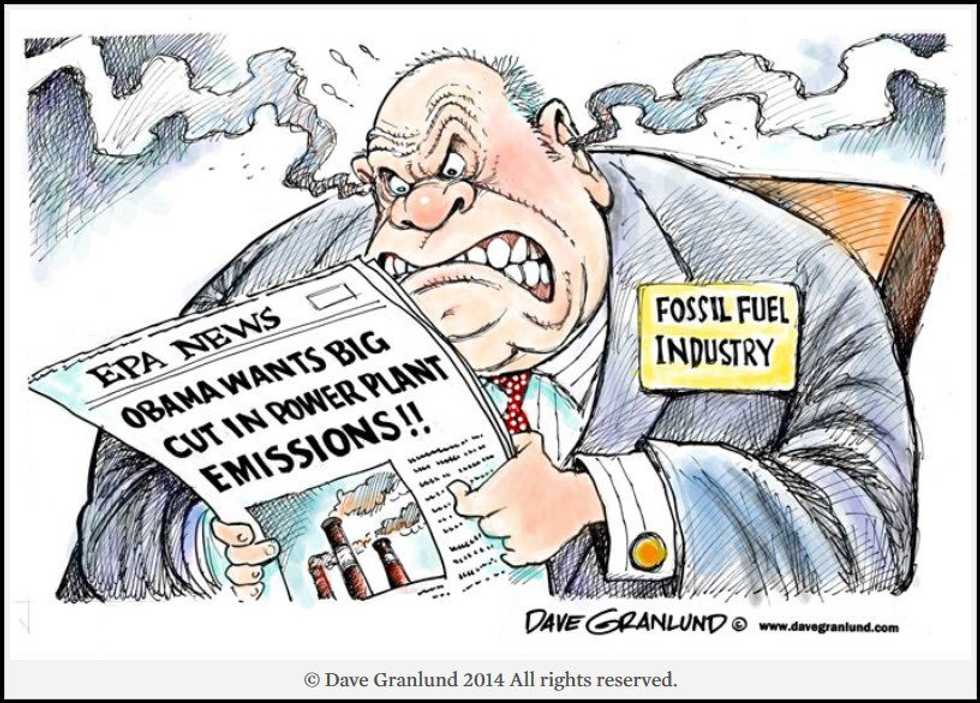
On Monday afternoon, President Barack Obama released what he referred to as the "biggest, most important step we have ever taken" in tackling climate change, together with the Environmental Protection Agency. It was the final rule of the Clean Power Plan.
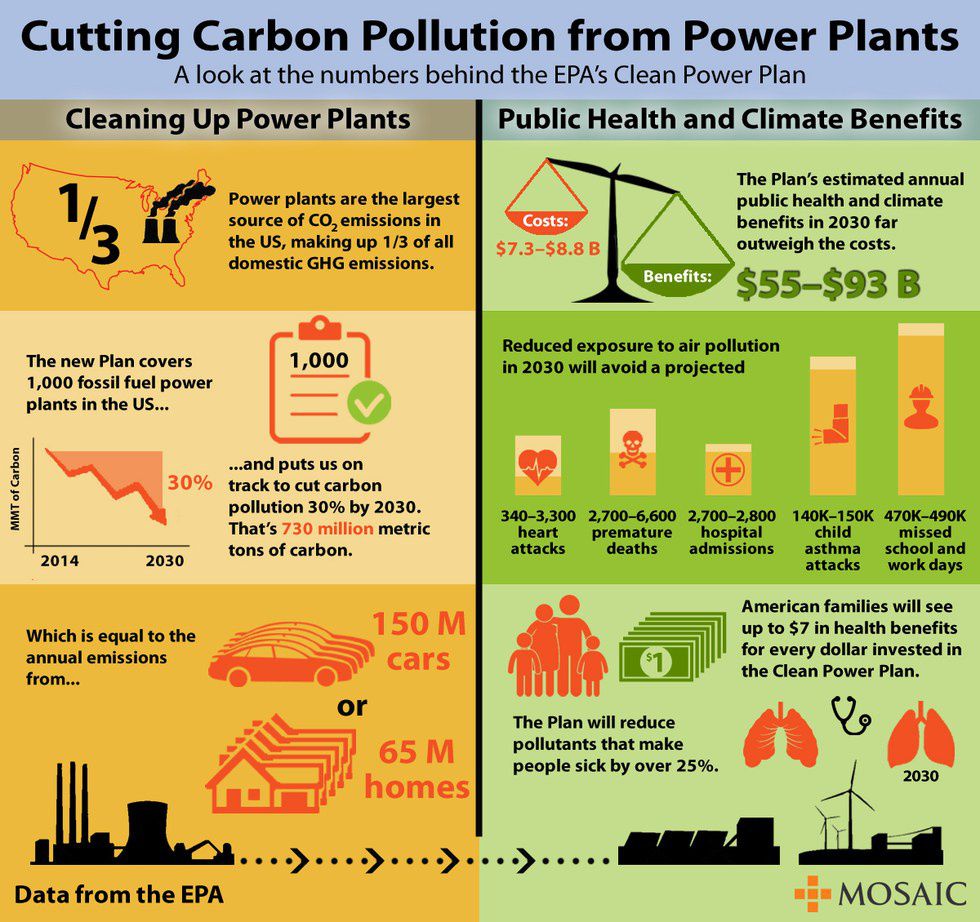
The idea is straightforward: To cut back greenhouse gas emissions by power stations across the United States. The goal he set was to cut carbon emissions specifically by 32 percent within 15 years. Compared with 2005, the revised plan aims to make this cut by 2030, a measure that he suggests will have the same environmental effect as taking 166 million cars off the road.
The argument:
Obama does not see climate change as a joke. At all. And he's going hard with the fight against it. This plan aims to reduce carbon dioxide emissions by 9 percent more than the Obama administration had previously set forth.
Why the urgency, you may ask? Obama's Twitter feed and the EPA webpage offer some answers:
- CO2 levels in our atmosphere are higher than they’ve been in 800,000 years. 2014 was the planet’s warmest recorded year in history.
- The United States is the country with the highest carbon footprint per capita in the world.
- Power plants actually account for one third of our CO2 emissions--more than our homes, cars and airplanes combined.
- Until now there have been no federal limits to the carbon pollution produced by power plants in the United States, despite the limits imposed on arsenic, mercury and sulphur release.
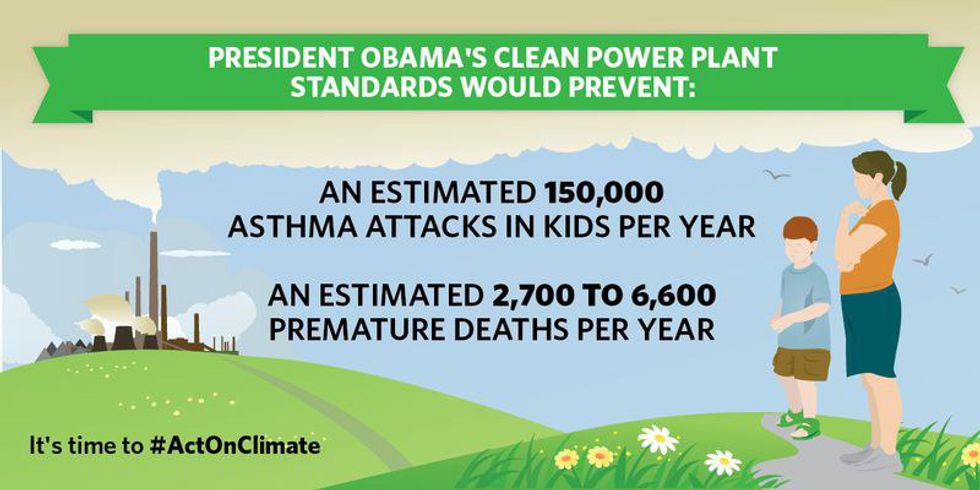
- Carbon dioxide is detrimental to our health. Obama has pointed to the trends of the incidence of childhood asthma worldwide which have paralleled the sharp increase in carbon dioxide emissions in the past decade.
What will happen:
- The EPA will establish CO2 emission guidelines for existing EGUs (fossil fuel-fired electric generating units) while still offering the states a lot of flexibility regarding the manner in which they will achieve their specific reductions. Basically, the EPA will offer the what, and the individual states will figure out the how, depending on their capabilities.
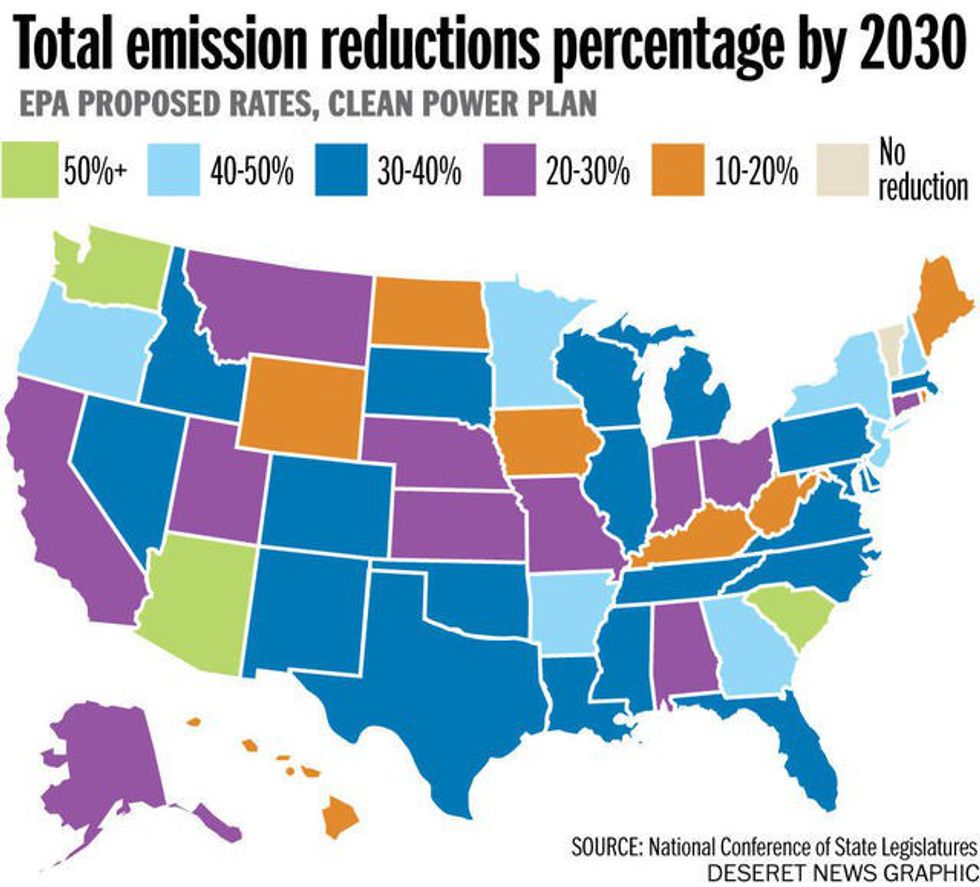
- This ruling will apply to only 47 states and any Indian tribes approved by the EPA to develop a CAA section 111(d) plan (which is basically a plan determining the best manner the EGU can reduce its carbon emissions).*
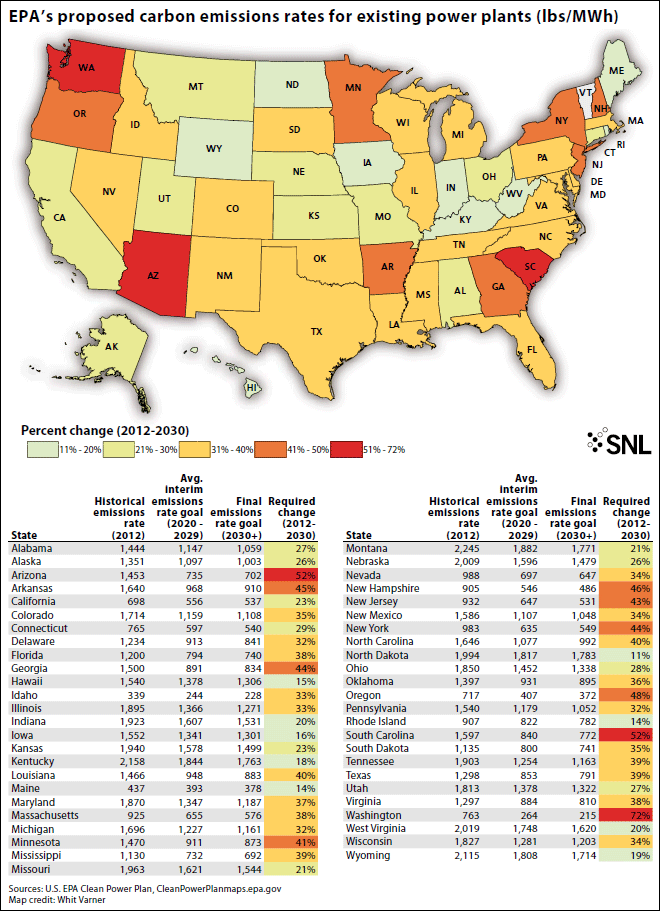
- The EPA uses a complicated formula to determine how much an individual state should cut by 2030. First the amount of emissions currently being produced by the state's power plants is determined, and then the EPA figures out how much can be reasonably cut using methods that have been adequately demonstrated and can be done at a reasonable** cost. This includes:
- heat rate improvements that allow more electricity to be produced while burning less coal
- a heavier reliance on gas rather than coal plants for energy
- the construction of more wind, geothermal, nuclear, solar, biomass and hydropower plants.
- If a state refuses to comply with the plan (Texas governor Rick Perry, for instance, has done this one before) then the EPA is authorized to step in and enforce its own plan. This is inconvenient to a state, however, because the EPA has less powers than a state does in this area–it can't force the state to invest in renewables, for one–so the agency's plan may be less flexible and more costly.
* This is because Vermont and the District of Columbia, the two states not affected by the plan, do not have affected EGUs. There's nothing to cut, there. Meanwhile, Alaska and Hawaii aren't covered under the rule so long as the EPA struggles to figure out how to deal with their unique grid situations. While American Indian tribes are actually sovereign Nations, the EPA has been authorized by the Clean Air Act to treat them as states under this Act.
** It is worth noting that the definition of "reasonable" here is being highly debated.
Why some people like it:
It's flexible:
So long as the states meet the minimum of their reductions, it's really up to them how they manage to do so. States can even choose to meet their "requirements" with a rate-based or mass-based goal: A rate-based goal refers to the amount of CO2 emitted per megawatt-hour of electricity produced in a plant, while a mass-based goal refers to the total amount of CO2 emitted by the plant over time. The EPA made sure to make the two types of goal as equivalent as possible when it comes to calculations, but a state could always assess which one is most convenient–regardless, this does mean improvements would still occur where they wouldn't without the plan, which is always positive.
It's proactive:
As Obama voiced, the issue of climate change is dire and it's global, yet the American energy system is still not as efficient with its waste as it could be–by a long shot. If we make improvements, we not only do it for ourselves, but we do it for the rest of the world. This plan is relatively clear and goal-based while still being flexible to each state's needs, desires, and limitations.
Through this plan we set a good example for other countries so that their own emissions don't have the awful consequences climate change could have on our country such as those scientists have been predicting (sinking Miami, anybody?). We protect our future generations, but also those of our allies. It's good in environmental, social, political, economic (well, debatably) and human terms.
It's eco-friendly:
This one requires no further explaining. It's simply the right friggin' thing to do. However, it is still being criticized for its level of eco-friendliness.
Why some people don't like it:
The asthma argument:
And pretty much all the other health-based arguments that the President and other advocates for federal measures on fossil fuels bring up. People are largely skeptical about the idea that rising levels of CO2, a gas already present in high amounts in the atmosphere as it is, may be the cause of the correlating upward trend for asthma. The same skepticism is meeting the administration's argument regarding higher incidences of allergies. Nevertheless, studies such as this one do detail that ragweed, a common allergen producer, is responding to rises in atmospheric CO2 by growing faster, flowering earlier and producing more pollen, particularly near urban locations. It's hard to know what to believe on the health front, at least in direct cause-and-effect terms. CNN journalist Chip Knappenberger finds the public health benefits to be "tenuous, at best."
The climate change argument:
Yeah... Still. I'm talking about the "global warming is pseudoscience" and "we don't need to care about this stuff yet" folks.
Yet aside from that, people are claiming that it's not the right approach from the federal government in combatting the issue. Some don't like that it's the government creating these regulations, while others don't approve of the flexibility.
It's a tad optimistic:
Both in terms of its expectations regarding the states' interests and its actual environmental impact, the plan has definitely been proposed with a hopeful outlook. The states, after all, do not technically need to meet their exact goals so long as the efforts to do so are considered to be enough by the EPA, which makes for a fairly loose plan.
In environmental terms, furthermore, it is thought by several businessmen to not exactly be cost-effective. Mainstream scientific projections affirm that about 2.5°C of global warming by the end of the century will be a result of carbon dioxide emissions from the burning of fossil fuels. That means that if the United States were to halt all of its production and drop its carbon dioxide emissions to zero right now, future global warming would still only be reduced by about 0.15°C.
The rule also poses a threat to electric reliability. By the EPA’s own estimates, it would shutter 68,000 megawatts of fossil fuel electric generating capacity.
It's not all that popular:
While a measure to reduce greenhouse gas emissions is generally thought of to be positive from the outside, the "how" is always important. Several states had already formed a coalition to stop the Clean Power Plan before it was even announced, which in general should raise a red flag when a country prides itself on prioritizing the voice of its people. Then again, we are referring to state legislators here, the interests of which may not always reflect the interests of its people if they are not entrepreneurs.
According to the White House, however, the plan will "save the average American family nearly $85 annually on energy bills in 2030 and create tens of thousands of jobs." So, as is usual in environmental policy and federal regulations, it's a matter of who you believe in, what you care about, and how likely something is to truly happen.
With the Clean Power Plan, however, at least we're onto something. The question is whether it's efficient, and therefore, whether it's worth the potential costs.