Let's imagine that you're interested in learning how to play golf.

You already know the best course nearby and the trainers who can teach you, but now all you need is just the equipment.
You understand that membership into this course will cost you quite a bit and that you may need different trainers to suite you at different points, and you also understand that golf clubs can be expensive, especially due to the fact that there are so many different kinds that have their own different specialties.
However, you're determined to learn the sport. Hell, you might even be the first in your family to learn how to play it.
Sooner or later, you'll have bought your membership, paid your trainer, and purchased your equipment. Due to scheduling conflicts, you have one trainer that you meet with on Mondays and Wednesdays and another trainer that you meet with on Tuesdays and Thursdays. Thankfully, y'all meet at the same golf course and go over the exact same techniques, with a few differences here and there.
Now imagine being forced to buy a different set of golf clubs for the different trainers. You're on the same course, you're playing the same sport, you're learning the same technique, but you still have to pay for a completely different set of clubs to alternate between the two trainers.

That outrage is perfectly depicted by college students' fury over access codes in universities.
We all know firsthand how expensive it is to go to college, how costly fees can get for the university and for certain individual classes, and how each classroom may need a textbook (which prices for are extremely extortionate, but that's a story for another time). In addition to already paying so much for all of this, a classmate of mine who needs the same textbook for two different classes is forced to buy two separate access codes. For the exact. Same. Book.
This may not be an issue to many of us, but to those affected, it's an unnecessary expenditure that steals money out of an already scrapped-for-cash college student to benefit a textbook company that doesn't care about their education. They've made that greediness evident by forcing us to spend money on something we don't even need.
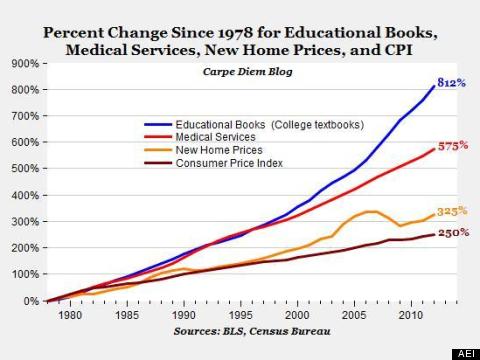
I'm not even going to detail the insane costs of textbooks to begin with or the blatant greediness behind requiring online access codes for those textbooks - that's a battle for another day. The movement for affordable education has seen so many accomplishments, from the establishment of Pell Grants to the White House's College Promise Proposal that allows for two years of community college to be free for responsible students, but now it's our turn as student to lead the charge towards common sense education reform. No more waiting on change from politicians with textbook lobbyists whispering in their ears.
Perhaps the push for more affordable textbooks begins with a push for common sense textbook regulations. Something to get the ball rolling, like a policy which states that a student needing the same textbook for two different classes doesn't have to buy another access code. A simple request that only helps a select few, but it's a start.
So how do we go about that? In this modern day of hashtag-activism and protests rarely making it past the Internet, let's use these online textbook companies' own medium against them. With McGraw-Hill being the largest online textbook assailant of affordable education, let's start a hashtag that demands their attention as well as the medias' airtime. As much as I hate hashtag-activism, you can't deny the awareness they bring.
We'll tell McGraw-Hill to #McGrawAPair.
If you're like me and wanting to take this battle outside of social media, you can begin by organizing a grassroots picketing protest outside of your campus bookstore. One student with a sign at one university can turn into hundreds of students on dozens of universities, and before you know it, the pressure is on McGraw-Hill to #McGrawAPair.
If you believe you may be affected by this unnecessary purchase, ask your campus ambassador and provider directly if it applies to you. If you still have to buy two separate access codes for the exact same book, maybe it's time to pull out your phones and picket signs and join the movement. If you're not affected, speak out for those who might not do it themselves. It's a minuscule step towards an affordable education, but at least we're taking control of our situation.