
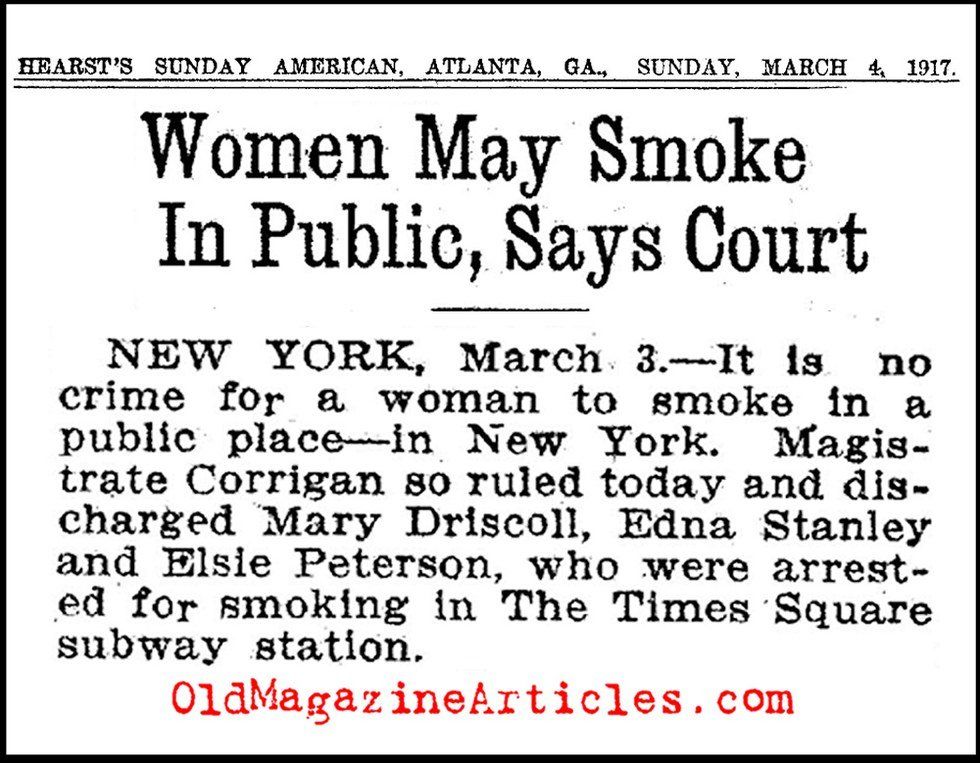
F. Scott Fitzgerald’s short story, "Thank You for the Light,” was only recently published for the first time in 2012 in the New Yorker. It tells the story of a Midwestern traveling saleswoman named Mrs. Hanson, a “faded woman of 40." She is a woman extremely stressed out from her work and the daily humdrum of ordinary life. Cigarettes are her only source of solace-a solace which is looked down upon in the area where her job has recently reassigned her. She struggles to keep her habit hidden amidst the daily aggravations of her life. Finally, after a day of futile sales and great stress, she decides to enter the city's local Catholic cathedral for an innocent, yet hidden smoke.
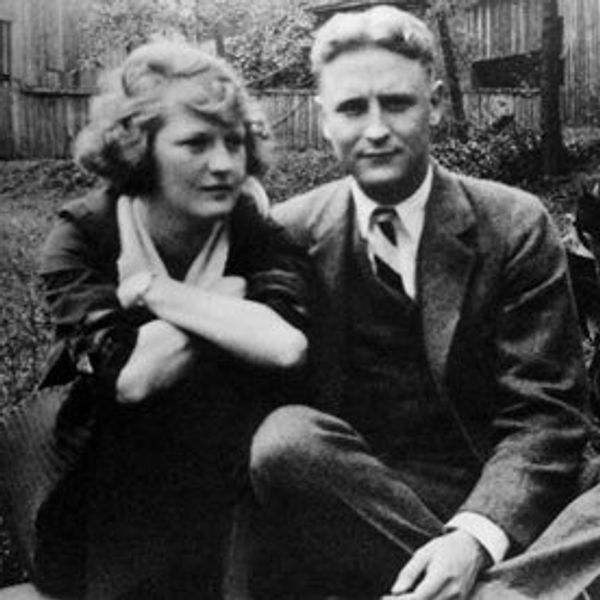
The peculiar short story was written in 1936, a time of great personal distress for Fitzgerald. The short story, which display's shreds of Fitzgerald's Catholic upbringing, was originally turned down by the New Yorker, and only to be rejected by several other publications. The reasoning behind the New Yorker's original refusal was because of its lack of continuity with the rest of his works along with its peculiarity. The magazine commented on the work stating that it was "unlike the kind of thing we associate with him and really too fantastic.”
This simple short story was nearly all forgotten until it was recently and expectantly discovered by his grandchildren in a stack of papers. A Fitzgerald scholar encouraged his grandchildren to resend it into the magazine which initially rejected it. This time the New Yorker happily published it in August 2012.
It has restarted a new discussion around Fitzgerald, the role his childhood faith of Catholicism played in his life, the struggles of his later life and a keener depth of one of his most common themes: desire for hope, and solace amidst addiction and stress. It may not be as dramatic or involved as some of his other short stories such as "Babylon Revisited." Nevertheless, it is an interesting read with a unique conclusion.
There may be instances in life where we perceive everything, even the most valiant of efforts, to be futile and worthless (just as in the case of Mrs. Hanson). It is a story which stands as a reminder that no matter how dreary an event, how busily chaotic a life or how bleak a predicted forecast, there will always be solace, there will always be a light -- even if that light is the end of a cigarette butt.