
Alfred, Lord Tennyson was the prominent poet of the English language during the Victorian Era. It was he who created the popular saying “Tis’ better to have loved and lost/Than never to have loved at all,” which is from his most famous poem, “In Memoriam.” It was this poem which greatly comforted Queen Victoria during her bereavement of her then recently deceased and much beloved husband, Prince Albert. The queen’s great love for this poem prompted her to make him Britain’s Poet Laureate. “In Memoriam” may be at the top of the Tennysonian canon, yet another of his greatest works is “Locksley Hall.”
“Locksley Hall” is a poem where Tennyson sentimentally recalls his childhood days, yet it is embedded with a moral question. The question Tennyson asks: Is it better to ignore the problems which plague oneself and society (with the best option not having them at all & indulging in hedonism), OR should one nobly take on societal dilemmas and tackle the problems of oneself and the world, thus giving oneself a meaningful purpose in life?
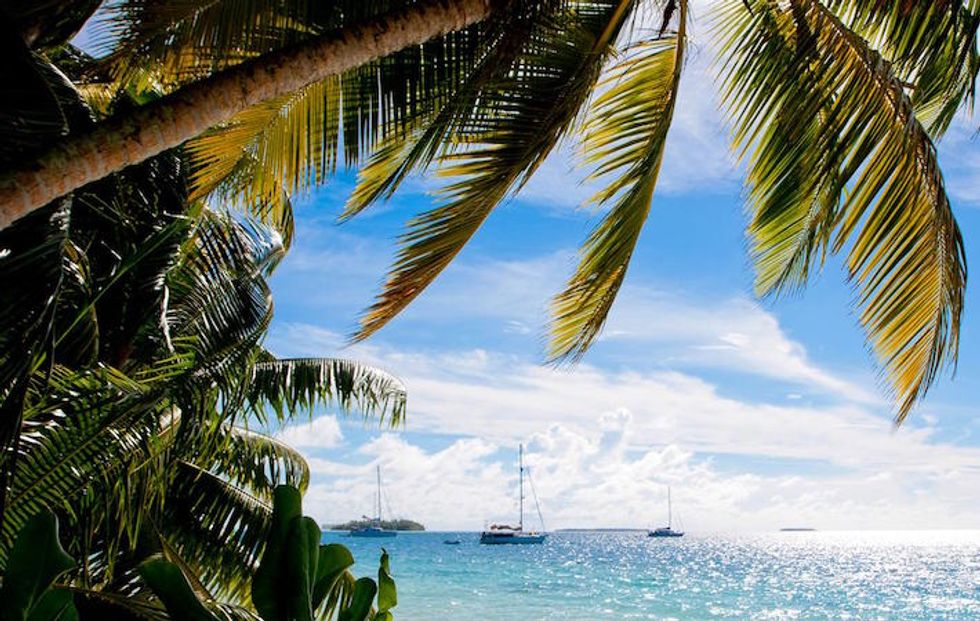
Tennyson uses the image of a beautiful tropical paradise to create one’s own world where one can live in pure bliss and be free of the world’s constant ongoing dilemmas:
“To burst all links of habit-there to wander far away
On from island unto island at the gateways of the day.
Larger constellations burning, mellow moons and happy skies,
Breadths of tropic shade and palms in cluster, knots of Paradise.
Droops the heavy-blossomed bower, hangs the heavy-fruited tree-
Summer isles of Eden lying dark purples spheres of sea.”
(Tennyson “Locksley Hall” )
Even if one does live with their head in the sand, the world will still have its problems and its need for people to resolve them, despite their complexity:
“Yet I doubt not through the ages one increasing purpose runs,
And the thoughts of men are widened with the process of the suns.
What is that to him that reaps not harvest of his youthful joys,
Though the deep heart of existence beat for ever like a boy's?”
(Tennyson “Locksley Hall”)
Tennyson himself decided to nobly take on the questions and problems of his modern world through his poetry after debating this same question and contemplating a life of paradise in one of the vast amounts of England’s exotic colonies (after all, he did live in the era when “the sun never set on the British empire”). This question which Tennyson once asked of himself is now asked of us: To self-exile oneself in a tropical paradise of hedonism and be carefree OR to pursue fixing the problems of society, or at least providing an educational and intellectual commentary on them? The exile itself does not necessarily have to be physically deal with location; it could deal with exile from the news, from current events, from commentary, etc. How can one fix society’s issues can when one is displaced from them on an island far away, exiled from the realities of the world? Are certain issues really worth being solved or at the least should they be solved by someone else? The question remains for us all: for some, the answer will come easily, for others more slowly.

















