
One in five adults in the United States experiences mental illness in a given year.
Where do you go when you feel like you have nothing and no one else to turn to? What if you don’t want to go see a professional who will make you feel like you’re another case and not just another person? What happens if you can’t talk when you really need it?
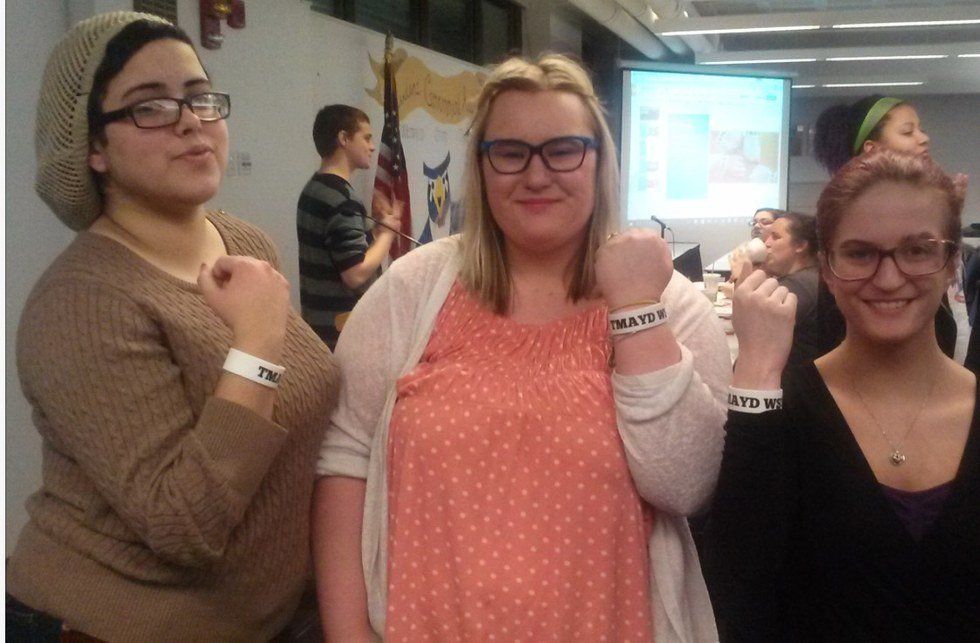
Tell Me About Your Day (TMAYD), a mental health initiative, was created by MIT student Izzy Lloyd in the wake of several student losses on campus and wanting to make it easier for there to be dialogues about things that people are usually afraid to talk about. Students, faculty, and staff who pledge to “listen without judgement, show support, care,“ and wear a white bracelet with the initials TMAYD, becoming open ears to anyone who needs to talk.
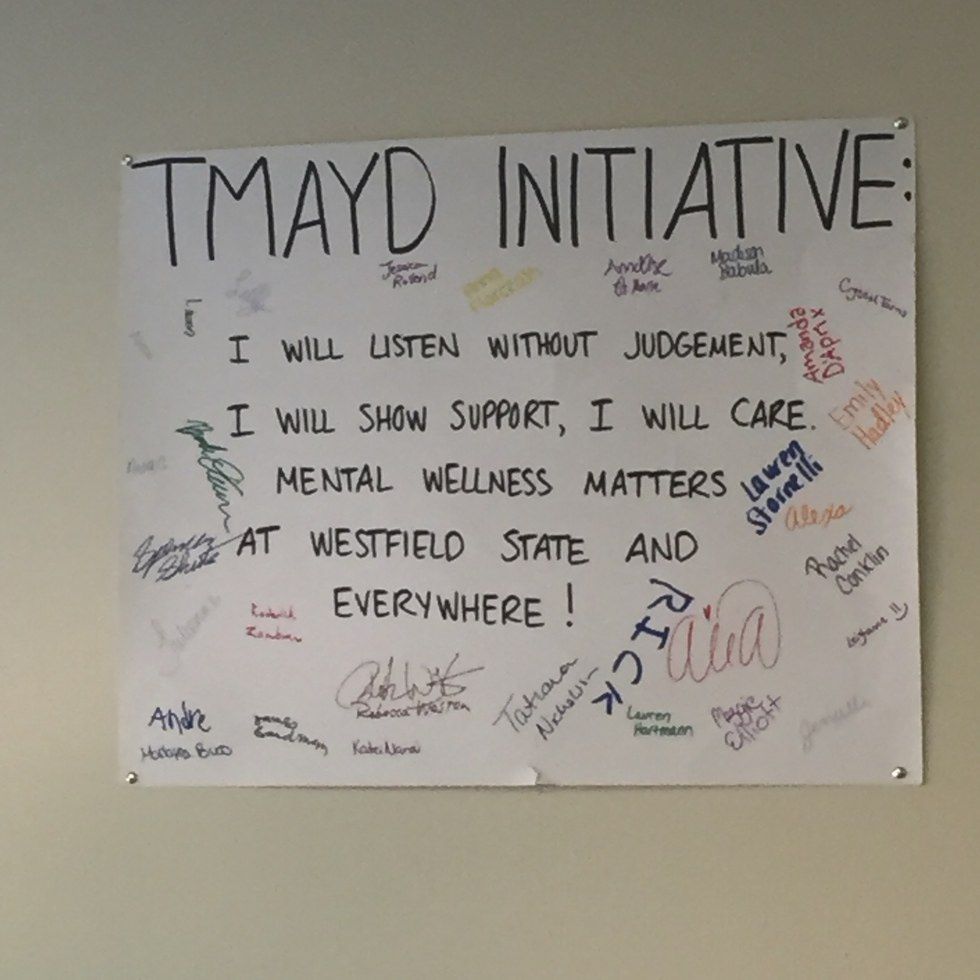
This initiative has now taken storm at Westfield State University thanks to the founder of the Westfield Chapter of Tell Me About Your Day, Caroline Koty. It all started as a class project to identify a social justice issue on campus and became something that was able to come to life with assistance and funding.
They spread the word through a Westfield Chapter TMAYD Facebook page and Instagram page posting photos about people's days, sharing positive posts, facts, and more. Mental Health has become something that people don’t want to talk about and seems to focus on the negatives.
“First of all, Tell Me About Your Day’s big thing is normalizing Tell Me About Your Day, like normalizing the conversation of just our daily life. I feel like our society is so hush hush like, ‘Let’s just leave that over there, we’re don’t want to touch that, were not gonna poke over there.’” Said Koty. The idea is to get people to get off there phones more and be more present and communicating.
“Another thing we identified in a survey with RA’s (Resident Assistant’s) was that when people were coming for help it was when they were in crisis, so when it was at the point where someone had already self-harmed. So where do we get to the point where we’re reaching people before they get to that crisis? That’s the goal, we don’t want it to get to that point and that’s how TMAYD started.” Said Koty.

The whole point of the initiative is to fight the stigma about mental health and to be able to create more people who are willing to be there for people when they’re feeling most vulnerable. Instead of making the conversation about thoughts about self-harm awkward, it can become something where two people talk it out and stop the idea. If someone wants to talk about an addiction they have such as drug use, eating, alcohol, and more TMAYD supporters are there to be a lending ear.
Another issue that the movement is trying to address is people using mental illnesses as adjectives. “One of the big ones I’ve heard is: the weather is so bipolar today. No, the weather is not bipolar, you live in New England,” said Koty. “Another one is like when someone is actually sad because they got a really bad test grade and they’re just like ‘I’m really depressed.’ No, depression is a diagnoses, sadness is an emotion.”
So how do we stop this from happening? Using this type of language to describe “abnormal” behaviors is offensive to people who might be diagnosed with a mental illness. “It’s the same thing as using the r-word, it’s the same stuff and it happens daily, some people don’t even pick up on it that’s how often it happens,” Koty said. “This is serious stuff. What if that person you said that comment to actually struggles with that disorder you used as an adjective? What if that person actually has clinical depression, what if that person is actually diagnosed bipolar? Then you just put them in a box.”

The next big issue that Caroline mentions is one of the movement’s top priorities is the conversation about mental illness. “When people do talk about mental illness it’s like an ‘oh we can’t talk about that’ kind of thing. People shut down when people bring up ‘I’ve had thoughts of suicide,’ ‘I self-harm,’ ‘I’m in recovery from self harm,’ or ‘I haven’t eaten today because I don’t like the way I look.’” Caroline continues by saying that stigma is within that idea right there. There are certain topics that people say are not okay to talk about but when we don’t make it okay to talk about that’s when suicide happens, that’s when overdoses happen.
As a university and as a community, we need to make the mental health and mental illness conversations okay in order to save people from making these harmful decisions. Because it is okay to that have that conversation and it won’t put more harmful thoughts or cause more pain. Asking that question, “Are you having thoughts of suicide?” isn’t going to make someone want to harm him or herself, it can actually help stop something like suicide from happening when the question is asked.
The main idea is to make mental health awareness a more common thing on campus. TMAYD WSU posts facts, quotes, and statistics on their Facebook page to keep people informed, they host events to get people involved and aware of what they’re trying to do, they have discussions about how to be an active listener and how to start a conversation talking about a persons mental health.
The movement is only just beginning. It will continue to grow, continue to have more events raising awareness and educating and making the conversation okay.
“Stigma is a result from lack of education” said Koty. So educate yourself, join the movement, where the wristband and tell people about your day.
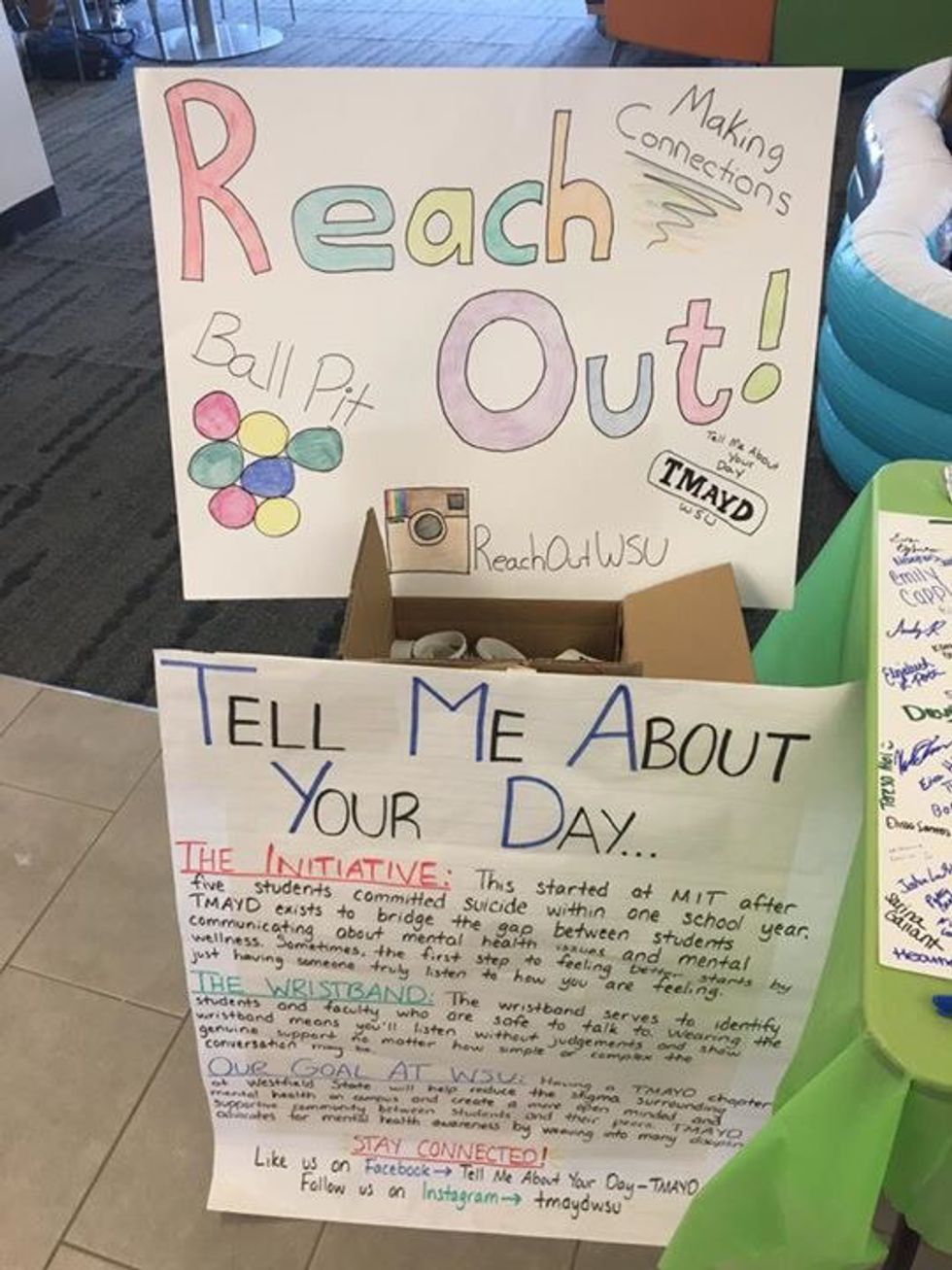
To get more involved or get more information on the movement at this very second:
Email Caroline Koty: ckoty1430@westfield.ma.edu