


I, like many young children growing up in the 90s, was obsessed with the Teenage Mutant Ninja Turtles. I watched the cartoon, read the comics, played the video games and bought the toys. And, like many obsessed kids, I remained a turtle loving child well into my 20s. I still watch the shows and buy the toys (that last one can feel a bit embarrassing for a 24 year old at Toys "R" Us).
Many view the TMNT franchise as merely a shallow 80s/90s cartoon that was more interested in selling toys than delivering deep and meaningful stories and characters. However, like most of the films and TV that I'll cover, there are some deeper elements buried within all of the media that we consume as adults and children. For example, the turtles display a family dynamic that many immigrants in America can relate to.
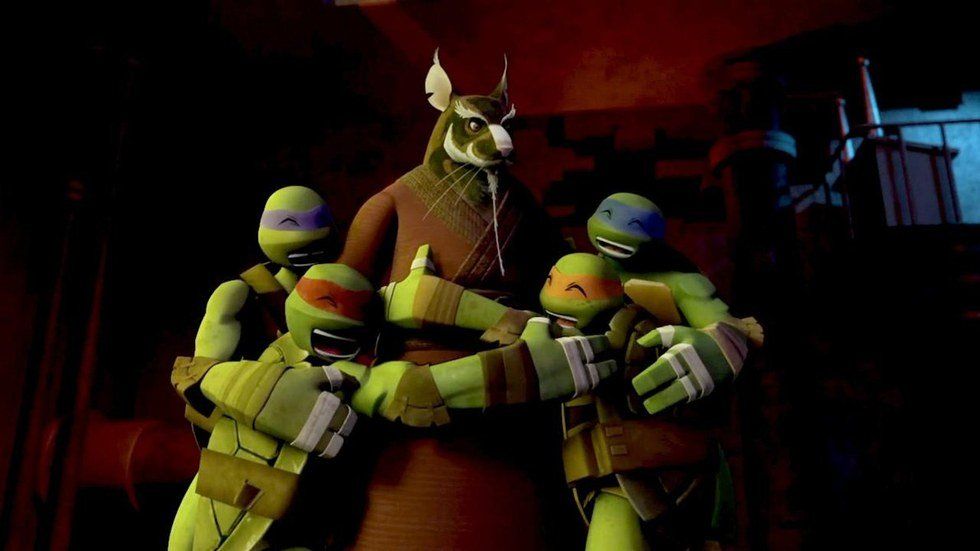
For those who do not know, the four ninja turtles (Leonardo, Donatello, Michelangelo and Raphael) began life as four normal, baby turtles. Due to an accident with chemicals (I know, a group of heroes that gets its powers from radioactive chemicals — how original!) the four grow into anthropomorphic turtle who can speak. They are raised by a similarly anthropomorphized rat named Splinter. Splinter, depending on which continuity you follow, was once the pet rat of a Japanese ninja master named Hamato Yoshi or is Hamato Yoshi; either way he is transformed by the same chemicals that changed the turtles. Now he and the turtles live in the sewers of New York City, fight criminals like the Shredder, and primarily dine on the healthiest of delicacies — pizza.
From that description, one can already read some obvious family dynamics into the turtles. The most obvious being that the turtle family is an adoptive one. Splinter cares for the four boys as if they were his sons (In the 2014 movie, Leo even calls him father). The turtle family is also representative of a single parent household, since he raises four teenage boys by himself (God help him). However, the interesting aspect about their family came about while watching the 1990 film "Teenage Mutant Ninja Turtles." The turtle family is an immigrant family and is somewhat divided on generational and cultural lines.
Early in the movie, the turtles return to their sewer lair after their first battle. They return to Splinter and report to him. Splinter attempts to give them some sage advice, but Michelangelo ignores him and orders a pizza from a phone booth in the lair. Next, Splinter attempts to have them meditate, but they ignore him and start dancing instead. On the surface this appears to merely be teens acting out against a parent, but then I thought that it might stem from a cultural difference.
Splinter is from Japan and his personality and beliefs reflect those of his native culture. He practices ninjutsu and expects his sons to respect him as an elder and their teacher. The four turtles, however, are wrapped up in music, food and movies (Raphael goes out to see "Critters" after Splinter's talk). Unlike Splinter they have lived their entire lives in the U.S. and have been influenced by the societal/cultural norms of their home.
It shows the struggle that many immigrants have when it comes to instilling cultural roots into their American born children. The turtles could be viewed as Japanese Americans who have been successfully assimilated into American society. As a second generation American, I was fully able to relate to the struggle of being an American and maintaining a sense on my German heritage. Maybe it was that struggle that made me relate to the turtles. Maybe that struggle gave the turtles a deeper meaning to me and children like me. Having one of the catchiest theme songs didn't hurt either.

















