
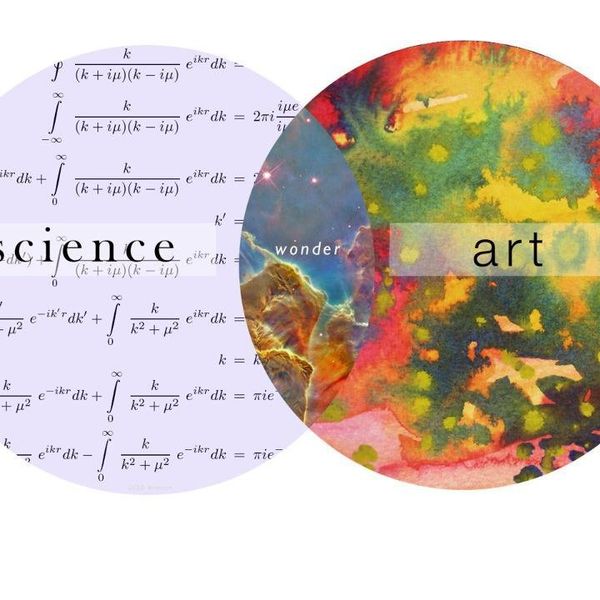

Getting that math test back, you shrug and admit that you must just be an arts person. You’ve never done well in math or science, but you draw and paint pictures that have won contests.
Though some contend that humans are either creative thinkers or technical thinkers, the truth is that successful people in any field cannot help being both.
Many people just do well in one area because it interests them. People pay attention to what they care about and are more willing to learn when a subject interests them. If students who excel in the arts enjoyed other subjects, they would do equally well.
People are not divided into creative or technical categories. They may choose a career that is considered more of one than the other, but creative people are necessarily technical, and technical people are necessarily creative.
Creativity requires more method than one might think. In today’s age, many artists go through a rigorous education, studying the masters and techniques of their craft. If creativity just came out of nothing, studying wouldn’t be necessary. Even the most talented painters have to know how to hold their brush the right way.
Without a doubt, there are artists who require little instruction. Their natural talent surpasses that of any teacher. These are often the people who come to reinvent their art, because their work is untainted by outside influences.
These artists, surprisingly, are the most technical. In order to create such masterpieces, they must observe the most minute details of their work. They spend many hours getting in touch with the exact process of producing beauty. And that attention to detail is the definition of technical.
For those seeped in obsessions with programming and numbers, here’s some news: you’re creative too.
The problem-solving skills needed for engineering and other technical areas mean that technically-oriented people have to be creative.
Bright Boys contends that we are all creative by nature because humans, over the course of our existence, were forced to come up with creative solutions to survive threats.
Now, it’s interesting that I can use “us” and “humans” interchangeably. I assume that anyone reading this is a human.
But maybe someday far off, we’ll invent robots who read articles. Or maybe dogs will eventually evolve to read. I believe both of these possibilities are unlikely though, because the quality of innovation is uniquely human. Dogs don’t create like we do, and robots, although they could process the words, could never gain pleasure from them, because they don’t experience feelings.
That is why humans are both technical and creative: it’s in our nature. Humans, unlike other species and robots, engage in self-reflection. That is the characteristic necessary to both make art and to make inventions.