


It takes little steps to change the world, but it takes a lot of little steps and a lot of help to get there.
We all hate cleaning up other peoples’ messes. Our instinct is to say, “that’s not my mess, therefore I shouldn’t have to clean it up. It may be another person’s mess, but that mess is becoming all of our problems."
Historically, cities tend to be built next to bodies of water due to the required access of fresh water and the fact that early settlers came from across the water in order to colonize. Philadelphia is one of those cities. The nickname “Filthadelphia” doesn’t come from nothing. Forbes named Philadelphia the third dirtiest city in America. We even beat New York and Cleveland on the list, which is saying something. The story tells, although mildly funny, is also a bit terrifying.
Global warming is a huge problem as many of you know. Even doing the littlest things can stop our world from reaching the disaster point.
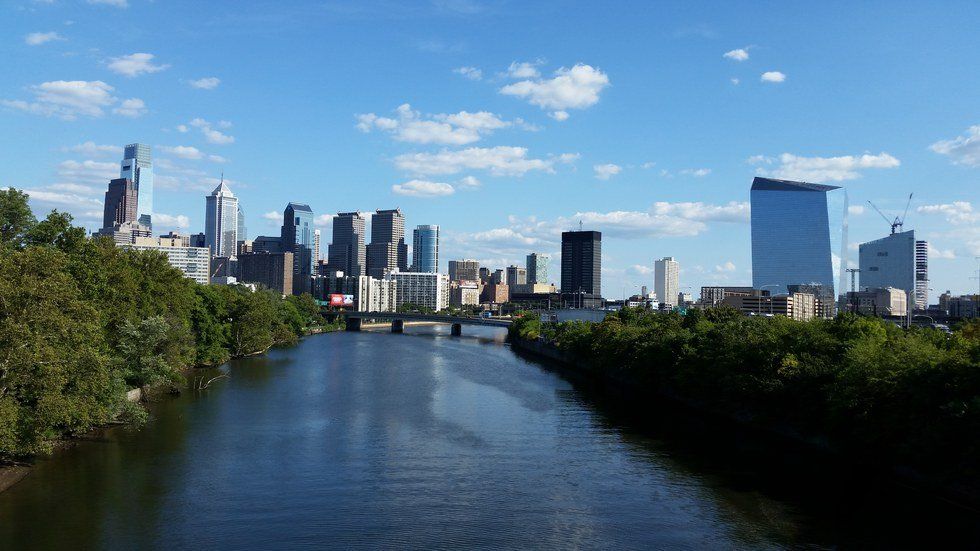
Perhaps this story really starts every day over and over again, every day, on my walk to work. I walk down Spring Garden Street and I’m looking down. I can’t help but seeing the trash scattered there, but it tells an even greater story. I cross the Spring Garden Street Bridge and I can’t help but looking up at the skyline and thinking that the chaos is beautiful. I think it will be even more beautiful when it is one day abandoned with weeds and vines twining and adapting until they have conquered even the tallest skyscraper and made our work oscillate. Humans can’t think we will beat nature in any part of the world.
When I see all the litter, I can’t help thinking how much of it is recyclable, from flattened bottles and cans to complete ones that people shove in hedges, to phonebooks, the majority of the waste I see is recyclable and not even that dirty.
Now, explaining global warming in its full glory is a complicated proposition, but the long and short of it is this, the more energy and materials we waste, the worse our environment gets. Factories release a great deal of carbon dioxide into the atmosphere, which in turn melts the polar ice caps. The more ice that melts, the hotter it gets, which in turn melts more ice causing a loop that will doom us.
Filthadelphia is a coastal city, what happens when ice melts and you are in a costal city. Well, if the ice is floating, it has already displaced its weight in the water, but if the ice is not floating, when it melts into the sea, sea level rises all over the world and that includes Philaldelpha. If this is happening on a larger scale all over the world, where are the people who used to live in these areas going to go? Where are we going to go if we become climate change refugees.
There are other components to this problem. Plastic garbage being dumped into bodies of water can swallowed and choked on by fish or birds who eat the fish. A sad day was when I was walking to work and saw a bird using plastic to build its nest. What if the chicks choke on it?
So the easiest way to keep plastic out of the environment is to recycle it. The more being recycled, the less demand is put on producing new plastic.
Now the point of environmental science majors is to scare people. "Scared is good, scared is a superpower," the twelfth Doctor once said and that is extra true here. Only being scared for the future will cause us to enact the changes necessary in order to survive.
So here is my proposition: If everybody picked up one piece of recycling off the street every day (like I currently do) and put it in a recycling bin, we could make a huge impact in cleaning up the city and the environment. If you skipped to the bottom to read the proposition I suggest reading the rest of the article to understand my reasoning.
What’s in it for you: Well, in addition to helping the planet and all the people on it, I will provide everybody who wants to accept my proposition with a free miniature hand sanitizer so that you can use some after you pick up a piece of recycling. Hopefully, that will make the process seem less disgusting.

















