I have been dancing ballet since I was three. My coordination has blossomed, and as I have gotten older I have branched into different genres; however, I never explored the world of tap. Tap dancing has a completely different dynamic than all the forms I have tried. Even though ballet and hip-hop seem completely different, they share the basic idea of dancing to create movement. With tap, you are dancing to create sound. This fundamental difference, and also partly fear of failure, was the reason I took so long to explore this new realm of the dance universe. Since then, I have shed my fears and embraced this new challenge. As a seasoned dancer beginning the process of learning a foreign form, I recorded my observations and experiences during the first year of my tap experience. From my list of new student feelings, I created a list of conclusions that address my struggles. This list of conclusions is designed for new teachers that are looking for guidance on how to reach new students.
1. Utilize the mirror.

The mirror is a powerful tool for learning coordination. I found myself concentrating on my feet in the mirror. I felt like I was mentally willing my feet to move in the correct manner. Of course, the dancer does not want to form a habit of looking in the mirror, but the mirror can be useful when the dancer is figuring out how to execute the step correctly.
2. Encourage use of the upper body.

Not only does it increase balance, it also breeds beneficial habits for carriage and focus, and increases the brain’s immersion in the step.
3. Use encouraging words.
Encouraging words have unimaginable power. Even a nod of the head can change the student’s experience. I found, in many cases, that if I believed I could do a step, then I could do it; however if I believed that I could not then I did not succeed.
4. In the beginning stages, don’t put students on the spot.
Lead by example. Students probably know the step in their minds, but they cannot articulate it yet verbally or physically. After students have practiced the step a few times and feel more comfortable, then it is helpful to ask them to try the step alone while you watch or to ask them questions about what they are doing.
5. Distinguish between a bad habit or a one time, beginner’s error.
A bad habit is something wrong that a student does because he or she believes it is correct, and a one time error is simply a mistake made in the process of honing in on the correct movement. An attentive teacher will notice the difference between a student who thinks that they are right versus a student who knows they made a mistake. Students are struggling to articulate the steps, and if it is a one time error then they will know when their movements are not matching up with what they have been taught. Calling a student out on a one time error right after they learn the step will lower esteem and add unnecessary pressure.
6. Glorify growth rather than end product.
Let me clarify: this is not always helpful. Some students will react poorly, so it is up to the teacher to know his or her class. If it is appropriate, gently making light of mistakes can allow the student to feel less self-conscious. Also, if the student believes that his or her beginner's mistake is not a big deal to the teacher, then the student will be less apt to be embarrassed.
8. Repetition, repetition, repetition.
Having students repeat the new step is the best way to form muscle memory. Muscle memory only occurs after the student has learned the step, so the student needs to practice the new step until he or she can complete it consistently correct. Then start the repetition process. It is also important to ensure the student can perform the step consistently correct before the repetition process because the student has the potential to repeatedly enforce a bad habit.
9. Present skills as able to be learned.
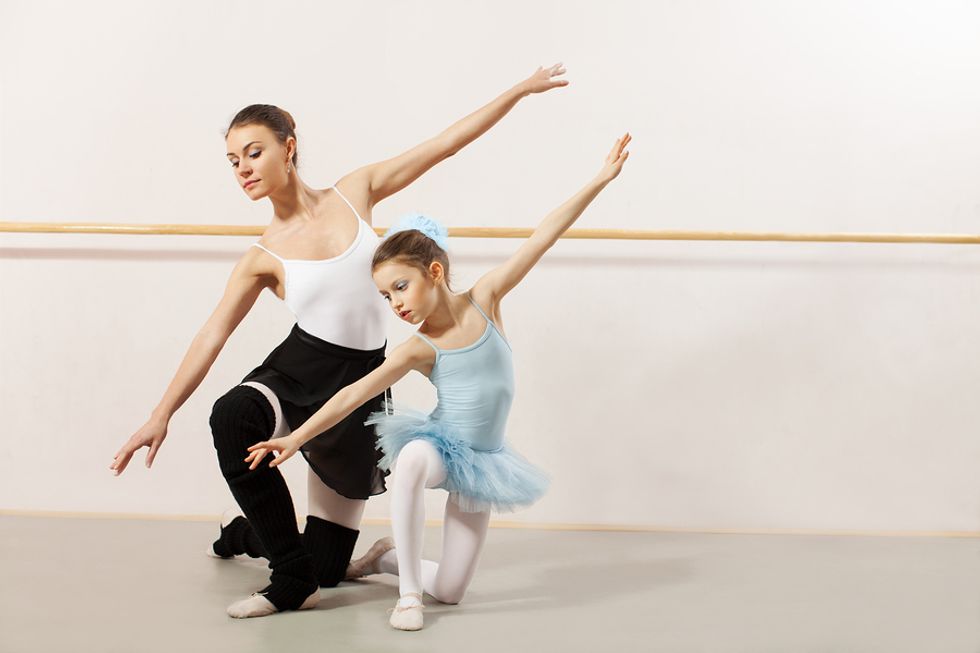
Don’t perpetuate the idea that if a dancer does not start with promising characteristics, then he or she will never master the art. Natural aptitude is a small part of the equation; mental attitude is the main characteristic that determines potential. The goal is to convey that you value learning and perseverance, not ready-made talent.
10. Give feedback in a way that promotes learning and future success.
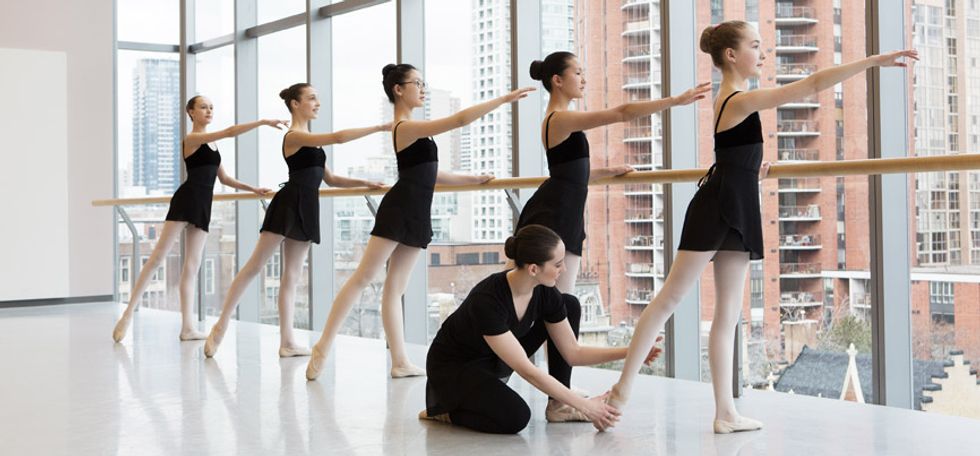
Constructive criticism is the only effective means to help new learners. A more experienced student can handle tougher love, but a new student is likely to be overwhelmed.
11. Present yourself as a resource for learning.
Teachers must be available physically and emotionally. It is important to take time to meet with students if they request it. Teachers must also identify with students’ emotions. Everyone was a new student at first, so teachers must remember these emotions and allow themselves to connect with students.
12. Personalize the experience.
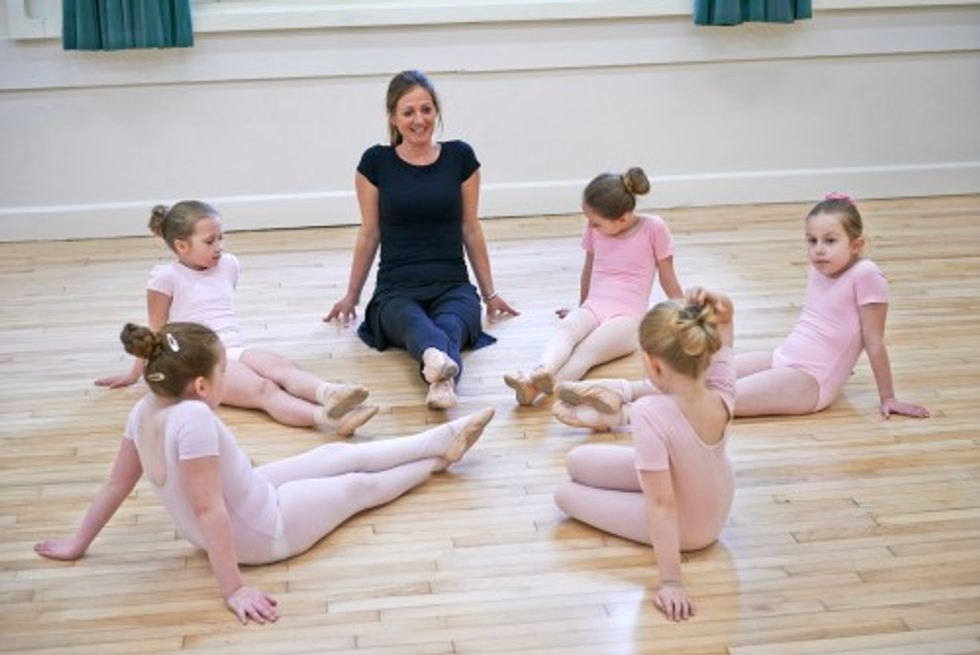
Learning is almost impossible if students feel uncomfortable. Help ease students into the learning process by familiarizing yourself with them: learn everyone’s name, learn about them, connect with them. Every student should be the most important one in the room.