Taylor Swift is literally always in the media. I can’t think of a single person who doesn’t know who she is — or at least recognize her name. I’ve never been a huge fan of her, simply because I wasn’t really into her country or pop music. (Except for her "You Belong with Me" music video that I watched on repeat because of Lucas Till). In 2013, I decided that she seemed sleazy and I didn’t like her. All my friends told me it was because I was jealous of her being with Harry Styles, but in light of recent events (#TaylorExposedParty), it turns out I was right this whole time. Taylor Swift is problematic.
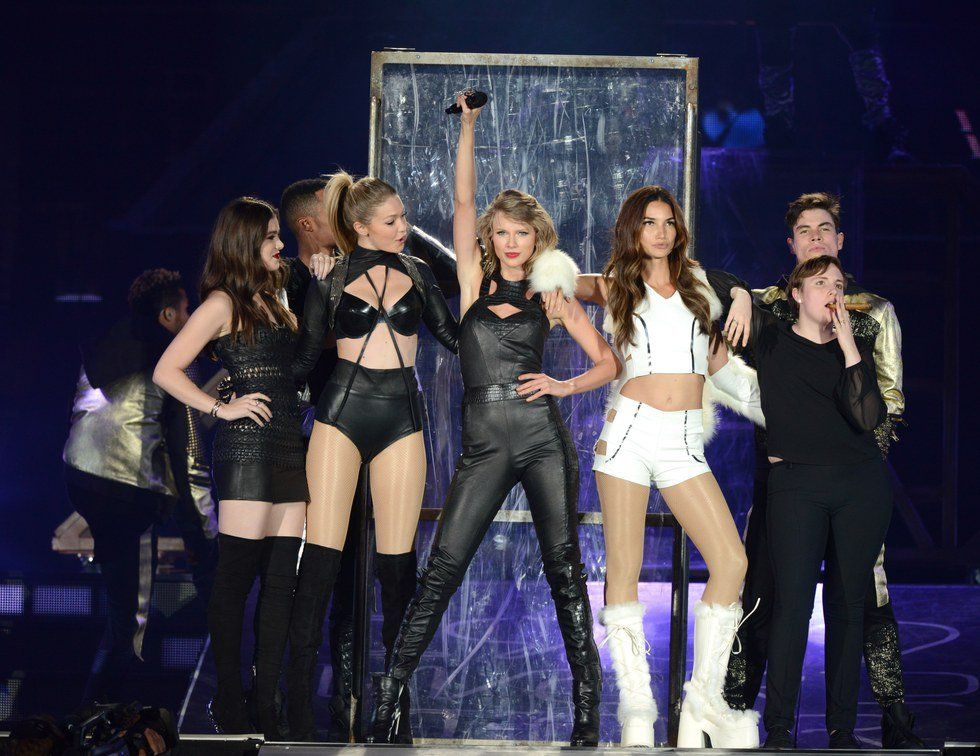
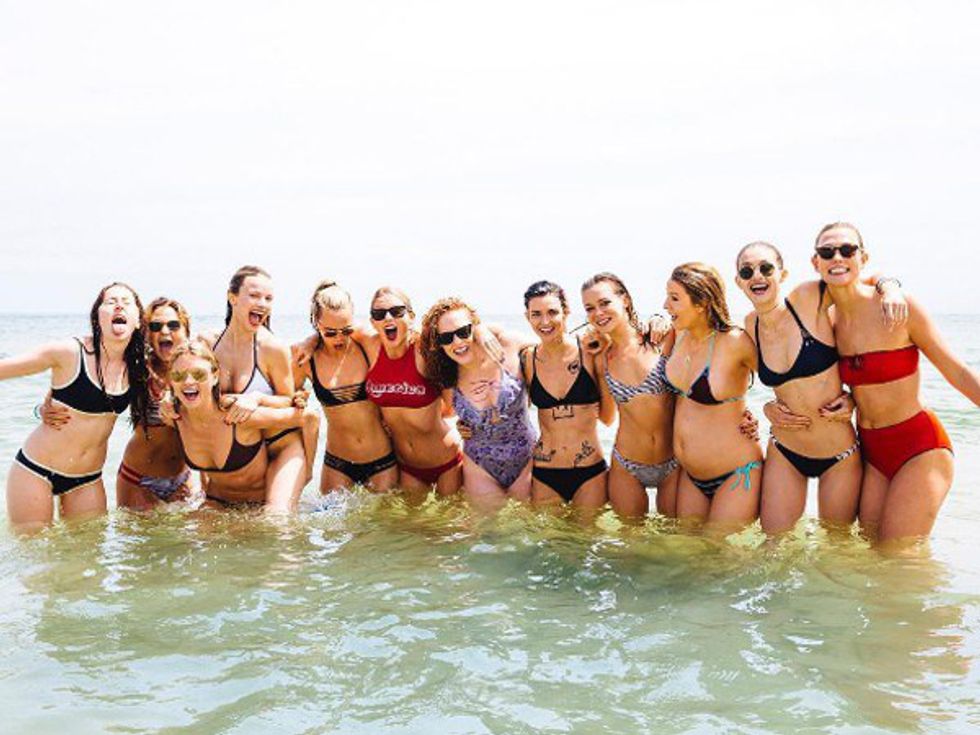
As much as I hate to admit it, though, Taylor Swift herself is not as problematic as the archetype she portrays in popular media. She plays the role of the popular, rich, skinny, white girl who seems perfect in every way. She writes songs “from her heart” about the hardships in her own life — but she is so privileged that the only struggle she seems to be able to come up with is a bad breakup with a boy she liked. Taylor Swift’s “girl squad” also adds to her problematic archetype. Instead of being the tight-knit group of strong women that she tries to sell it as, it seems a lot more similar to a popular clique that you see in high school, with a bunch of skinny, beautiful, models and singers. We will come back to this later.
Probably the most problematic part of Taylor Swift’s role as “America’s Sweetheart” is that because of the brand she has made for herself as the innocent “girl next door,” any wrongdoing she does just slides right off her. Like Teflon. I thought that people would see how greedy she was when she took her music off Spotify to make more money for herself, but they didn’t. She even trademarked phrases from her own lyrics, like “this sick beat,” “party like it’s 1989,” and “’cause we never go out of style,” so no one can use those on any products without asking her permission. She went as far as to sue a fan who made 1989 merchandise on Etsy. If Taylor didn’t have the innocent white girl persona, she would have been called out by now for being as greedy and self-centered as she truly is.
Taylor Swift, as a person, is still pretty questionable. She claims to be an avid supporter of feminism, but she seems to forget to support women of color. To put it simply, she is a white feminist. To be clear, white feminism is not a way to put down feminists who are white. Instead, it is a term used to describe feminism that ignores intersectionality. White feminism essentially excludes the experiences of almost anyone who isn’t white, cis, and straight. Last year, she called out Nicki Minaj for throwing shade about her Video of the Year nomination — when Nicki was really only commenting on how she, too, “broke records” and “impacted culture,” but did not receive a nomination. As well as the fact that Taylor’s video really only featured women with very slim bodies, unlike Nicki’s “Anaconda” video. Taylor’s rhetoric about “pitting women against each other” reveals a lack of understanding of the experiences women of color face, especially in popular media.
On that note, Taylor Swift’s “girl squad” further proves the shallow understanding she has about feminism. First of all, almost all of the members in her “squad” are white, with the exception of Selena Gomez and Zendaya (though she has started to distance herself from the group). Not only that, but they are all skinny, pretty, and famous. As I said before, it seems more like an intimidating clique of popular girls than a feminist squad. She seems to think that feminism entails throwing huge get-togethers with your picture-perfect friends, and always “supporting” them in the media. However, not only is her group of friends the opposite of diverse but blindly supporting each other without thinking for yourself is almost anti-feminist? Taylor called Nicki out for not “supporting” her Video of the Year nomination, but shouldn’t Nicki have the right to her own opinion? As Beyonce says, “the most important relationship a woman can have is a relationship with herself.” One should not set aside their own values and views just so they can “support” their friends.
On top of that, Taylor Swift and her group of friends seem to be wildly ignorant to the struggles happening in the world right now. When Selena Gomez tweeted in support of Taylor Swift during the #TaylorExposedParty, she claimed that people needed to focus on the other issues that are happening — although she, herself, had never once mentioned anything about the tragedies going on around the world. She dug herself a deeper hole by diminishing the importance of the Black Lives Matter movement, implying that it was merely a “hashtag.” If Taylor and her friends are this ignorant to the struggles of real-life people, I guess that’s to be expected when all of them are privileged with money, beauty, and light skin.
Okay, now let’s discuss the recent feud between Kanye West, Kim Kardashian, and Taylor Swift — because it is a lot more problematic than it originally seems. When Kanye West first came out with his song “Famous” which featured some explicit lyrics about Taylor, she immediately claimed that she did not approve of it. Although people may think that this whole incident is just more celebrity drama, it actually portrays an unsettling representation of racism in this country. She played the victim in front of the entire world by subtly calling him out in her Grammy’s award speech. By doing that, she painted herself as the innocent white woman being terrorized by the “big, scary, Black man”. Everyone — celebrity and civilian alike — was quick to side with Taylor Swift, even after Kanye claimed that she actually had given approval. Because of course, America’s Sweetheart can’t lie.
Turns out, she did lie. When Kim Kardashian released a video of Taylor’s phone call with Kanye, she exposed Taylor Swift for being the snake that she really is (#TaylorExposedParty). However, even after the evidence was revealed, Taylor Swift continued to play the victim by writing a statement condemning Kim and Kanye for recording her phone call without her permission. Part of her statement reads, “I would very much like to be excluded from this narrative, one that I have never asked to be a part of, since 2009.” First of all, she didn’t take any responsibility for lying to the entire world and profiting off painting Kanye as an attacker. She also claims that she “never asked to be a part of” this “narrative.” I mean, she kind of did by playing the victim, yet again, on the Grammy’s stage and portraying Kanye as the villain. Instead of just accepting this as petty celebrity gossip, people need to see that the racial undertones in this situation truly reveal the way America’s pop culture treats people of color. If Taylor were not white, she probably wouldn’t get away with any of the stuff she has done. If Kanye were white, people probably would have sided with him sooner than they did.
I was reading an article about Taylor Swift, and the author used a terrific phrase to describe the way Taylor lives her life: opportunistic victimhood. She plays the victim in every situation where someone questions her in any way, and society allows her to do so. She painted Nicki Minaj as the “angry Black woman,” and Kanye West as the “scary Black man,” and yet everyone seemed to let her do it! She plays the victim in hopes of adding to her innocent white girl aesthetic. She claims to support feminism, but it seems that she supports feminism only when it benefits her, and even then, it’s solely white feminism. The people she chooses to surround herself with all seem to be blissfully unaware of the struggles that are going on in the world right now. Because of all this, I feel that Taylor Swift is extremely overrated, and she isn’t a good role model for all the young women who look up to her. Yo, Taylor, I’ma let you finish, but I guess I’m more like Kanye than I originally thought, because I think Beyoncé is one of the best feminist role models of all time.