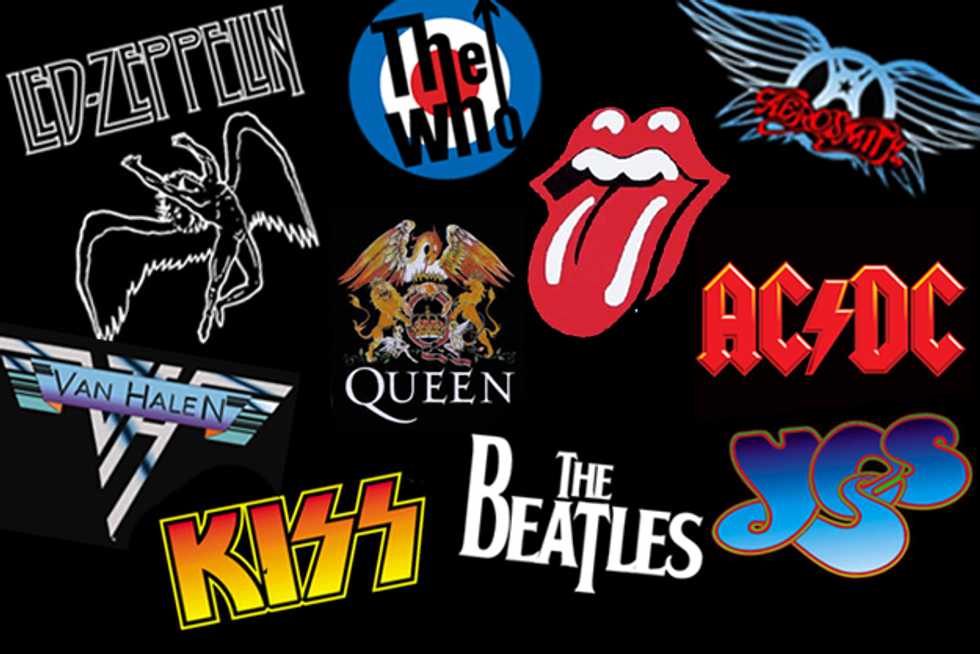
The 70s was a golden period where some of the best music of all time was created, both in Britain and in the United States, with the emergence of bands like Pink Floyd, The Kinks, and Led Zeppelin. The essence of 70s rock boils down to three main parts: the historic background, emotions, and unique style.
The different historic backgrounds made the 70s British rock bands very different from the American ones, even though the underlying values were very similar.
The 1970s in Britain was a period of economic uprising - the economy had rebounded, poverty levels were at its lowest ever, and income was growing. With the growing prosperity and better living conditions, punk rock and glam rock came along - punk rock refers to music with hardcore singing styles with a rebellious edge, where glam rock put a lot more emphasis on the hairstyles and appearances of the band members on the basis of punk rock.
In America, the 1970s was both a good period and a depressing one - technology was at its peak, but the Cold War and the Vietnam War were disturbing everyone’s lives. And these conflicting emotions were not hard to find in the music in the 70s American rock bands with songs like “Bring’em Home” and “Find the Cost of Freedom." Anti-war was a dominant musical theme in the 70s, which can be seen in the Woodstock Festival during that period.
We can find historical elements in the songs from the two cultures, and they oftentimes collided despite their differences. For example, both countries were experiencing a peak of development, and people for the first time in a long period were able to dream big about the limitless possibilities that the humans could achieve, one of them being the exploration of outer space. David Bowie released his song “Space Oddity” right around the time Apollo 11, in America was launched; The Kinks wrote a song about space and technology called “Supericonic Rocket Ship”; Led Zeppelin also launched their own record label under the influence of Apollo 11, and even attached a symbol of it on their band’s label.
The 70s rock bands were heavily influenced by their time period, and bands around the world were all heavily inter-related with songs singing about similar themes, especially those in Britain and the ones in the United States.
The emotions conveyed in 70s rock songs were also significantly important for examining that particular time period. One of the most noticeable ones is the uplifting feeling of excitement and optimism. David Bowie’s “Heroes” is a good example of this, with the lyrics singing “I, I will be King, and you, you will be Queen …We can be heroes, just for one day.” The emotions were very high and it seemed like everything was achievable.
The period was also a time of spiritual introspection where songs sang about the deep human mentality as well as the influence of society on people, with Pink Floyd’s song, “Brain Damage”, singing “There’s someone in my head, but it's not me. And if the cloud bursts thunder in your ear, you shout and no one seems to hear.” The song conveys a sense of confusion in the fast-evolving society and the helplessness of losing oneself completely.
Songs were also used as an outlet for bands to mock contemporary society. The Kinks released a song mocking pop-culture in Britain called “Everybody’s in Show-biz," and Pink Floyd satirized the economic status and people’s value towards money by the song “Money” which sings “Money, so they say, is the root of all evil today, but if you ask for a raise, it’s no surprise that they’re giving none away.” Hiding in between the lyrics of the songs, we can taste the bitterness and the songs served as the band's loudest protests.
Another emotion that was prominent in a lot of 70s rock songs was the idea of rebelling, which we can hear from David Bowies’, “Rebel Rebel," The Who’s, “My Generation," Judas Priest’s, “Breaking the Law," The Ramones’, “I Don't Care," and so on.
The 70s rock was also known for its style, which in one word could be summarized as “GLAM." The music was an explosion of excitement and the performances were massive and fabulous. Many bands tried to recreate the altered state of consciousness in their performances with neon lights and colored smoke to manifest the dizziness of a dreamy state. The members of the bands often had long, exaggerated hairstyles and makeup as well as extravagant clothing that were not only eye-catching but also symbolic and memorable.
The 70s rock is a very significant genre. The music with deep historical context was not only a mirror of the 70s society but also had a deeper level of self-absorption, passion and emotion underneath. 70s rock is by all means one of the most precious cultural and musical legacies. So next time you want some good music, don't immediately turn to the America’s Top 40 radio or the Billboard, but try some 70s rock music instead, because 70s rock promises to be a whole new and intriguing experience.