Election day is coming fast, and as a major part of it, the Electoral College is something many Americans have accepted at face value. The College has always been a part of our election system, and the rules we know it by today have stood since the 1880's. But, the more I've looked into this institution, the more problems I've seen. I think the Electoral College is one of the things standing in the way of a more direct and free democracy, and I'm going to outline the major problems with this system, ones that have existed since it's beginning, and the benefits of removing the system altogether.
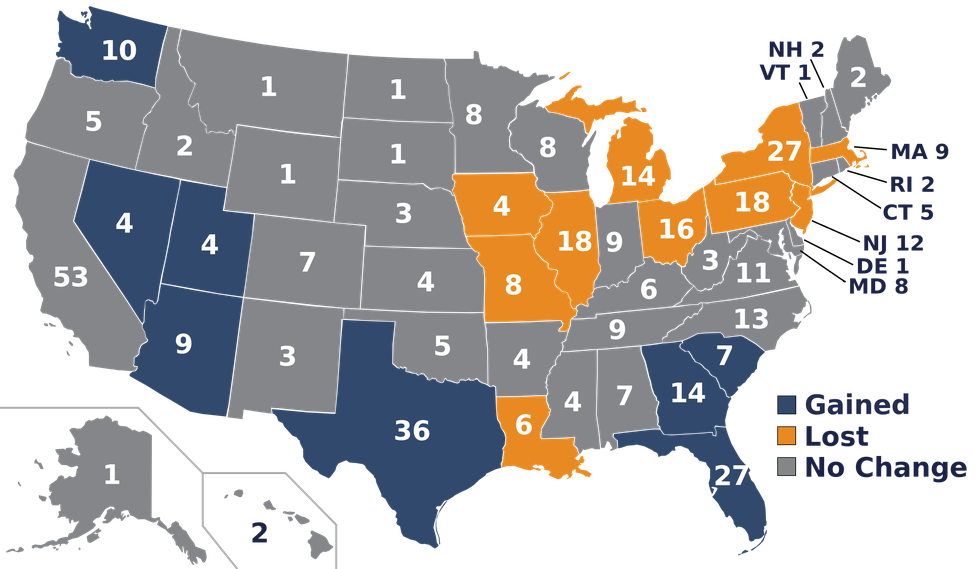
One of the first issues with the College is a matter of inequality. By that, I mean that your vote might not hold as much power as someone else's. Aren't all of our votes supposed to be equal? I know, I thought so too, but let me explain. To start, let's look at two states Vermont, and Texas. Vermont has 3 electoral votes, while Texas has 38. These votes are designed to be proportional to state population but end up making certain people's votes have much more weight. With Vermont's population of 626,042 there are about 208,681 per electoral vote, while in Texas which has a population of 27,469,114 there are 722,871 votes for each of its 38 electoral votes. That means that a person who lives in Vermont will hold more power with their vote than a person who lives in Texas or California. That kind of inequity of power wouldn't exist if we went by the popular vote. Everyone would have the same power regardless of their location.
Another problem with the Electoral College is the electors themselves. When I began my research, the process of how these electors are selected intrigued me, and got a variety of answers. For many states, the electors are selected by their political parties a few months before the election, while others use primaries. The fact that most states have no say in who their electors are is unsettling enough, but the rules governing them are even more concerning. Did you know that only 24 states have rules punishing electors that vote against the popular vote? That means in 26 states, if an elector votes for whoever they want, there is no consequence. Cutting out these middlemen in our election system will make democracy much more direct.
The last issue with the electoral college is how it manipulates and artificially creates battleground states. I'm sure you've heard that term or "swing state" in the past. These are the big ticket states that often come close to being either Republican or Democrat. This, in turn, causes many candidates to focus much of their campaigning attention on larger states like California and Texas, while states like Wyoming and Alaska don't get much attention. One major electoral rule is the cause of this. 48 of the 50 states have a winner-take-all system. That means one candidate wins all of the votes in those states, turning the whole state red or blue. This isn't quite honest or fair, as not everyone in that state voted one way. Removing the college would allow each state to be represented more honestly and accurately, and would help reflect the political sentiments of various regions. This would also make it so that candidates need to focus more of their attention on other places than just the battleground states, giving people more chances to really see and hear their candidates.
Overall, removing this well-intentioned but problematic institution would remove some of the muddiness and artificial strife in American politics, and bring us just a little bit closer to the truer democracy we strive for.