
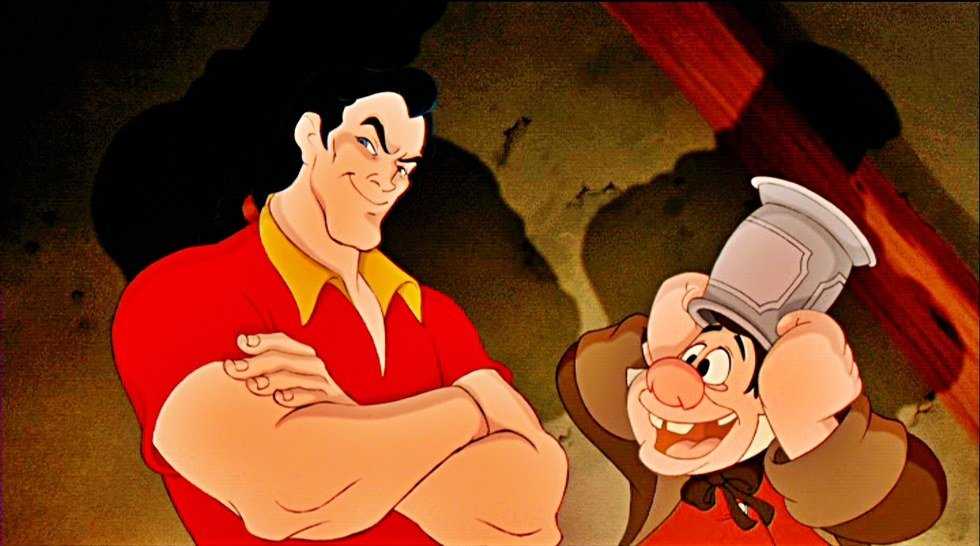
Be our guest: The recent adaptation of Beauty and the Beast has explicitly made the character of Lefou homosexual, sparking a controversy and dialogue throughout the nation. For those that recognize the importance of spreading awareness and acceptance of the LGBTQ community, the addition in the film offers opportunities for children, young adolescents or people from all demographics to not fear the expression of their individuality or sexual orientation. Children and adolescents are at an age when they need the confidence that it is OK to be unsure of themselves and not know who they are, and the reassurance that they will be loved and accepted by society unconditionally.
Beauty and the Beast should be a tale that promotes that sense of belonging, which is why Lefou’s character should be celebrated. According to director of the 2017 film, Bill Condon, he only intended the hinting of homosexuality to be a subplot in the film, but our society finds a way to denounce the short addition and then boycott the entire 129-minute film. The film was to not be shown in Kuwait and Malaysia, to be boycotted by one Alabama drive-in and to be given a strict revision in Russian theaters. Now the film viewing in Malaysia is permitted, but with a PG-13 label, indicating how people still view homosexuality with a negative connotation. For a film that is all about recognizing latent internal beauty, the recent controversy over Lefou’s character focuses on superficiality and a need to defend heterosexuality as the normal way of being.
Although individuals within our society have made strides at accepting a diversified set of sexualities, our society still loves to label groups as “the other” and question their presence in aspects of mundane life, such as the cinema. We are still trapped in a gender code that designates stringent guidelines of behavior and personality. Our society is conditioned to display gender in a particular way and for its members to confine themselves to the attributes that gender roles require. Therefore, even the slightest hint of a male exhibiting perhaps more feminine traits than masculine traits, or even a balance of the two, is often met with disdain. Sociologist, Erving Goffman, was known for his views of the presentation of the self and how we are always playing what we think is the appropriate role for everyday life. He inferred that there is nothing natural about gender identity; it is a process that is learned as we learn to take on certain attributes through the messages that we receive from prominent figures in our world.
Goffman's idea can be seen throughout history as a rigid Motion Picture Production Code or Hays Code established guidelines for filmmakers to obey and hindered the authentic expression of individuality. Gay characters were being swept under the rug in movies, and in the late 1930s/1940s the only way to circumvent the code was by painting homosexuals as cold-hearted villains. The result was the linkage between homosexuality and the description of “the other”; an abnormal way of being. Decades later, cinema still has to hint at homosexuality or expose it in an “appropriate manner” because it is still synonymous with sin for many communities and cultures. Beauty and the Beast does not directly deal with homosexuality. Rather, it suggests a "bromance" for characters Gaston and Lefou. Similarly, the relationship between Will Ferrell and John. C. Reilly in Step Brothers is exemplary of a bromance. Yet, it is clear that a presentation of a love story between two male protagonists has to be covered in comedic jargon in order for it to be acceptable by its viewers. Burdened with a dark past, the concept of sexuality is in demand of acceptance in the present and in the future.
Supporting Lefou’s homosexuality, proponents of the film have referenced that much of the music that comprises many of our beloved Disney classics were written by Howard Ashman, who was a gay man. Yet, our culture ignorantly puts a spotlight on small details in order to use it as a way to gain publicity and defend traditional conventions. However, it is more than tradition — it is about wanting individuals to inhibit their natural tendencies and desires rather than displaying the gender roles that were the glue maintaining the status quo. The minor subplot should be embraced as an addition that complements the beautiful message of the film — a message and lesson that still requires repetition and attention in the 21st century: to be able to be loved and love another in return can only be achieved once we look past superficial perceptions and forge connections based on internal strength and beauty.