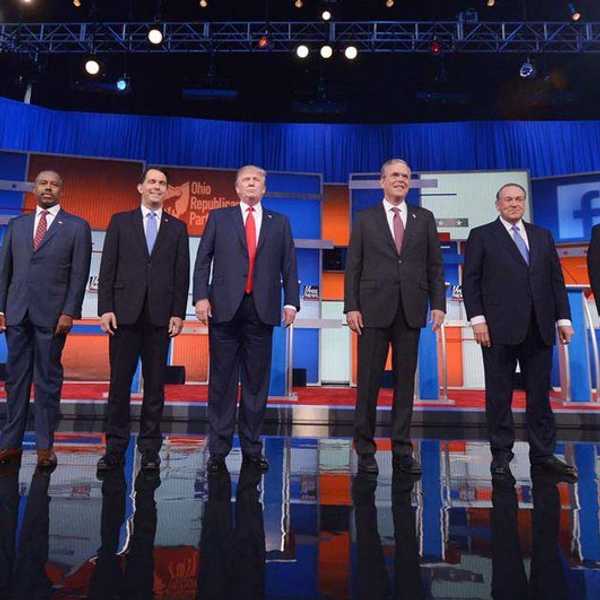
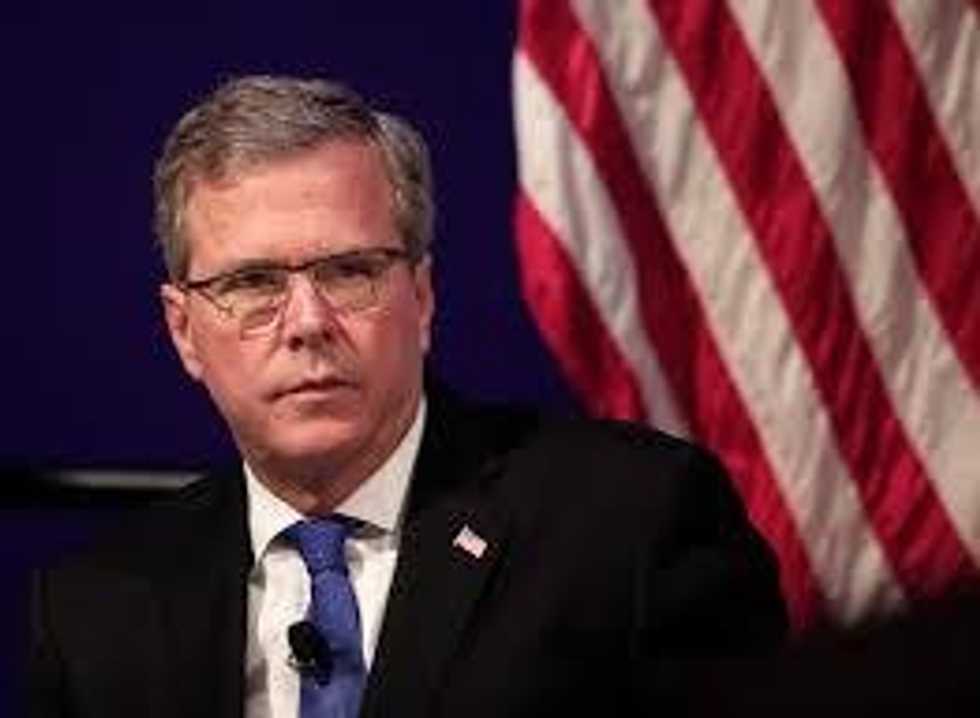
Earlier this week, Fox News released a poll showing that Donald Trump has risen to the top in popularity among Republican voters with 18 percent saying that they would vote for the billionaire businessman. Scott Walker, the governor of Wisconsin, came in second in the poll with 15 percent of likely voters, and former Florida governor Jeb Bush came in third with 14 percent.
As someone who is independent but left-leaning, I have been interested by this contrast in top contenders in the preliminary stages of the 2016 presidential campaign—in particular between the personas of Donald Trump and Jeb Bush. Both surnames have become household names over the past three to four decades, but for vastly different reasons. And now as presidential candidates, these men seemingly appeal to two different factions of the Republican party.
Trump, a Penn alum, has made his name in real estate—especially through his development projects in Manhattan. For the youngest generation of voters, however, his name will also be indelibly connected with reality television ("The Apprentice" began in 2004 on NBC) and the key catchphrase of "You're fired."
As a candidate, Trump has maintained that characteristic style of bluntness mixed with confidence through his recent remarks on Mexican immigrants followed up by his statement of intention to win the Hispanic vote come November 2016.
Furthermore, the remainder of Trump's platform is staunchly conservative. The backbone of his campaign is focused on economic issues—from simplifying the tax code to eliminating the inheritance tax and the corporate tax. On domestic issues, Trump has previously stated that he opposes gun control and the new Common Core standards for public education.
Bush, on the other hand, comes from one of the most well-known American political families of this era. Interestingly enough, though, he graduated from the University of Texas with a degree in Latin American studies and actually spent part of his early working years in Venezuela. Bush entered the political realm in his own right through the governorship of Florida (winning in 1998).
Currently, one of the main obstacles for Bush has not been personality or words, but rather the shadow left by the presidencies of his father and brother.
Appealing to a more moderate base, Bush has pushed for reform of the nation's illegal immigration laws—including pathways to citizenship for undocumented immigrants already in the country. He also supports the Common Core, emphasizing that the standards are determined by each state.
While Bush is fairly in-line with conservatives on most other domestic/policy issues, the two aforementioned stances in particular make him stand out among contenders.
Will the businessman with opinions bigger than his hair be able to prove that he is capable of diplomacy? Will the former governor be able to prove that he would be a different executive than his previous family members?