Throughout the existence of humanity there have been wars, and those wars have to be fought somewhere. When this happens there are always people that must move to avoid the battles, especially during a civil war.
In early 2011 the people of Syria took to the streets for a peaceful demonstration against their then current leader Bashar al-Assad and his regime. They protested the lack of political progress from the Bashar al-Assad regime and the regime’s inhumane tactics of handling anti-government demonstrations. Bashar-al-Assad responded with torture, and shooting and killing the protesters. This directly caused the full on Civil war in Syria that we are seeing today.
When civil wars break out in countries without functional centralized government this can allow other organizations, countries, or groups to take control of land and state resources. In the case of Syria, Islamic extremist organizations moved in to occupy the territory. Civil unrest such as this is responsible for territories falling into the hands of groups such as ISIL (Islamic State of Iraq and Levant)(A.K.A. ISIS and IS.)
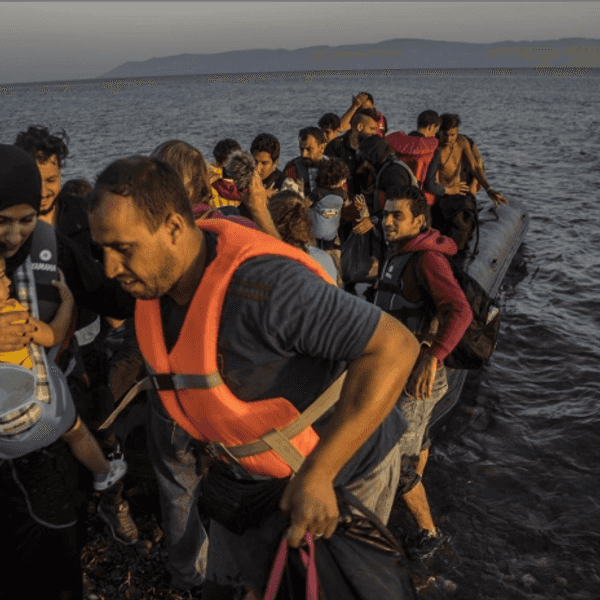
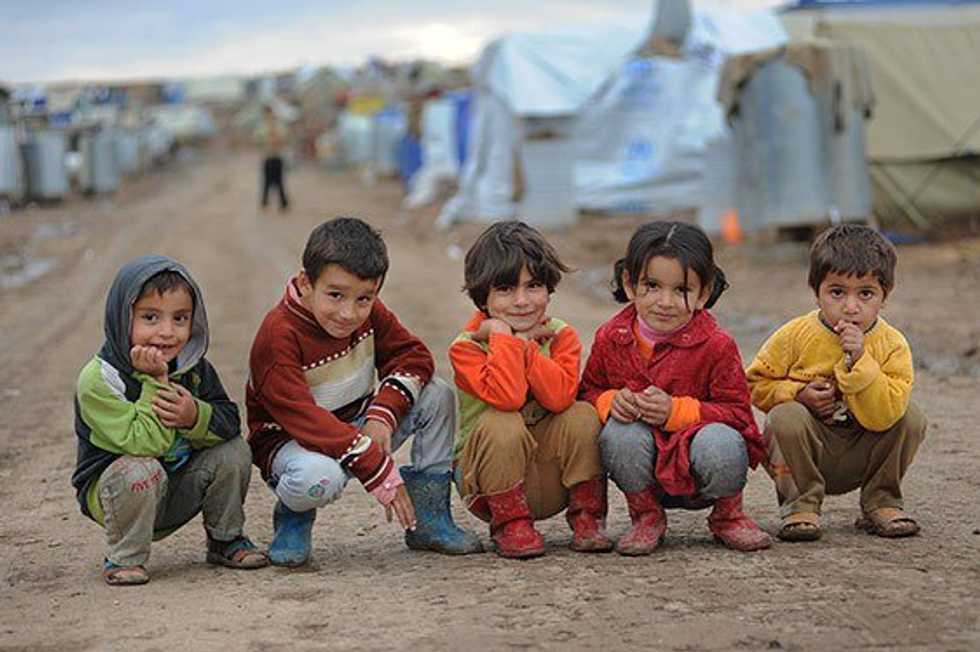
Estimates from Amnesty International suggests that 220,000 people have died due to these conflicts in Syria, as well as 12.8 million in need of immediate need of humanitarian assistance. Syrian civilians were displaced to the tune of 50%. The United Nations estimates there are 6.5 million Syrians displaced within Syria itself, as well as an estimated total of 4 million who have fled the country entirely. The majority of those civilians who fled Syria have only gotten as far as Turkey, Lebanon, Jordan, and Iraq. This kind of mass exodus is not easy to handle for the country receiving the refugees. Turkey, being Syria’s neighbor, had refugee camps ready to go as the refugees started to flood the border. Where it is estimated by Amnesty International that 1.9 million Syrian refugees are currently located. However, some countries were not so prepared.
The United States isn't exactly easy for refugees to just walk up and ask for refugee status. Even though the Obama Administration has announced its plans to allow 10,000 Syrian refugees to enter the United States in fiscal year 2016. This number is still being finalized among rigorous negotiations between the White House and Congress. Legally the number of accepted refugees throughout a fiscal year is determined by the president, but historically this number is agreed upon by their governing counterparts on the Hill. Secretary John Kerry has spoken out on the issue stating that the number of total refugees should be 75,000. The total number is not based solely on Syrian refugees, but for anyone seeking refuge in the United States. The opposition to accepting larger number of refugees are concerned with possible national security concerns with the refugees. They have substantial doubts to the screening measures currently in place in order to ensure the applicants are not a threat to domestic national security.
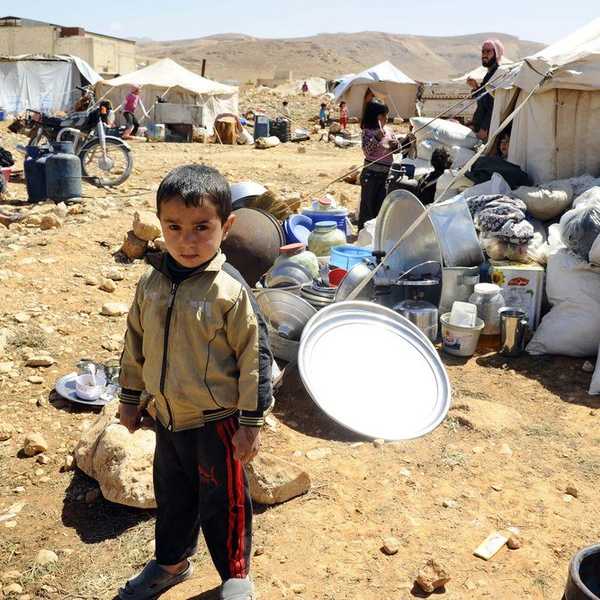
The screening measures conducted by NATO to ensure that the host countries are not allowing hostile parties into their country are incredibly time consuming. Even the slightest red flag will keep the refugees out of the process indefinitely. Larry Yungk, a senior resettlement officer who has worked on refugee resettlement for 35 years describes the process of gaining admission as "...applying a very fine filter — even if there’s a question, we’re not going to proceed with resettlement.” The residents in these makeshift desert camps are simply looking for some since of normalcy many have expressed a great desire to work to provide for a better life for their families.
Negotiations will continue for some time and this is no doubt part of larger and more complex negotiations as to the U.S.’s involvement in the Syrian Civil War. There, however, is no debate on whether or not a conflict such as this spurs civil unrest and allows for groups such as ISIL the opportunity to gain territory. Even the most nefarious of groups such as al-Qaida agrees that this is not good. In order to prevent the further gain of territory from terrorist groups such as these, we must all agree, that a functional government in Syria and the surrounding region needs to exist. How exactly to do that, is still to be decided.