
Chocolate — rich, luscious, melt-in-your-mouth goodness. It’s a flavor found in all our favorite sweet treats: cookies, cakes, pies, and ice cream. Its enticing smell immediately ushers cherished childhood memories of finagling a piece of candy from the glass jar and carefully unwrapping the delicious morsel with pudgy fingers before swiftly devouring it.
Yet for the majority of those who harvest the cacao bean, a central ingredient in the production of chocolate, the latter holds no such merry connotations. Rather, it conjures images of deep red gashes on their skin, painful separation from their families, and the sweltering heat of the fields. In fact, it is the soaring popularity and demand for chocolate worldwide that have allowed child labor and even slavery to become modus operandi on cocoa farms throughout West Africa.
This year, the average US citizen will eat over eleven pounds of chocolate. The cocoa (the processed state of the cacao bean) in this confectionery will most likely come from one of two West African countries, Ghana and the Ivory Coast, which together produce over 70% of the world’s supply of this crop. The latter will then be sold to the majority of chocolate companies, including the international giants Hershey, Mars, and Nestlé.
The rapid surge in popularity of chocolate over the last few decades has led to a growing demand for cheap cocoa. Despite gargantuan corporate profits — the chocolate industry is worth $110 billion a year — the average cocoa farmer earns less than $2 each day, effectively planting him below the poverty line. Consequently, he resorts to the use of child labor in an effort to maintain competitive prices.
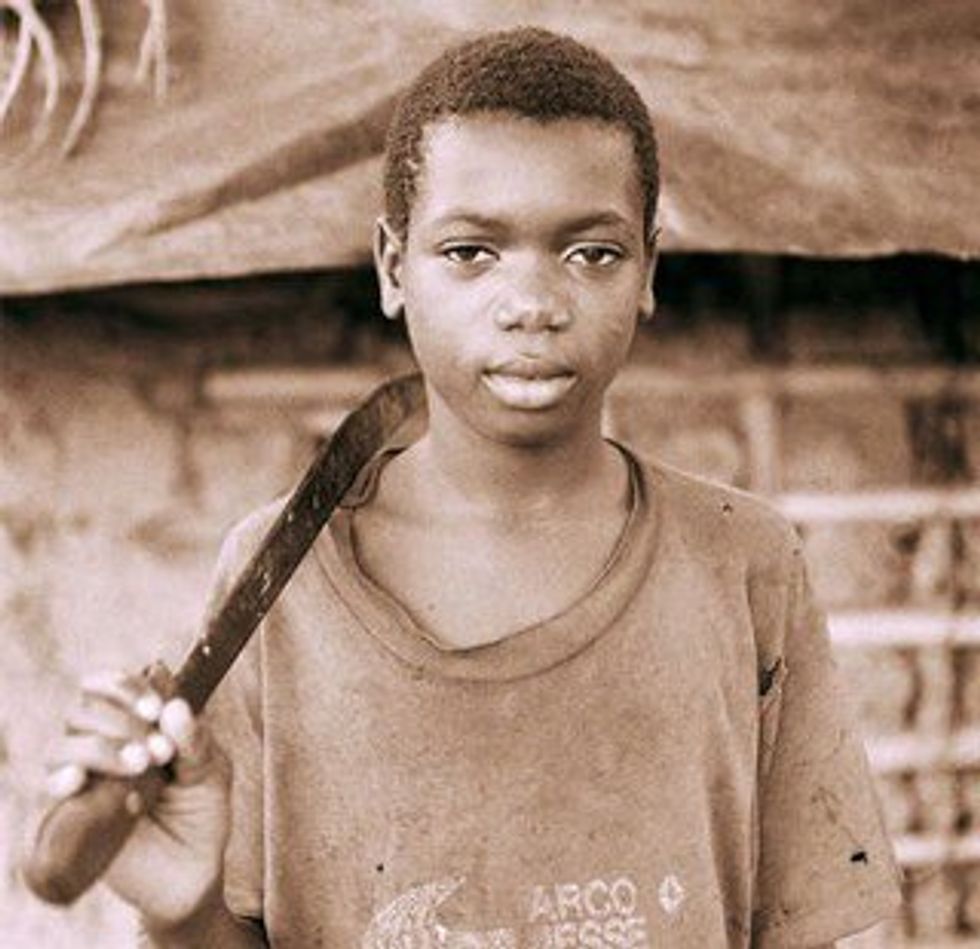
According to an investigative report published by the BBC in 2000, hundreds of thousands of children are taken from their families each year and sold as workers in cocoa farms, where they are effectively treated as slaves. The destitute parents of these children, many of whom come from Mali, Burkina Faso, and Togo, sell their kids to traffickers in the belief that they will find honest work and send home their earnings. Instead, these young laborers, generally between eleven and sixteen years old, are forced into hard manual labor for up to one hundred hours a week. They use chainsaws to clear the dense forests and machetes to cut open the tough cacao bean pods.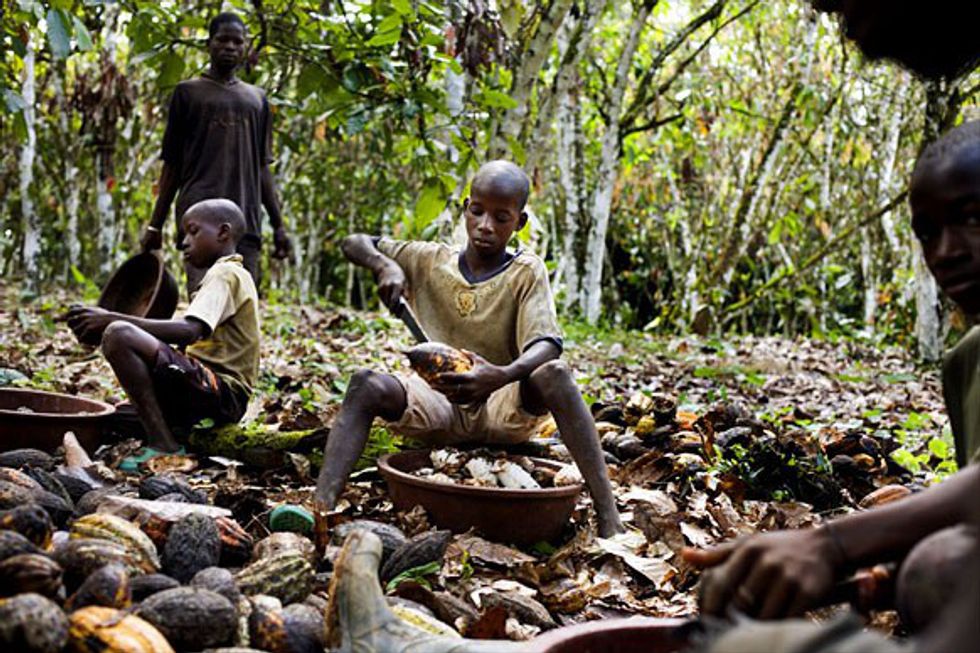
Child laborers use machetes to split open cocoa pods.
In return for their toil, the children are fed the cheapest food available (generally corn paste and bananas) and are provided wooden planks to use as beds in tiny, windowless buildings. They do not have access to clean water or sanitary bathrooms, and 40% of those in the Ivory Coast do not attend school. Denied education, these children harbor little hope of ever breaking the vicious cycle of poverty.On top of these deplorable conditions, the laborers also suffer regular beatings, especially if they attempt to escape. Most will not see their families again for years, if ever.
“The beatings were a part of my life,” said Aly Diabate, a freed slave. “Anytime they loaded you with bags [of cacao beans] and you fell while carrying them, nobody helped you. Instead they beat you and beat you until you picked it up again.”
In response to these egregious violations of the International Labour Organization’s Child Labor Standards, consumers and conscientious companies have turned to Fair Trade chocolate untainted by slavery. Most of this cocoa is organic and harvested in Latin America, where neither slavery nor child labor have been documented as of yet. Through the purchase of these products, chocolate lovers can send a clear message about what they will and will not condone when it comes to food production. Although child labor currently permeates and contaminates the chocolate industry, we as consumers have the power to use our dollars to reduce these injustices.





 man running in forestPhoto by