Over 16,000 animals are on the official endangered species list with a possibility of extinction, and over 40,000 species are cataloged on the IUCN Red List, which lists all threatened species at risk for becoming endangered. Despite these large numbers, it is possible for species to recover from their categorical listing. An endangered animal, particularly through help by protection agencies, can most certainly procreate enough to lower the species to a classification of "threatened" and then eventually be removed from both lists. This takes time, though. In fact, it can take years for a species to make even the slightest move towards becoming no longer endangered.
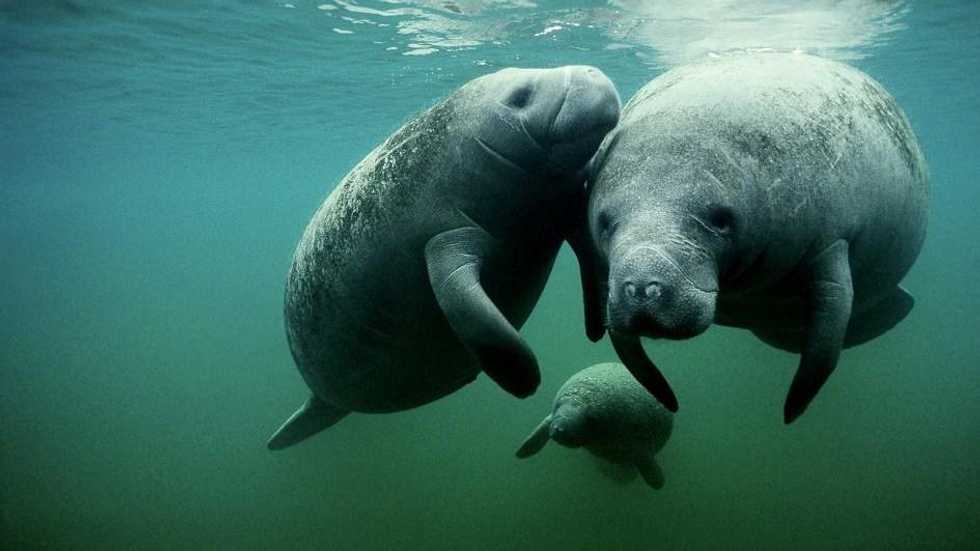
The most recent species that has made this step towards species recovery is the West Indian manatee, also known as the sea cow. As of January 2016, Trichechus manatus (the West Indian manatee) was announced to being on the IUCN Red List of threatened species instead of the endangered species list, as it has been since 1967. This is a large step forward considering the breeding and gestation periods for the females.
Female manatees, though able to mate anytime during the year once they mature at age 5, can only give birth once every two and a half to five years. The gestation period of a calf typically lasts a full year, though it is not unheard of to hear of a female manatee being pregnant for up to fourteen months. This, similar to humans, depends on when the calf is fully developed or is ready to experience the world on its own. Typically each female can only birth one calf at a time; a birth of twins can be seen, but it is extremely rare. Sometimes, though, the calf can be lost due to environmental factors, a miscarriage via watercraft incidents or some sort of natural cause. Due to these breeding factors, the manatee species has regenerated rather slowly.
The main reason as to why these gentle giants of the ocean were endangered can be linked to a variety of factors, with those breeding complications not helping their situation. Contrary to beliefs, the manatee's endangerment is not from attacks from other animal species. No, these creatures aren't a bother to most species, save for crocodiles. The West Indian manatees' main predator are actually our species: humans. Humans injure and kill many manatees each year via watercraft incidents, indirect fishing incidents, litter consumption, environmental degradation and poaching. Many manatees get run over by boats, jet skis and other watercraft vehicles every year. This leads to scarring and cuts in adult manatees, death to calves and can provoke a miscarriage within a pregnant female. Manatees also get entangled within fishing nets and trot lines as well, and can swallow hooks which puncture their internal organs causing them bleed internally, often resulting in death. Litter consumption, obviously, is not good for the health of a manatee depending on what it swallows; this can be either simply harmful or lethal. Environmental degradation regards to a shrinkage of the natural habitat of the West Indian manatee via humans in order to make new land developments. Poaching, though not as prevalent as in earlier years, still takes place. Believe it or not, manatee bone and meat are popular in some countries; it is said that the bone holds medicinal value.
But humans aren't the only reason for their endangerment, no, some of it is simply nature taking its course. Water temperature, natural internal diseases and natural marine diseases also attribute to many manatee deaths. Sometimes, when migrating to warmer waters as the season gets colder, the manatee may get stuck within a channel. Though the manatee is a large creature, it still requires warm temperatures in order to survive. When the temperature reaches a certain level of coldness, the manatee develops a cold stress syndrome which brings forth death of the creature in the end. Manatees also are prone to many different gastrointestinal issues and, as shown in the previous statement, are extremely susceptible to pneumonia as they cannot withstand cold temperatures. As for marine diseases, the most common to take the lives of West Indian manatees is exposure to Red Tide, a discoloration of an area of water due to an outbreak of toxic dinoflagellates. These toxins are typically present in shrimp and other shellfish which, when consumed by the manatee, results in poisoning which leads to death.

Due to a recognition of a drastic shrinkage in the population, in the years 1972 and 1973, the West Indian manatee was nationally protected by both the U.S. Marine Mammal Acts of 1972 and the U.S. Endangered Species Act of 1973. Being a species native to Florida, the state also protected the species under the Florida Manatee Sanctuary Act of 1978 as well as contributed millions of dollars over the years in order to make the waters a
Today, there are now over 13,000 West Indian manatees swarming the Atlantic Ocean around South America and over 6,000 still native to the south and east coast of the United States, primarily centered around Florida and the Gulf. This increase in population is due to not only the multitude of protection laws in
Congratulations gentle giants, you're on the way there!