


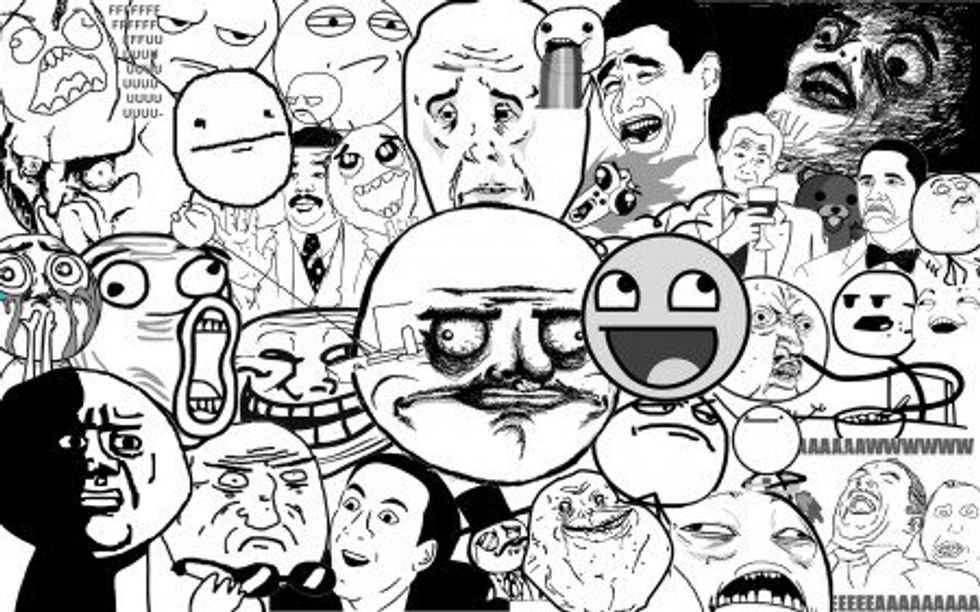
You cannot escape memes. They are everywhere, and it does not look like they are going to go out of fashion any time soon. However, it may surprise you to know that the basic concept of the meme was developed as early as the 70s.
Richard Dawkins is an evolutionary biologist famous for his 1976 book "The Selfish Gene." The book is largely about explaining some interesting biological phenomena, but it also captures a biological perspective of social phenomena. In Chapter 11 of "The Selfish Gene," he coins the word meme. He regards a meme as a cultural idea that can spread. This would include music, slang, clothing, etc.
The meme is analogous to the human gene. Just as more successful and biologically fit genes survive and spread, memes do as well. The success of a gene is affected by its environment, and the same concept can be applied to a meme. The internet has become the environment where the ease of communication has allowed memes to spread faster than ever.
When you think of meme, you are probably not thinking of Dawkin’s precise definition. You probably are thinking of captioned pictures. Philosophical velociraptors, pre-historic sponges and a very unfortunate Brian come to mind. However, captioned pictures are not the only viral internet phenomena. Music videos, creepypasta stories and even the whole dress debate can be considered internet memes. They are a unique cultural expression in that they can reach a much wider audience since they are not restricted by geographical boundaries.
There is an entire science that studies memes known as memetics. This branch studies the more traditional version of memes, but the explosion of internet memes has resulted in many studies that analyze them as windows into the culture of the modern world.
Understanding why certain memes go viral can provide an understanding of human nature. One study found memes that evoke stronger emotions are more likely to shared, and this seems pretty obvious. Specifically, the emotion that most consistently results in a viral meme is anger. Memes that appeal to a specific group’s anger are most likely shared when the subject of the meme is an “out-group” member. Think of all the anti-Hillary videos that Republicans have shared and all of the anti-Trump videos Democrats have shared on your Facebook wall.
Internet memes have found their presence in the outside world as well. Companies utilize the knowledge of why certain memes spread in creating advertisements for their product. If you think about it, every Old Spice commercial is a meme essentially parodying itself. "The Conjuring" was able to build hype through its viral trailers. Memes also sustain the memory of older products from falling into obscurity (the condescending Willy Wonka meme).
Memes are a product of human nature. While many memes are niche to certain groups, there is always a clever one every now and then that can be enjoyed by almost everyone. Memes produced by one community are viewable by others, and this may over time foster a sense of understanding and appreciation between different groups of people.

















