Superhero movies will go "the way of the Western" says Steven Spielberg. As a component of his "big [Hollywood] meltdown" theory, which predicts the collapse of the film industry in the event that one or several tentpole franchise flop in the box office, Spielberg believes that consumers have put too much stock in superhero films. Mr. Spielberg, this is not so.
Superhero movies are not a genre; they are a sub-genre. One remarkable thing that 21st century culture has affected is: acceptance for nerds, geeks, dorks, and weirdos. As someone to whom these qualities are liberally ascribed, I have found this a great way to feel comfortable reading the "Knightfall" trilogy in public. Amongst the dorky dorm decor I currently sport are posters for: "Batman vs. Superman: Dawn of Justice," "Secret Avengers," "Attack on Titan," "Game of Thrones," and "Star Wars." There are several others, but you get the picture. I bring this up because, twenty years ago, one could not advertise being an adult who reads comic books with a lack of ridicule. Even in the Golden Age of Comics, pulp books and comics were considered juvenile. Even though comic book have circled all-time lows for the past decade, and are slowly rising as you can see here, now Geek Culture consumption is at an all-time high. It is okay to be a nerd, geek, dweeb, whatever, and I am relieved to hear "cool posters, bruh."
This current wave of acceptance and fandom is brought on largely due to the success of the Marvel Cinematic Universe, which, starting with "Iron Man" in 2008, successfully rebranded an entire taboo subculture in a way that was acceptable to the mainstream. Though the "X-Men" movies, directed by Brian Singer, came before Iron Man, when Marvel went bankrupt in 1996 and sold off movie rights to Fox and Sony, the creation of the post-credit scene and Nick Fury's rumors of the "Avengers Initiative" drove fans wild, and made the unassimilated voraciously curious. John Favreau and Kevin Feige unwittingly set a precedent for an expansive, cinematic universe that would be emulated by the DCEU, Disney (owns Marvel) with "Star Wars", Sony's admirable attempt at a Spiderman Universe, and whatever fuster cluck is going on at Fox right now. These movies are generating billions at a seemingly incessant pace, save the disaster that was "Fant4stic."
I must reiterate, however, that this is just the newest wave of fandom. What Spielberg fails to acknowledge is that he is, in part, responsible for these fans existing in the first place. His work on the "Indiana Jones" series, "Jaws," and the "Jurassic Park" movies, including an executive producer credit on the $1.6 billion grossing "Jurassic World" entry to the series, is a huge contribution to the same overarching culture to which these superhero films belong. The release of these movies surrounded sci-fi successes like the "Back to the Future," "Blade Runner," "Star Wars," and "Star Trek" films and, in the case of "Star Trek," TV series. Then, the superhero movies started coming in. We saw Christopher Reeve play "Superman" in '78, and the ball kept rolling. This spawned a series of films starring Reeve, and subsequently validated the market for Tim Burton's "Batman" in '89. The movies that came after were met with contempt and Batnipples. It was not a time of great respect for superhero movies yet. Still, this was enough to carry geeks from the 70s well through the nineties, coupled with the rise of anime series like "Dragon Ball Z" in the States.
At the turn of the millennium, things began to explode for nerds everywhere. New subcultures were popping up left and right based on their literary drug of choice. "The Lord of the Rings" fans got their privates kicked in and their brains barraged once a year for three straight years, with the Oscars to show for it. "Harry Potter" nerds got seven books and eight movies. "Twilight" nerds got shirtless werewolves. "Hunger Games" nerds got freaking J-Law. Things were great, and the quality has only improved since then. "Game of Thrones" is wildly popular as both a TV and book series. It is hardly matched in writing quality and fanbase vehemency. With the rise in quality television and a change in its consumption, so too has risen the nerd culture. "Daredevil," "Orange is the New Black," and "Game of Thrones" are all prime examples of how geeks are staking their claim into all forms of media.
Christopher Nolan's "Dark Knight Trilogy" is the first set of superhero films to really gain critical acclaim, earning the sub-genre's first Academy Award and possibly best all-time performance by an actor in any genre with Heath Ledger. This trilogy established the now unassailable fact that superheroes and their villains can be extraordinarily well-written in both film and comic cells.
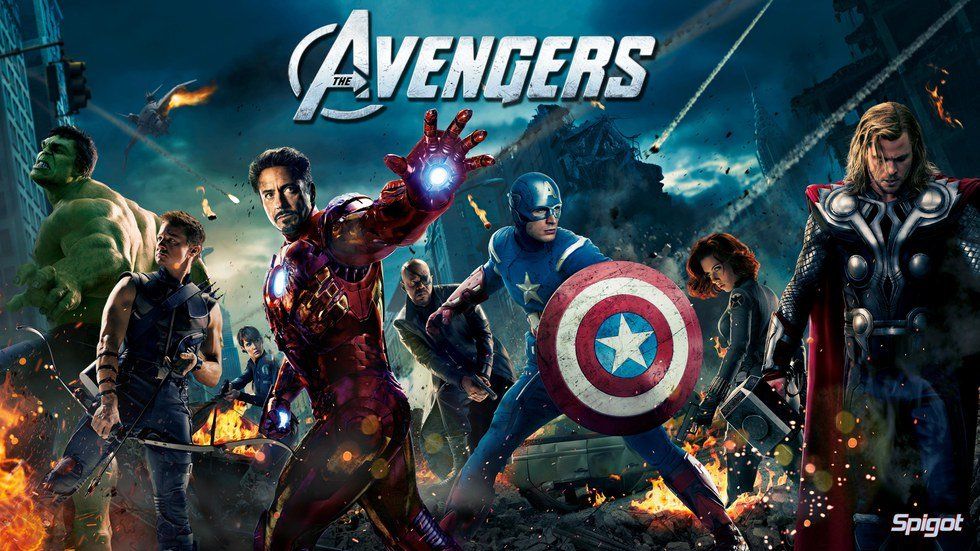
Given this overwhelming evidence, Mr. Spielberg, I rebuke your claims for their provincial scope. If, "The Avengers" was able to gross $1.52 billion in 2012 and the brand is still going as strong as it is, then there is no reason to think that this now heavily-ingrained part of our culture will disappear. Sure, it might cool off some, but we have raised our children during the new Golden Age. They won't let go of their deep attachments the same way I remember waiting in line for hours with my father to see the premier of "The Phantom Menace." These legends and stories transcend the generation that saw WWII and the one that experienced 9/11 on their first day of kindergarten. These are tales of acceptance, not discrimination against indigenous peoples. These are stories that inspire hope, patriotism, and justice for all, regardless of race, gender, or sexuality. They will live on as the great American myths that came about at the nation's height. Everyone loves a good story.