Look, who doesn't love a good superhero story? They make great role models, exciting movies and are all-around awesome figures to look up to. Lately though, now that we millennials have reached the end of our teens, it seems that something is a little bit off about these heroes we loved so much growing up. They're all men! This controversy of under-representation is one that has been gaining momentum for a while now—particularly among young feminists. The recent release of Avengers: Age of Ultron really brought this issue to the public eye, exposing the questionable choices Marvel makes regarding Black Widow and the lack of women featured in their films in general.
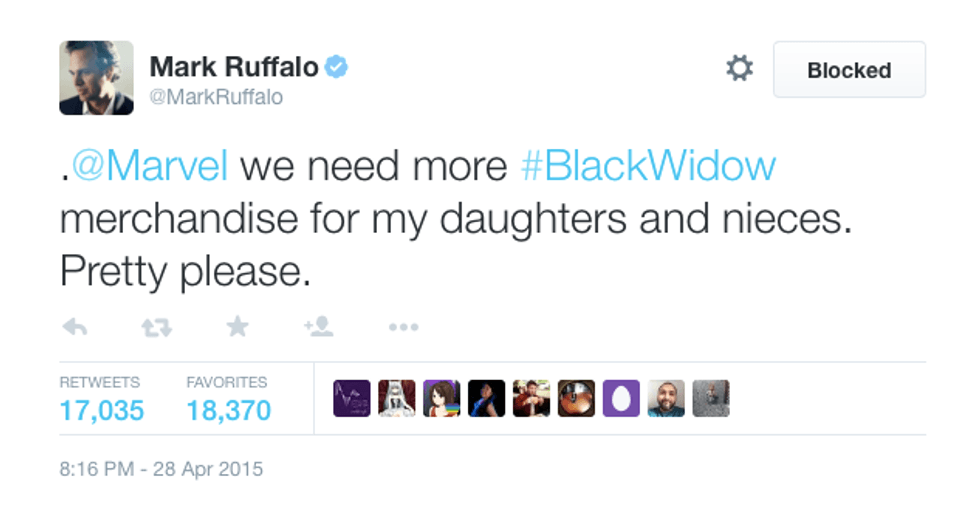
Back in April, actor Mark Ruffalo (Bruce Banner/Hulk) tweeted the following:
(via @markruffalo)
Once one of the franchise's own actors commented so publicly, it was hard to ignore the blatant (although perhaps accidental) sexism on Marvel’s part. In fact, the association between females and superheroes has been sparse since the 1950s and is still being fought today. Between Big Bang Theory constantly reminding its audience that only men can be “geeks” and most comic books drawing females as if they were mere sex objects, we can’t deny that while we’ve made progress, we are still far from equal and even further from realistic representation. With superheroes being so prominent in cinema now (Age of Ultron is the fifth highest grossing movie in the world), it's important that we don't lose sight of the fact that women can be superheroes, too. SO let’s talk about the Bechdel Test!

(via neveranyasterisks)
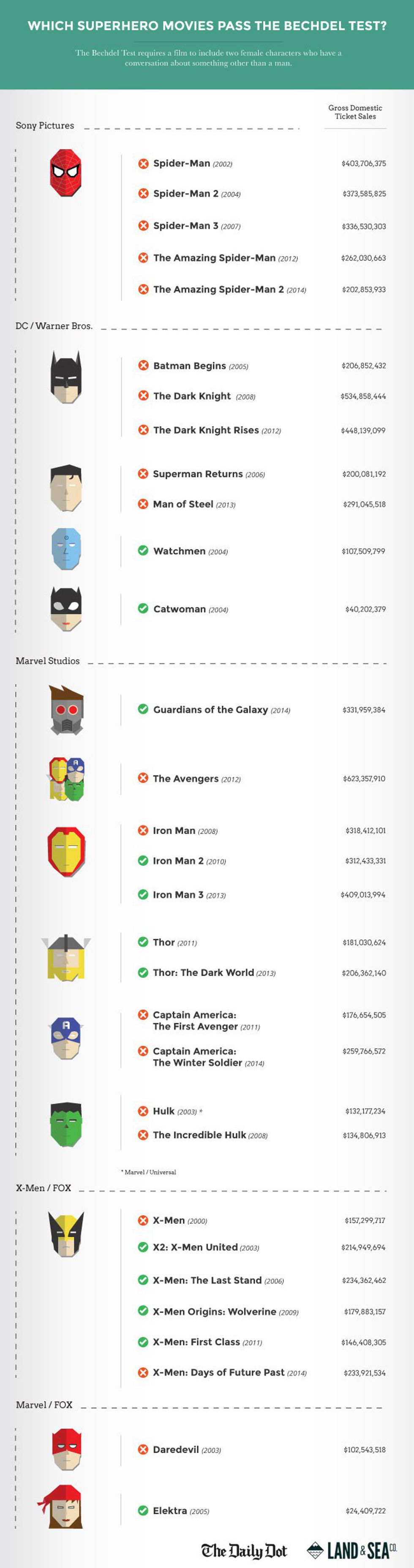
This is a test popularized by Allison Bechdel in 1985 (via the strip above titled "The Rule"), which is mainly used on movies and television shows, but has more recently been expanded to include a wide variety of media. There are three criteria: One, it must have at least two women in it who, two, talk to each other about, three, something besides a man (even food or shopping—it doesn’t have to be deep!). Seems super simple, right? You would probably be surprised by which movies don't meet these criteria.
Here’s an image showing most of Marvel's films and how they stack up against the Bechdel Test:
(via dailydot.com)
Now this doesn’t mean you’re a horrible person if your favorite movies fail the test. It doesn’t even mean the movie is bad. It’s just serving to make a point. Why are women so flat and underrepresented in the film and comic book industry?
Mark Ruffalo’s tweet inspired us to do more research and find absolutely astounding results.
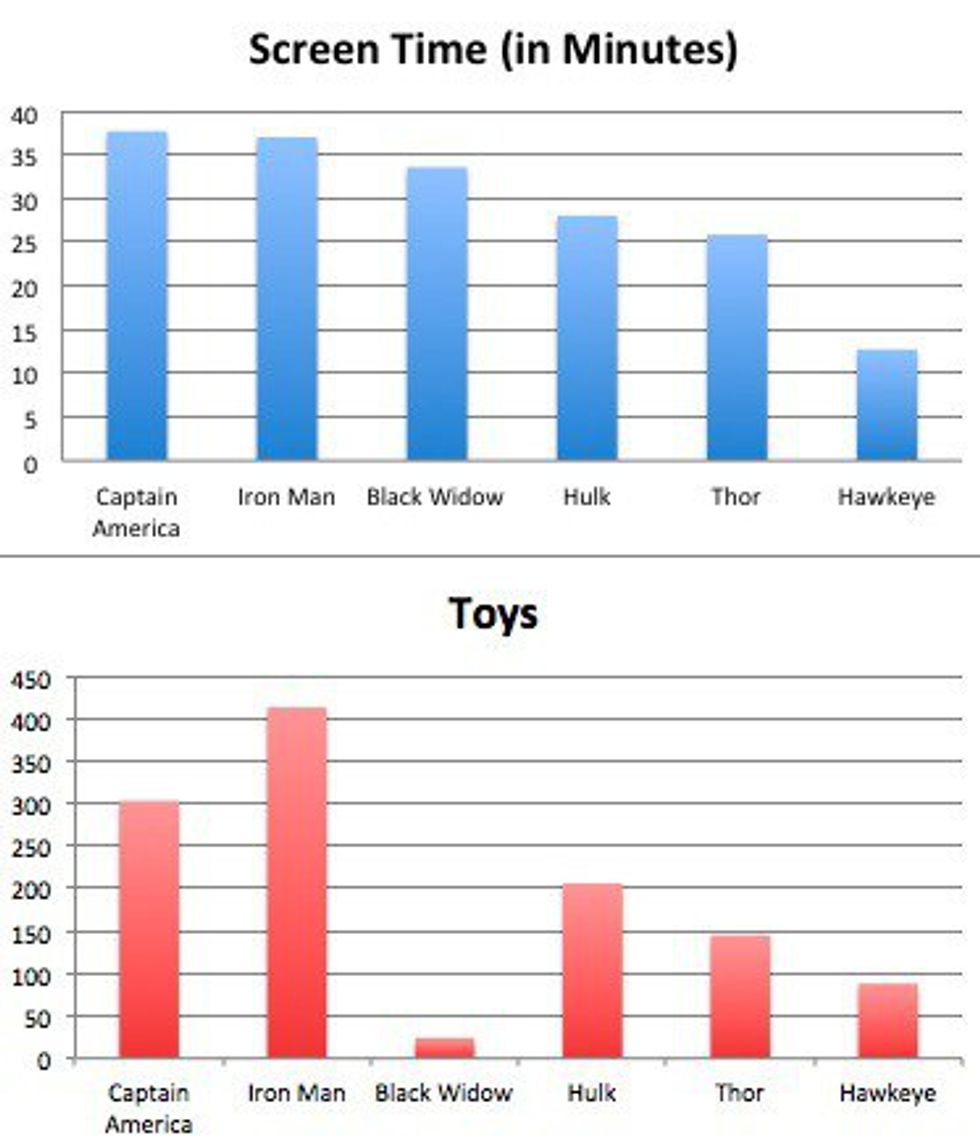
These images are pulled from a study that illustrates the following: Black Widow is featured in The Avengers between 30 and 35 minutes. While this marks her at having more screen time than half of her male co-stars, the second image reveals she has the least merchandise to her name. The same study was done for the recent release of Avengers: Age of Ultron and it yielded virtually the same results. Despite Black Widow being the third most represented on the screen, that representation in no way transferred to merchandise. This makes it seem like she is the kind of character that is to be seen but not admired or worth liking. In the most recent study, they have yet to find a Black Widow action figure, LEGO, or “prop” toy. (An example of a prop toy would be the Iron Man mask or gloves that look like the Hulk—essentially role playing merch.)
(via butnotblackwidow.tumblr.com)
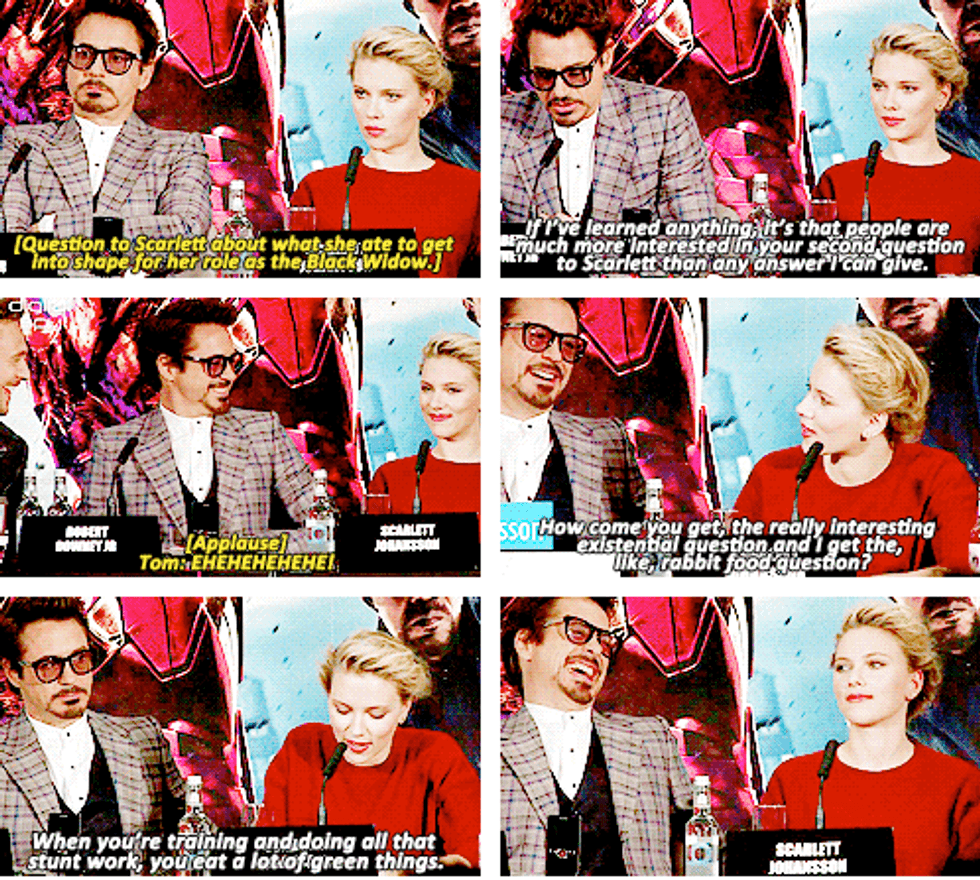
Finally, before moving on, let's recall this incident:
(via feminspire.com)
Oh, and this one:
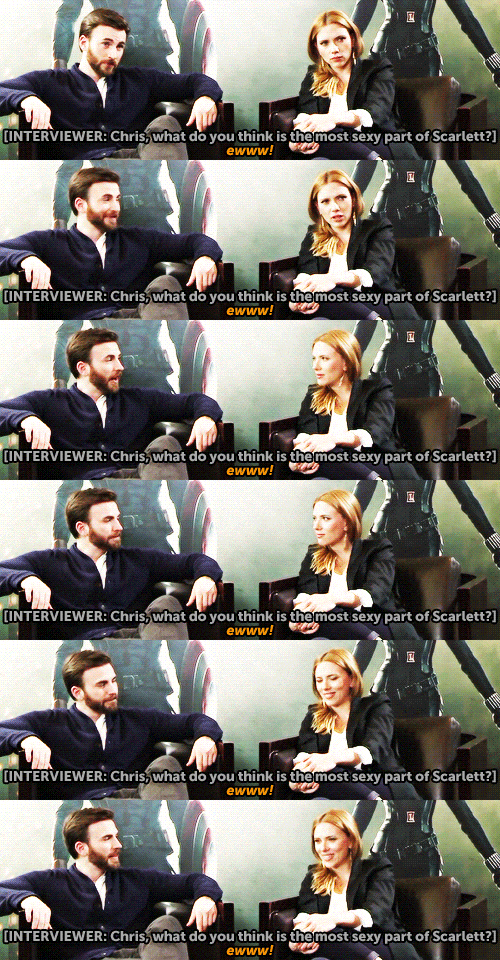
(via rebloggy.com)
And we can't forget about this:
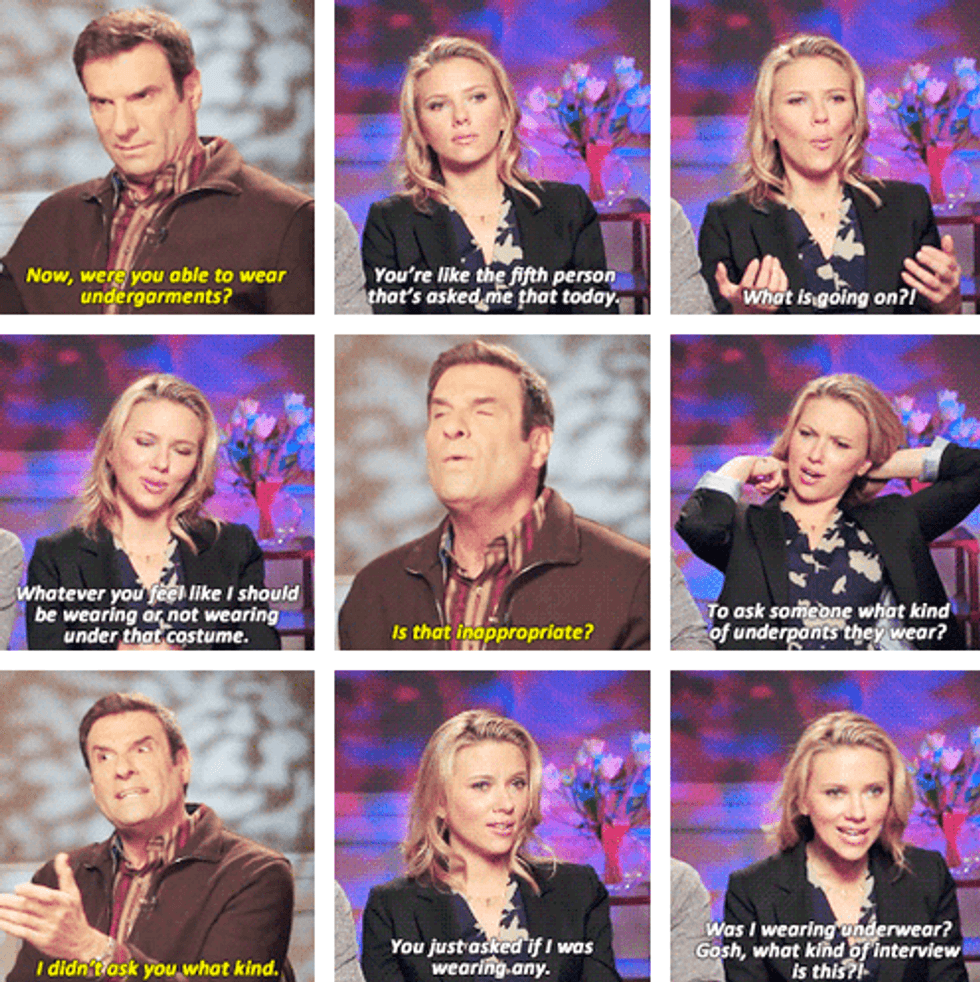
(via feminspire.com)
Between these and this recent interview where Chris Evans and Jeremy Renner made some disrespectful comments toward their own co-star, it's no wonder Scarlett Johansson is fed up (not to mention the rest of us who loyally follow the franchise). It’s time for Black Widow to start being represented in merchandise and treated like a real character, not just eye-candy (because, if we're being honest, she could take any of them in a fight.) It's time to have a woman superhero who isn't defined by the men on her team.
It’s something to think and talk about—with awareness, this can change. Guardians of the Galaxy, which was written by Nicole Perlman and passed the Bechdel Test with flying colors, was considered a huge success in both the box office and reviews, so it's not like the concept of equal representation is completely outlandish. The main issue is that under-representation of women in the media (and pretty much anyone who isn’t a white, straight male) is reflective of society. Yes, the patriarchy is alive and well, folks. If we continue on this path, we aren’t creating an accurate picture of what our country looks like. In addition, seclusion in the media only widens the gap that people have to cross to get to equality, which is the exact opposite of what should be happening. In relation to superheroes, this is especially important for young girls. They don’t want to date superheroes; they want to BE superheroes.
End all, be all, we have to think what the impact of this will have on the younger generation. If little kids don't have figures in movies, TV, or even toys that they can identify with, that can be very detrimental to their perception. They'll begin to think that something is wrong with them because none of the characters they're seeing are anything like them. What kind of message is it sending to cater superhero toys all toward little boys, leaving very few heroines for girls to look up to? Then they may start to lose sight of the fact that they're allowed to love comics and superheroes, too, that they can wear a cape and save the day. Princesses are great and all, but they're not for everyone. Young girls need to know that it's OK to be a badass and to be your own hero.
However, in all of this, there is an upside. The Marvel cinematic universe is a few years behind the comic universe in terms of story lines, so there's still hope. This year has shown much more representation for women in Marvel's comics. For instance, Gwen Stacy has her own book, Spider-Gwen, which takes place in an alternate universe where she was bitten by the radioactive spider instead of Peter Parker. It's really cool to read as it's an origin story we're not sick and tired of, and she ends up becoming the hero instead of the damsel.In addition, Black Widow has her own book, while appearing in the various Avengers titles. There's also Ms. Marvel, the story of a teenage Muslim girl who finds herself with superpowers and has to learn how to be a hero while also trying to live her normal life. Perhaps the best recent bout, though, is the big event that started in May: Secret Wars. Basically every universe that exists (or has existed) in Marvel has now collided into one big lump. As a result, there are new story lines in each universe dealing with this new world, including, but not limited to, A-Force (the all-female Avengers team), Witch Hunter Angela, Runaways (think Breakfast Club, but they're mostly girls and also mutants), and Years of Futures Past (starring Kitty Pryde's daughter!) Women are leading books and actually getting decent character development, and it's kinda awesome. Finally, we can't forget about Captain Marvel: she's the all-around exemplary hero, exhibiting all the traits attributed to a classic hero, not to mention proving a great role model. Even though we'll still have to wait about three years, she's truly the perfect character to be the first woman to have her own film.
Now of course, we aren't saying all of this to pick a fight or to preach to the choir, but some things are worth pointing out. If you never call attention to an issue, it remains a problem, just as this has. Women make up half of the world's population—it's time to start noticing them. Movies and television are some of the most influential resources we have at our disposal; we need to start using them to reinforce positive ideas and portray realistic people. It's time to leave stereotypes behind. We don’t need another generation growing up in a prejudiced world, viewing male-dominated media, and thinking they have a set role they are expected to fill. Equality starts with a change in mentality, which can be brought about by the simplest things—if people begin seeing more strong, realistic female characters getting things done, then the idea of women earning equal pay or, you know, running the country won’t sound so out of this world.