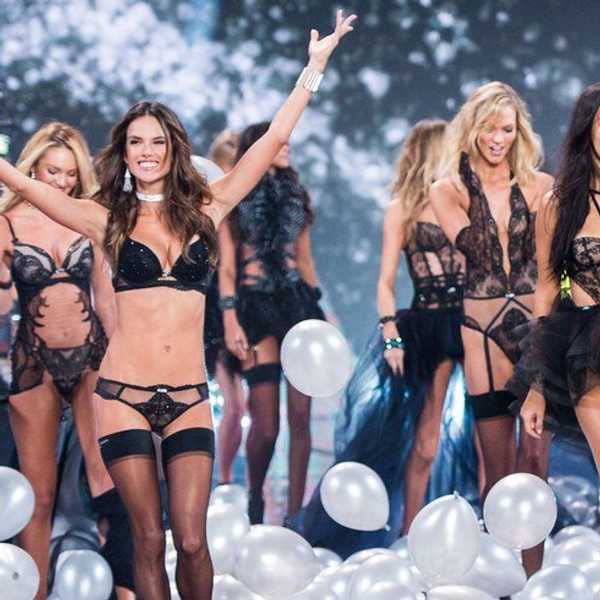

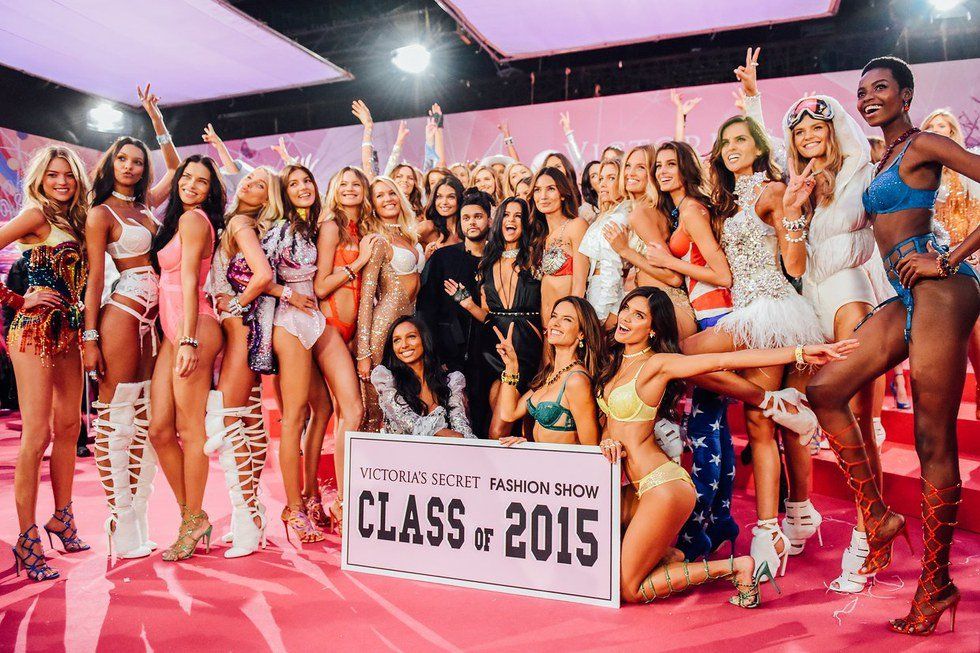
After watching the Victoria’s Secret fashion show each year, many of us are often left with one of two feelings: helplessness and/or lust. Whether we admit it to ourselves or not, we inevitably wonder how these women achieve such “amazing” bodies, as society suggests. How are we so easily swayed by what we see on TV and in the magazines?
Why does this exploitative fashion show appeal to a plethora of women and foster such a fan base? Why do so many of us follow these models on Instagram and cut their photos out of magazines to hang them on our refrigerators?
After being exposed to the “iconic” portrayal of women in society, via television and film, magazines, advertisements, etc., we, the audience, have been conditioned to become subjects of the messages conveyed. The Victoria’s Secret Fashion Show is broadcasted on CBS, viewed by 6.6 million people, and features 44 of the most highly paid models. Clearly, this production is relevant in society, and as a result, holds authority over women, as it exemplifies the ideal of “sexy.” The goal of these models is to persuade the audience; women ranging from pre-adolescence to old age. Society has reinforced an ideal image of perfection, which women strive to attain. This unrealistic image of “beauty” delivers societal messages, constantly conveyed in all forms of media. The Victoria’s Secret Fashion Show uses social attractiveness to appeal to the audience. Those who are physically appealing are more likely to influence and persuade the customers. These beautiful models convey the message that in order to look like them, it is imperative that we are thin, fit, and flawless.
An authority has control over its subjects in that they are easily able to manipulate and influence consumers into behaving a certain way. The Victoria’s Secret models hold authority over their audience, as they embody this ideal of “sexy,” demonstrated purely by the aesthetic of the women walking on the runway: their bodies, tall, lean, perfectly sculpted, and thin, not one ounce of fat in any of the wrong places, effortlessly lifted breasts, beautiful hair, and tan, glowing skin. Not a hint of imperfection. This definition of beauty is constantly reinforced into our minds. Not only is there this annual fashion show, but also an abundance of photographs, commercials, and magazines portraying these “angels” and constantly reminding us that we are one step closer to achieving “sexy” by trying to look like them.
On Instagram, one of the most prominently used social networking applications worldwide, Candice Swanepoel and Alessandra Ambrosio, two of the most famous Angels to date, each have over an astonishing 5.5 million people follower base. This demonstrates the authority that these models have over people, as they have attracted an abundance of fans purely based on their looks and status. Women who follow them strive to achieve the “sexy” look that they portray on the runway and in their photographs. These women are a profitable pursuit, as they take advantage of the authority they have achieved by enabling the “idealized women” to become a reality through these media outlets. The Victoria’s Secret Fashion Show implements and exaggerates these cultural ideologies into society by using the authority that the models contain, which results from the power of social influence. As a result of seeing all of these beautiful and “perfect” Victoria’s Secret models, we are persuaded to strive for perfection and to appear like them.
As Susan Giroux, the author of "Theory Toolbox," explained, “the individual is constructed or interpellated as a subject by the institutions of modern life; the so-called unique individual, in other words, is always defining itself and being defined by the generalized social categories of the modern state […] The institutions of modern life literally make us into subjects.” The Victoria’s Secret Fashion Show’s advertisement strategy exemplifies the key notion in this idea. As a result of the way we have been conditioned by society, the individual is subjected by the culture industry to attain certain ideals, specifically beauty and attractiveness. The success of Victoria’s Secret and their fashion show ultimately depends on this ideology and the desire to achieve this appearance. The authority and physical appeal of the show ultimately aid in the persuasion of its receivers, as a result of the effect it has on women by influencing this societal ideology of attaining “sexy."
By capitalizing on their authority and physical attractiveness, the Victoria’s Secret Fashion Show and their models are able to persuade women across the country that in order to be sexy and beautiful, we must look like them.